Total de visualitzacions de pàgina:

10.7.25


BILLY JOEL - NEW YORK STATE OF MIND


Publicada: 19 de maig de 1976

Àlbum: Turnstiles


“New York State of Mind” és una balada emblemàtica de Billy Joel, inclosa en el seu àlbum “Turnstiles” de 1976. Tot i que mai es va publicar com a single, s’ha convertit en una de les cançons més estimades de Joel —tant una expressió íntima com un himne públic per als novaiorquesos. Com gran part del disc, la peça reflecteix la transició personal de Joel, especialment el seu desig de deixar enrere Hollywood i reconnectar amb la seva identitat novaiorquesa. Tot i ser profundament arrelada en la seva experiència, la cançó connecta amb qualsevol persona que senti un vincle emocional amb Nova York.


Joel va escriure la cançó just després de tornar a Nova York, després de passar quatre anys a Los Angeles. Decebut amb l’estil de vida de la Costa Oest, trobava a faltar el caràcter, la duresa i l’ànima de la seva ciutat natal. Durant un trajecte amb autobús Greyhound al llarg de la línia del riu Hudson, de camí cap a Highland Falls, va començar a escriure la lletra en una llibreta. Un cop a casa, va acabar-la i la va completar en només una hora.


Fortament influït per Ray Charles, Joel va concebre la cançó com una balada de jazz, amb ritmes swing lents, inflexions blues i rics acords. Joel ha descrit Charles com una de les seves grans inspiracions, i anys després van fer un duet junts a la cançó “Baby Grand”. A la peça hi destaquen el piano, el saxòfon i una atmosfera de club de jazz clàssic.


“New York State of Mind” va adquirir un simbolisme encara més profund després dels atemptats de l’11 de setembre de 2001. Joel la va interpretar al Concert for New York City i al telemarató “Tribute to Heroes”. En una d’aquestes actuacions, va col·locar un casc d’un bomber caigut damunt del piano, com a homenatge als serveis d’emergència morts en els atacs. La lletra va agafar una nova dimensió emocional, convertint-se en un himne no oficial de resistència, record i orgull novaiorquès.


Al llarg de les dècades, ha estat versionada i reinterpretada per nombrosos artistes, sovint en col·laboració amb Joel. Barbra Streisand la va gravar el 1977 i més tard hi va fer un duet amb Joel el 2014 al seu àlbum “Partners”. Joel va dir que aquell duet el va fer “sentir legítim” a la indústria —sobretot per la seva mare, que admirava Streisand. Tony Bennett també en va fer una versió amb Joel per al seu àlbum “Playin’ with My Friends” del 2001, i junts la van interpretar als Premis Grammy del 2002, guanyant una nominació per millor col·laboració pop vocal. Altres duets destacats inclouen actuacions amb Elton John, Garth Brooks, Bruce Springsteen i fins i tot els Muppets, amb Floyd Pepper de l’Electric Mayhem versionant-la a la segona temporada del programa.


Tot i no haver entrat mai a les llistes com a senzill, “New York State of Mind” s’ha mantingut com una de les preferides pels fans i una peça habitual als concerts de Joel. La seva influència va més enllà de les llistes musicals, actuant com una carta d’amor a Nova York i un símbol de retorn emocional a casa.


BILLY JOEL - NEW YORK STATE OF MIND


Released: May 19, 1976

Album: Turnstiles


“New York State of Mind” is a signature ballad by Billy Joel, featured on his 1976 album “Turnstiles”. Though never released as a single, it has become one of Joel’s most beloved songs, both a personal expression and a public anthem for New Yorkers. Like much of the “Turnstiles album”, the song reflects Joel’s personal transition, particularly his desire to say goodbye to Hollywood and embrace his New York identity once again. The song is deeply rooted in Joel’s experience, but it speaks to anyone with a deep emotional connection to New York.


Joel wrote the song immediately after returning to New York following a four-year stint in Los Angeles. Disillusioned with the West Coast lifestyle, he longed for the character, grit, and soul of his hometown. During a Greyhound bus ride up the Hudson River line, heading back to Highland Falls, New York, he began sketching lyrics in a notebook. Once home, he finished writing and composing the song in about an hour.


Strongly influenced by Ray Charles, Joel crafted the song as a jazz ballad, with slow swing rhythms, bluesy inflections, and rich chords. Joel has described Charles as a major inspiration, and the two would later duet on Joel’s song “Baby Grand” in 1986. The song features prominent piano, saxophone, and a lounge-like atmosphere reminiscent of classic jazz standards.


“New York State of Mind” became especially symbolic after the September 11 attacks in 2001. Joel performed the song at The Concert for New York City and the “Tribute to Heroes” telethon. During one performance, he placed a fallen firefighter’s helmet on his piano in tribute to the first responders who died in the attacks. The song’s lyrics took on a renewed emotional resonance, becoming an unofficial anthem of resilience, remembrance, and pride for New Yorkers.


Over the decades, the song has been covered and reinterpreted by a wide range of artists, often in collaboration with Joel. Barbra Streisand recorded the song in 1977 and later duetted with Joel in 2014 on her album “Partners”. Joel said the duet “made him feel legitimate” in the industry—especially to his mother, who admired Streisand. Tony Bennett recorded a version with Joel for his 2001 album “Playin’ with My Friends: Bennett Sings the Blues”. The duo performed the song at the 2002 Grammy Awards, earning a nomination for Best Pop Collaboration with Vocals. Other high-profile live duets include performances with Elton John, Garth Brooks, Bruce Springsteen, and The Muppet Show even featured a version, sung by Floyd Pepper of the Electric Mayhem in Season 2.


Though it wasn’t a charting single, “New York State of Mind” remains a fan favorite and a staple of Joel’s live shows. Its influence transcends the music charts, acting as a love letter to New York City, and a symbol of emotional grounding and homecoming. 


9.7.25


DAVID BOWIE - CHANGES


Publicació: 7 de gener de 1972

Llistes d’èxits: EUA: #41 · Regne Unit: #49


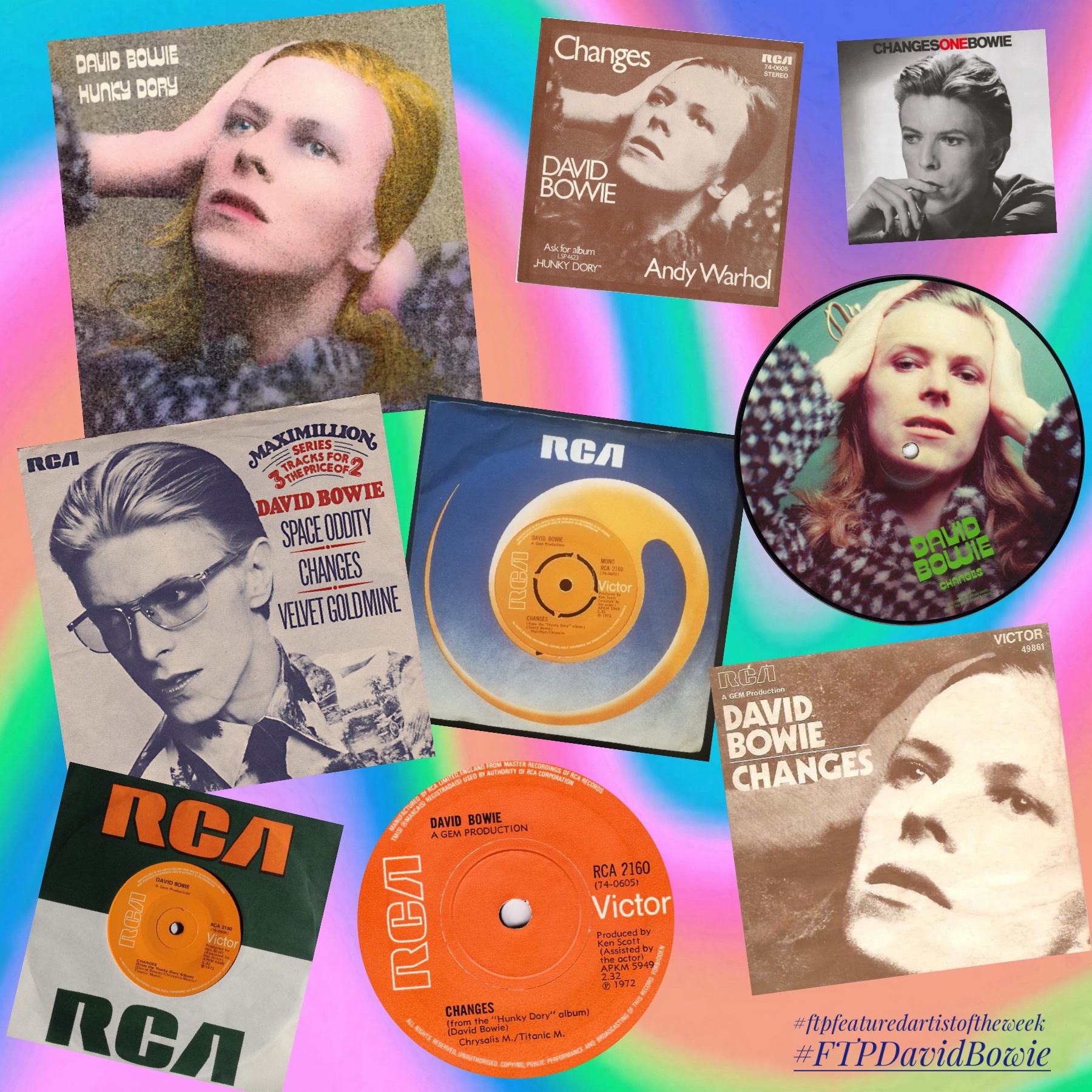
“Changes” és una de les cançons més emblemàtiques de David Bowie, extreta del seu quart àlbum d’estudi, “Hunky Dory” del 1971. Va ser publicada com a senzill el gener de 1972, significant la seva primera col·laboració amb RCA Records, el segell que posteriorment ajudaria a impulsar-lo cap a la fama mundial. Tot i ser molt ben rebuda per la crítica—Billboard la va qualificar com una de les millors del disc—la cançó va tenir poc èxit comercial inicial, sense entrar a les llistes britàniques i assolint només el lloc #66 als EUA. No va ser fins a la publicació del recopilatori “ChangesOneBowie” que el single va arribar al #41 als Estats Units. Després de la mort de Bowie l’any 2016, va reaparèixer a les llistes del Regne Unit, assolint el lloc #49.


En el seu nucli, “Changes” és un manifest personal. Bowie la va escriure en un moment de canvi profund: la seva dona Angela estava embarassada del seu primer fill, Duncan, i ell mateix es trobava reflexionant sobre la seva direcció artística i el paper dins de la indústria musical. La lletra, carregada de rebel·lia i optimisme existencial, és un autodiàleg sobre la identitat i la transformació:


“I still don’t know what I was waiting for / And my time was running wild” (Encara no sé el que estic esperant i el meu temps corre molt depressa). Segons el biògraf James Perone, les lletres són clarament autobiogràfiques i marquen el moment en què Bowie decideix trencar amb les expectatives comercials i agafar-se a la reinvenció constant com a principi vital.


Musicalment, “Changes” presenta un arranjament elegant i sobri. Bowie toca el saxòfon, mentre que Mick Ronson—el seu col·laborador de confiança—es va encarregar dels arranjaments de corda. La melodia de piano, tan reconeixible i que obre i tanca la peça, és obra de Rick Wakeman, que poc després es faria famós amb el grup Yes. El moment més icònic de la cançó és la seva tornada entrebancada: “Ch-ch-ch-ch-Changes”, una marca sonora que ha estat comparada amb el “My Generation” de The Who o el “Bennie and the Jets” d’Elton John. Més que una floritura vocal, és un símbol d’inseguretat generacional i de identitat fluida.


Quan es va publicar, Bowie encara lluitava per trobar el seu lloc. “Space Oddity” havia estat un èxit inesperat tres anys abans, però les seves produccions posteriors havien tingut una recepció discreta. En aquest context, “Changes” era una declaració valenta i ambiciosa, en què Bowie afirmava la seva voluntat de transformar-se sense por, fins i tot amb la seva carrera penjant d’un fil. Irònicament, no va ser fins a l’èxit de “Ziggy Stardust” i “Starman” que el públic realment va començar a entendre i seguir el seu viatge artístic.


Amb el temps, “Changes” es va convertir en una cançó central dins del llegat de Bowie, una mena de tema recurrent que apareixia cada cop que canviava de pell. El seu missatge de transformació i llibertat creativa es va mantenir viu en cada etapa: el glam alienígena de “Ziggy Stardust”, el soul de “Young Americans”, l’experimentació berlinesa de “Low”, fins a l’elegància crepuscular de “Blackstar”. Com assenyalen els biògrafs Paul Trynka i David Buckley, “Changes” no és només una cançó—és la plantilla de tot allò que Bowie arribaria a ser.


I, amb gran significat, “Changes” va ser també l’última cançó que David Bowie va interpretar en directe, l’any 2006, durant una aparició sorpresa al Hammerstein Ballroom de Nova York, on va fer un duet amb Alicia Keys en un concert benèfic. Després de dècades de reinventar-se, Bowie va tancar la seva carrera en directe amb la mateixa cançó que havia anunciat al món la seva identitat canviant. En retrospectiva, aquell moment sembla un adéu elegant i silenciós d’un home que una vegada es va comprometre a “enfrontar-se a la tensió” de cada transformació.


DAVID BOWIE - CHANGES


Released: January 7, 1972

Charts: US: #41  UK: #49 


“Changes” is a defining track from David Bowie’s fourth studio album, “Hunky Dory”, released in December 1971. Issued as a single on January 1972, it marked Bowie’s first release on RCA Records, a label that would later help propel him to superstardom. Though critically praised at the time—with Billboard naming it one of the strongest cuts on the album—the song was commercially unsuccessful, failing to chart in the UK and peaking modestly at #66 on the US Billboard Hot 100, but after the release of the compilation, “ChangesOneBowie” reached #41. its cultural and personal significance far outweighs its initial reception. Following Bowie’s death in 2016, “Changes” posthumously re-entered the UK Singles Chart at #49.


At its core, “Changes” is a personal manifesto, a song Bowie wrote amid deep transitions in his life. His wife Angela was pregnant with their first child, Duncan, and Bowie himself was reflecting on both his creative direction and the music industry at large. The lyrics capture a moment of self-interrogation and rebellion, brimming with existential optimism. “I still don’t know what I was waiting for,” he sings, “and my time was running wild.” According to biographer James Perone, the lyrics are “clearly autobiographical,” marking Bowie’s decision to break with commercial expectations and embrace artistic reinvention as a lifelong ethos.


The recording features a tight and elegant arrangement. Bowie himself plays saxophone, while Mick Ronson—his longtime collaborator—arranged the string sections. The elegant piano part, which bookends the song, was played by Rick Wakeman, who would later find fame with Yes. The track’s most iconic feature is Bowie’s stuttering chorus hook—“Ch-ch-ch-ch-Changes”—a pop hallmark that sits alongside the likes of The Who’s “My Generation” and Elton John’s “Bennie and the Jets.” Like those songs, the stammer is more than a vocal gimmick—it’s a statement of generational unease and personal identity.


At the time of its release, Bowie was at risk of fading into obscurity. “Space Oddity” had been a fluke success three years earlier, and since then, his records had underperformed. “Changes” was a brazen declaration of intent, filled with ambition and defiance, even as his career teetered on a knife’s edge. The irony is that it wasn’t until Bowie’s next album, “Ziggy Stardust”, and the success of “Starman”, that audiences finally caught up with the artist he was becoming.


But “Changes” would go on to become one of Bowie’s most emblematic songs, serving as a recurring theme throughout his career. Its message of transformation and artistic freedom echoed with each reinvention—from the glam rock alien of “Ziggy”, to the plastic soul of “Young Americans”, the Berlin experimentalist of “Low”, and the elegant elder statesman of his final album, “Blackstar”. As Paul Trynka and David Buckley both note in their biographies, “Changes” is not just a song—it is the blueprint for everything Bowie would become.


Fittingly, “Changes” was also the final song David Bowie ever performed live, in 2006, during a surprise appearance at the Hammerstein Ballroom in New York, where he duetted with Alicia Keys for a charity concert. After decades of morphing personas, Bowie closed his live performance career with the same song that first declared his mutable identity to the world. In retrospect, it reads like a final full-circle moment, a quiet and graceful sign-off from a man who once vowed to “face the strain” of every transformation.


FREDDY MERCURY & MONTSERRAT CABALLE - BARCELONA


Publicada: 26 d’octubre de 1987

Llistes: Regne Unit: #2


L’any 1987, va néixer una col·laboració musical que va desafiar gèneres, convencions i fins i tot idiomes. Quan Freddie Mercury, el carismàtic líder de Queen, va unir forces amb Montserrat Caballé, una de les sopranos més grans del món, el resultat va ser “Barcelona”—un triomf pop-operístic nascut de l’admiració, l’ambició i un duet inoblidable entre una llegenda del rock i una icona de l’òpera.


La col·laboració va començar com un somni. Mercury, un amant declarat de l’òpera, havia dit sovint que Caballé era la seva cantant preferida: “Té la millor veu de totes.” A principis de 1987, el seu desig de conèixer-la es va fer realitat. La seva trobada a la ciutat natal de la soprano, Barcelona, va encendre no només una admiració mútua, sinó també les primeres llavors d’un projecte musical complet.


En aquell moment, Barcelona acabava de ser escollida com a seu dels Jocs Olímpics de 1992. Caballé va ser convidada a participar en els preparatius musicals de l’esdeveniment i va pensar immediatament en Mercury. El que havia de ser només un himne olímpic es va convertir en un àlbum col·laboratiu sencer. Mercury, entusiasmat pel repte d’escriure per a una veu com la de Caballé, hi va accedir sense dubtar.


La peça central, “Barcelona”, és un himne a la majestuositat de la ciutat, que combina el dramatisme teatral de Mercury amb la soprano imponent de Caballé, tot recolzat per una orquestració grandiosa. A causa de l’agenda de la cantant, Mercury va gravar inicialment una maqueta cantant amb veu falsetto les dues parts, la seva i la de Caballé. Quan ella va escoltar la gravació, va quedar impressionada—no només per la passió, sinó per la reverència amb què Mercury abordava el llenguatge operístic.


Tot i que el single, publicat l’octubre del 1987, només va arribar al número 8 del Regne Unit, el seu moment real va arribar després de la mort de Mercury el 1991 a causa de complicacions relacionades amb la sida. Quan es va reeditar el 1992, poc abans dels Jocs Olímpics, la cançó va escalar fins al número 2 al Regne Unit, als Països Baixos i a Nova Zelanda.


Tot i que inicialment estava destinada a ser l’himne oficial dels Jocs Olímpics, la mort de Mercury va fer que els organitzadors escollissin una altra peça, per evitar controvèrsies. Malgrat això, en un moment simbòlic i emotiu, Caballé va interpretar “Barcelona” a la cerimònia inaugural dels Jocs, cantant en directe al costat de la veu enregistrada de Mercury—un homenatge commovedor tant a l’artista com a la ciutat.


El videoclip, dirigit per David Mallet, és tan grandiloqüent com la cançó. Tant Mercury com Caballé hi apareixen vestits amb robes majestuoses, envoltats de llum teatral i arquitectura clàssica. Mike Moran, coautor i productor de la cançó, també hi apareix dirigint l’orquestra, i sovint és confós amb Brian May de Queen per la seva aparença similar.


FREDDY MERCURY & MONTSERRAT CABALLE - BARCELONA


Released: October 26, 1987

Charts: UK: #2 


In 1987, a musical partnership emerged that defied genres, convention, and even language. When Freddie Mercury, the flamboyant frontman of Queen, joined forces with Montserrat Caballé, one of the world’s greatest opera sopranos, the result was “Barcelona”—a pop-opera triumph born of admiration, ambition, and an unforgettable duet between rock royalty and operatic legend.


The collaboration began with a dream. Mercury, a lifelong fan of opera, had often cited Caballé as his favorite singer. “She is the best voice of all,” he once said. In early 1987, his wish to meet her came true. Their first encounter in the soprano’s native city of Barcelona sparked not just mutual admiration but the seeds of a full-scale musical project.


At the time, Barcelona had just been chosen to host the 1992 Summer Olympics. Caballé was asked to contribute to the event’s musical preparations and immediately thought of Mercury. What was initially planned as a single Olympic anthem evolved into a full collaborative album. Mercury, energized by the challenge of composing for such a voice, agreed without hesitation.


The title track, “Barcelona,” became the centerpiece. A hymn to the city’s majesty, it blended Mercury’s theatrical flair and high-reaching vocals with Caballé’s breathtaking soprano and a full orchestral arrangement. To accommodate her demanding schedule, Mercury first recorded a demo singing both his and Caballé’s parts, the latter in falsetto. When she finally heard the tape, she was stunned—not only by his passion but by his deep respect for the operatic form.


Released in October 1987, the single made a modest but notable impact, peaking at No. 8 on the UK Singles Chart. Its real moment, however, came posthumously. After Mercury’s death in 1991 due to AIDS-related illness, “Barcelona” took on a deeper poignancy. Re-released in 1992, just ahead of the Olympics, the song soared to No. 2 in the UK, the Netherlands, and New Zealand.


Although it was originally intended to be the official theme of the Olympic Games, Mercury’s death led organizers to choose a different piece to avoid potential controversy. Still, in an emotional and symbolic moment, Caballé performed “Barcelona” at the Olympic opening ceremony, singing live alongside Mercury’s pre-recorded vocals—a moving tribute to both the artist and the city.


Directed by David Mallet, the music video was as grandiose as the song, with both Mercury and Caballé clad in regal attire, framed by theatrical lighting and classical architecture. Mike Moran, co-writer and producer, appeared in the video conducting the orchestra, often mistaken for Queen’s Brian May due to their similar appearance.


6.7.25


PATTI LaBELLE & MICHAEL McDONALD - ON MY OWN


Data de publicació: 23 de febrer de 1986

Llistes: EUA: #1 (3 setmanes) · Regne Unit: #2


L’any 1986, dues de les veus més emotives de la música americana—Patti LaBelle i Michael McDonald—van arribar al capdamunt de les llistes amb “On My Own”, un duet majestuós i malenconiós que, irònicament, cap dels dos artistes va gravar junts a l’estudi. Escrita per la llegendària parella de compositors Burt Bacharach i Carole Bayer Sager, la cançó es va convertir en un clàssic sobre la separació, el tancament emocional i una esperança silenciosa de reconciliació.


Inicialment composada per al disc “Friends” de Dionne Warwick (1985), “On My Own” no va assolir tot el seu potencial fins que LaBelle i McDonald li van donar vida amb la seva barreja inconfusible de soul i cors trencats. Bacharach i Sager havien promès la cançó a LaBelle, però el seu productor habitual, Richard Perry, no en veia clar el potencial. A contracor, va accedir a deixar que els compositors la produïssin ells mateixos. El resultat es convertiria en el major èxit de la carrera tant de LaBelle com de McDonald.


Tot i que finalment va ser un duet, la col·laboració no va ser convencional: LaBelle va gravar la seva part a Filadèlfia, mentre que McDonald ho va fer a Los Angeles. No es van conèixer en persona fins molt després, quan la van interpretar junts al programa The Tonight Show. El videoclip en va saber reflectir aquesta distància emocional i geogràfica, utilitzant efectes de pantalla dividida per simbolitzar el tema central: dues persones que es van allunyant, tot i desitjar encara una connexió que ja no encaixa.


La lletra captura el moment fràgil després d’una ruptura: quan l’amor encara flota en el record, però la realitat imposa la separació. “This wasn’t how it was supposed to end“ (Això no havia de acabar així), canta LaBelle amb veu trèmula. McDonald respon amb la confessió adolorida: “It’s like we never knew each other at all“ (És com si mai ens haguéssim conegut de debò). Per a Bayer Sager, la lletra va ser un triomf personal; a les seves memòries “They’re Playing Our Song”, admetia haver dubtat del potencial de la melodia: “Em sonava com una cançó de melodia polinèsia,” recordava. Però a mesura que les paraules prenien forma, va reconèixer que el seu pes emocional s’ajustava perfectament al to malenconiós de Bacharach.


Publicada el març de 1986, “On My Own” va esdevenir un èxit immediat: va ocupar el número 1 del Billboard Hot 100 durant tres setmanes consecutives, va dominar les llistes R&B i es va convertir en un èxit global, arribant al número 2 al Regne Unit.


PATTI LaBELLE & MICHAEL McDONALD - ON MY OWN


Released: February 23, 1986

Charts: US: #1 (3 weeks) UK: #2 


In 1986, two of the most emotive voices in American music—Patti LaBelle and Michael McDonald—found themselves at the top of the charts with “On My Own,” a soaring, melancholic duet that neither artist recorded in the same room. Written by legendary songwriting duo Burt Bacharach and Carole Bayer Sager, the track became a classic tale of separation, closure, and quiet hope for reconciliation.


Originally composed for Dionne Warwick’s 1985 album Friends, “On My Own” didn’t reach its full potential until LaBelle and McDonald brought it to life with their unmistakable blend of soul and heartbreak. Bacharach and Sager had promised the track to LaBelle, but her regular producer, Richard Perry, wasn’t sold on the song. Reluctantly, he agreed to let the composers produce it themselves. The result would be LaBelle’s biggest hit—and McDonald’s, too.


Although it became a duet, the collaboration was anything but conventional. LaBelle recorded her vocals in Philadelphia, while McDonald laid down his parts in Los Angeles. They didn’t meet until much later, when they performed the song live together on The Tonight Show. The music video cleverly emphasized their emotional and geographical distance by using split-screen visuals, symbolizing the central theme: two people drifting apart, longing for a connection that no longer fits.


Lyrically, “On My Own” captures the fragile moment after a breakup, when love still lingers in memory, but reality insists on separation. “This wasn’t how it was supposed to end,” LaBelle sings with trembling conviction. McDonald answers with the pained confession, “It’s like we never knew each other at all.” The lyrics were a personal triumph for Sager, who admitted in her memoir They’re Playing Our Song that she initially doubted the melody’s hit potential. “It sounded like a Polynesian melody,” she recalled. But as the words took shape, she discovered their emotional weight matched Bacharach’s wistful tune.


Released in March 1986, “On My Own” became an instant success. It topped the Billboard Hot 100 for three consecutive weeks, dominated the R&B charts, and became a global hit, peaking at No. 2 in the UK.