Total de visualitzacions de pàgina:

24.6.24


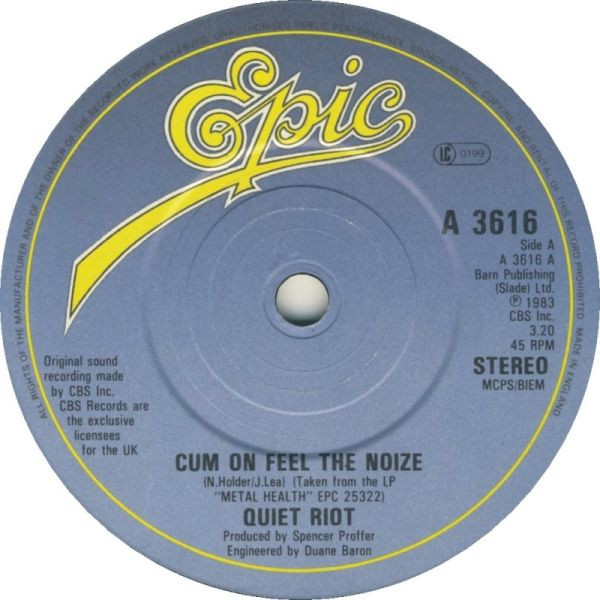
SLADE / QUIET RIOT - CUM ON FEEL THE NOIZE


Versió Slade Publicada: 23 de febrer de 1973

Llistes: Regne Unit: # 1 (4 setmanes)   EUA: # 98 


Versió Quiet Riot Publicada: 11 de juliol de 1983

Llistes: EUA: #5   Regne Unit: #45


"Cum On Feel the Noize" és un himne del glam rock originalment escrit i interpretat per la banda anglesa Slade el 1973. Escrita pel vocalista principal Noddy Holder i el baixista Jim Lea, i produïda per Chas Chandler, la cançó ràpidament va arribar al número u en les llistes de vendes del Regne Unit, sent el quart número u de Slade. El 1983, la banda nord-americana de heavy metal Quiet Riot va catapultar la cançó a noves alçades amb la seva pròpia versió, que es va convertir en un èxit de vendes als Estats Units. La versió de Quiet Riot va assolir el número 5 al Billboard Hot 100.


"Cum On Feel the Noize" captura l'atmosfera electritzant viscuda als concerts en directe de Slade. Originalment concebuda com "Cum On Hear the Noize," el títol es va transformar després que Noddy Holder recordés un concert al Regne Unit el 1972 on va sentir físicament l'energia de la multitud ressonant en el seu pit. L'obertura de la cançó, amb el càntic enèrgic de Holder "Baby, baby, baby", va començar inicialment com una prova de micròfon però eventualment es va convertir en part integral de la gravació final.


El vídeo musical de "Cum On Feel the Noize" va ser gravat per Caravelle durant un dels concerts de Slade a Den Hag, Països Baixos. La interpretació enèrgica va capturar la dinàmica presència escènica de la banda i va transmetre l'ambient contagios de la cançó.


En una entrevista del 1983, la perspectiva de Noddy Holder subratlla la qualitat perdurable de la música de Slade i la importància de "Cum On Feel the Noize" fins i tot una dècada després del seu llançament inicial. Holder va reconèixer la versió d'èxit de Quiet Riot com un testimoni de l'atractiu durador de la cançó i de la força de la composició de Slade. Malgrat les ofertes per modernitzar els seus clàssics, Holder va subratllar la importància de preservar l'essència original i l'energia de la seva música, prioritzant l'autenticitat per sobre del guany financer.


Les declaracions de Frankie Banali, el bateria de Quiet Riot, sobre el procés d'enregistrament de "Cum On Feel the Noize" revelen la naturalesa espontània i una mica caòtica de la sessió. La franquesa de Banali amb l'enginyer sobre la falta de preparació de la banda va conduir a una gravació improvisada que finalment es va convertir en la versió icònica de la cançó. La manca de proves i la familiaritat amb la versió original de Slade va resultar en una interpretació única per part de Quiet Riot, marcada per una introducció improvisada i petites variacions en l'arranjament.


Amb un fons ambientat en l'habitació d'un adolescent, el vídeo de Quiet Riot es desenvolupa amb una sèrie de seqüències surrealistes i exagerades que reflexen l'impacte potent de la peça. La rutina matinal del noi pren un gir salvatge mentre el seu sistema estèric es transforma en una entitat colossal i palpitant, omplint l'habitació amb un so retumbant i llums vibrants. Les escenes de flashback de la màscara de Metal Health evoquen l'emoció i la intensitat d'un concert en directe, subratllant la influència de la banda i la connexió visceral entre la música i l'audiència. Els intents inutils del noi per controlar el sistema estèric sobredimensionat intensifiquen els elements còmics i surrealistes del vídeo, culminant en una conclusió dramàtica on la realitat es fusiona perfectament amb la fantasia.


La popularitat de Slade al Regne Unit durant la dècada dels 1970 va ser notable, amb una sèrie de números u i un impacte significatiu en el moviment del glam rock. La seva col·laboració amb el productor Chas Chandler va solidificar encara més el seu so i va contribuir al seu èxit. Tot i que la influència de Slade va disminuir als Estats Units a finals dels anys 1970, la versió de Quiet Riot de "Cum On Feel the Noize" va reintroduir al públic nord-americà la música de la banda i va ajudar a augmentar les seves vendes.


SLADE / QUIET RIOT - CUM ON FEEL THE NOIZE


Slade version Released: February 23, 1973

Charted: UK:#1 ( 4 weeks) US: #98 


Quiet Riot version Released: July 11, 1983

Charted:  US: #5  UK: #45 


"Cum On Feel the Noize" is a rock anthem originally penned and performed by the English rock band Slade in 1973. Written by lead vocalist Noddy Holder and bassist Jim Lea, and produced by Chas Chandler, the song quickly ascended to the top of the UK Singles Chart, marking Slade's fourth number one single. In 1983, American heavy metal band Quiet Riot catapulted the song to new heights with their own rendition, which became a million-selling hit single in the United States. Quiet Riot's version soared to No. 5 on the Billboard Hot 100.


"Cum On Feel the Noize" captures the electrifying atmosphere experienced at Slade's live concerts. Originally conceived as "Cum On Hear the Noize," the title underwent a transformation after lead vocalist Noddy Holder reminisced about a 1972 UK concert where he physically felt the pulsating energy of the crowd resonating in his chest. The song's opening, featuring Holder's spirited chant of "Baby, baby, baby," initially began as a microphone test but eventually became an integral part of the finished recording.


The music video for "Cum On Feel the Noize" was shot by Caravelle and filmed during one of Slade's concerts in The Hague, Netherlands. The energetic performance captured the band's dynamic stage presence and added visual depth to the song's infectious vibe. 


In a 1983 interview, Noddy Holder's perspective underscores the enduring quality of Slade's music and the significance of "Cum On Feel the Noize" even a decade after its initial release. Holder acknowledged Quiet Riot's successful rendition of the song as a testament to its enduring appeal and the strength of Slade's songwriting. Despite offers to modernize their classics, Holder emphasized the importance of preserving the original essence and energy of their music, prioritizing authenticity over financial gain. 


Frankie Banali's drummer of Quiet Riot's talking about the recording process for "Cum On Feel the Noize" sheds light on the spontaneous and somewhat chaotic nature of the session. Banali's honesty with the engineer about the band's lack of preparation led to an impromptu recording that ultimately became the iconic version of the song. The lack of rehearsal and familiarity with the original Slade version resulted in a unique interpretation by Quiet Riot, marked by an improvised intro and slight variations in the arrangement. 


Set against the backdrop of a teenage boy's bedroom, the Quiet Riot's video unfolds with a series of surreal and exaggerated sequences that mirror the song's powerful impact. The boy's morning routine takes a wild turn as his stereo system transforms into a colossal, pulsating entity, filling the room with booming sound and vibrant lights. The flashback scenes of the Metal Health Mask evoke the excitement and intensity of a live concert, emphasizing the band's influence and the visceral connection between music and audience. The boy's futile attempts to control the oversized stereo system heighten the video's comedic and surreal elements, culminating in a dramatic conclusion where reality seamlessly merges with fantasy.


Slade's popularity in the UK during the 1970s was remarkable, with a string of chart-topping hits and a significant impact on the glam rock movement. Their collaboration with producer Chas Chandler further solidified their sound and contributed to their success. While Slade's influence waned in the US by the late 1970s, Quiet Riot's cover of "Cum On Feel the Noize" reintroduced American audiences to the band's music and helped boost their own sales a bit.



LED ZEPPELIN - KASHMIR

Llançament: 24 de febrer de 1975

Àlbum: Physical Graffiti


"Kashmir" és una cançó reconeguda de Led Zeppelin, inclosa al seu àlbum "Physical Graffiti" llançat el 1975. Va ser elaborada durant tres anys per Jimmy Page i Robert Plant, amb aportacions de John Bonham. John Paul Jones no va rebre crèdit d'autoria per a la cançó.


"Kashmir" es destaca com un dels grans èxits de Led Zeppelin, envoltat d'una atmosfera de misteri i amenaça. El seu debut va ser impactant, amb el tema oriental i el seu ritme hipnòtic mostrant la destresa innovadora de la banda. Inicialment titulada "Driving To Kashmir," la lletra va ser inspirada per unes vacances de Robert Plant al Marroc, on la va escriure mentre travessava el Sahara espanyol. El paisatge desert infinit va inspirar un somni de trobar un paradís personal a Kashmir, malgrat la seva disparitat geogràfica amb el Marroc.


"Kashmir" va sorgir d'una demo elaborada per Jimmy Page i John Bonham, utilitzant unes proves d’afinació de guitarra dels treballs anteriors de Page com "White Summer" i "Black Mountain Side." John Paul Jones va contribuir a l'arranjament, incorporant acords amb so marroquí tocats en una guitarra Danelectro i complementats per músics de corda de sessió.


Robert Plant va expressar la seva admiració per "Kashmir" no només per la seva intensitat, sinó també perquè desafiava l'etiqueta de heavy metal que a la banda no li agradava. Plant va destacar la percussió de John Bonham com a clau per a l'èxit de la cançó, assenyalant que la seva contenció la feia efectiva. Jimmy Page va recordar la qualitat hipnòtica de la intensitat de la cançó durant la seva creació, destacant la col·laboració inicial entre ell i John Bonham a Headley Grange. 


El representant de Zeppelin, Peter Grant, va recordar la demo inicial de "Kashmir" com a fantàstica, però inicialment sonava com un lament. Per millorar la pista, es va portar una orquestra pakistanesa, orquestrada per John Paul Jones, resultant en la versió final que captava perfectament l'atmosfera desitjada. Page va explicar que va reconèixer la necessitat d'elements orquestrals per complementar les parts de guitarra, proporcionant a la cançó la profunditat d'una simfonia.


La cançó es va destacar per la seva marxa lenta, ponderosa i tenebrosa, desafiant les tendències de rock contemporani. John Paul Jones va assenyalar que "Kashmir" tenia tot el que definia Led Zeppelin, barrejant antigues melodies de blues, elements psicodèlics i la muscularitat característica de la banda amb una atrevida infusió d'influències exòtiques. Considerada com una primerenca fusió de rock i World music, "Kashmir" va ser considerada per la banda com un punt culminant de la seva carrera.


LED ZEPPELIN - KASHMIR


Released: February 24, 1975

Album: Physical Graffiti


"Kashmir" is a renowned song by Led Zeppelin, featured on their album "Physical Graffiti" released in 1975. It was crafted over three years by Jimmy Page and Robert Plant, with input from John Bonham. John Paul Jones did not receive a writing credit for the song.


"Kashmir" stands as one of Led Zeppelin's greatest achievements, enveloped in an atmosphere of mystery and menace. Its debut was impactful, with its pulsating Eastern theme and hypnotic rhythm showcasing the band's innovative prowess. Originally titled "Driving To Kashmir," the song's lyrics were inspired by Robert Plant's holiday in Morocco, where he wrote them while traversing the Spanish Sahara. The endless desert landscape sparked a dream of finding a personal paradise in Kashmir, despite its geographical disparity from Morocco.


"Kashmir" emerged from a demo crafted by Jimmy Page and John Bonham, utilizing a guitar tuning reminiscent of Page's previous works like "White Summer" and "Black Mountain Side." John Paul Jones contributed to the arrangement, incorporating Moorish-sounding chords played on a Danelectro guitar and complemented by session string players. 


Robert Plant expressed his admiration for "Kashmir" not just for its intensity but also because it defied the heavy metal label the band disliked. Plant emphasized John Bonham's drumming as pivotal to the song's success, noting that it was his restraint that made it effective. Jimmy Page recalled the hypnotic quality of the song's intensity during its creation, noting the initial collaboration between him and John Bonham at Headley Grange. The iconic guitar riff originated from a tuning cycle Jimmy Page had been using for years. 


Zeppelin's manager, Peter Grant, recalled the early demo of "Kashmir" as fantastic, but initially sounding like a dirge. To enhance the track, a Pakistani orchestra was brought in, orchestrated by John Paul Jones, resulting in the final version that perfectly captured the desired atmosphere. Page explained that he recognized the need for orchestral elements to complement the guitar parts, providing the song with the depth of a symphony. 


The song stood out for its slow, ponderous, and doomy vibe, defying contemporary rock trends. John Paul Jones remarked that "Kashmir" had everything that defined Led Zeppelin, blending ancient blues, psychedelic elements, and the band's signature muscularity with a daring infusion of exotic influences. Seen as an early fusion of rock and world music, "Kashmir" was regarded by the band as a career highlight.


22.6.24


THE WHO - MY GENERATION


Estrena: 29 d'octubre de 1965

Llistes: EUA: #74   Regne Unit: #2


"My Generation" és una cançó de la banda anglesa The Who, escrita pel guitarrista i principal compositor Pete Townshend. Considerada una de les seves cançons més emblemàtiques, es va llançar com a single l'octubre de 1965. Al Regne Unit, va assolir el número 2, igualant el seu single més ben classificat amb "I'm a Boy" el 1966. Als Estats Units, va arribar al número 74. També va aparèixer a l'àlbum debut de The Who "My Generation" el 1965 i en una versió llarga a l'àlbum en viu "Live at Leeds" el 1970.


"My Generation" té un significat personal i cultural important per a Pete Townshend, qui la va escriure durant un viatge en tren pel seu 20è aniversari el 1965. En una entrevista del 1987 amb la revista Rolling Stone, Townshend va revelar que la cançó va sorgir del seu propi sentiment de desorientació i de la percepció de la banda de la efemeritat de la seva joventut. Escrita per a la subcultura jove i rebel coneguda com a "mods" al Regne Unit, la cançó captura la seva frustració amb la incapacitat de les generacions més grans per comprendre'ls. Townshend mateix la va descriure com l'únic comentari social important que mai havia fet, retractant un "mod" carregat de pastilles que lluita per articular la seva identitat entre la boira de les drogues i la rebel·lió.


The Who va col·laborar amb el productor nord-americà Shel Talmy a "My Generation" i la resta de l'àlbum. Talmy, conegut pel seu treball a Amèrica, va portar la seva experiència a Anglaterra, implementant innovacions com l'ús de 12 micròfons a la bateria en lloc dels habituals tres. Malgrat la reputació de la banda pel seu comportament desenfrenat, Talmy va aconseguir convèncer Keith Moon, a qui considerava el millor bateria de rock, de no destruir l'equipament d'estudi, una petició que Moon sorprenentment va complir.


"My Generation" inclou un dels primers solos de baix a la història del rock, interpretat per John Entwistle amb un baix Danelectro. Gravar el solo va ser tot un repte ja que Entwistle no parava de trencar cordes. Com que no hi havia cordes de recanvi disponibles, va haver de comprar un baix nou cada vegada. Malgrat ser el membre menys visible de la banda, els solos de baix d'Entwistle sovint confonien els directors de televisió durant les actuacions, ja que les càmeres solien enfocar equivocadament Pete Townshend. Entwistle tocava els solos amb una pua, ja que el seu manager creia que els dits no anaven bé a les gravacions, tot i que Entwistle va fer servir preferentment els dits per a les gravacions posteriors.


La famosa frase "I hope I die before I get old" (Espero morir abans de fer-me gran) va adquirir un gir irònic quan el bateria Keith Moon, va morir d'una sobredosi de drogues als 32 anys. Amb els anys, els membres de la banda han reflexionat sobre el significat darrere de la lletra, amb Roger Daltrey explicant que es tractava més d'una actitud que no pas d’una referència a l'edat física.


Iron Maiden, coneguts pel seu estil musical i líric contraposat a The Who, van versionar "My Generation". Ambdues bandes tenen un vincle a través de les seves aparicions al programa de televisió britànic Top of the Pops. Tot i que les actuacions solien ser pregravades, The Who va tocar en directe el 1972 i Iron Maiden va fer el mateix el 1980, convertint-se en el primer grup a fer-ho des de The Who. La versió de "My Generation" d'Iron Maiden va aparèixer a la cara B del seu senzill "Lord of the Flies".


THE WHO - MY GENERATION


Released: October 29, 1965

Charted:  US: #74   UK: #2 


"My Generation" is a song by the English rock band the Who, penned by guitarist and primary songwriter Pete Townshend. Regarded as one of their signature tracks, it was released as a single on October 1965. In the UK, it peaked at No. 2, matching the band's highest-charting single with "I'm a Boy" in 1966. In the United States, it reached No. 74. The song also featured on The Who's debut album "My Generation" in 1965 and in an extended version on their live album "Live at Leeds" in 1970.


"My Generation" holds significant personal and cultural resonance for Pete Townshend, who wrote it during a train journey on his 20th birthday in 1965. In a 1987 interview with Rolling Stone magazine, Townshend revealed that the song was born out of his own sense of disorientation and the band's perception of their fleeting youth. Written for the rebellious British youth subculture known as "mods," the song captures their frustration with older generations' inability to understand them. Townshend himself described it as the only successful social commentary he had ever made, portraying a "pilled-up mod" struggling to articulate his identity amidst the haze of drugs and rebellion.


The Who collaborated with American producer Shel Talmy on "My Generation" and the rest of the album. Talmy, known for his work in America, brought his expertise to England, implementing innovations like using 12 microphones on the drums instead of the usual three. Despite the band's reputation for wild behavior, Talmy managed to convince Keith Moon, whom he regarded as the greatest rock drummer ever, not to destroy the studio equipment, a request Moon surprisingly honored.


"My Generation" features one of the earliest bass solos in rock history, performed by John Entwistle using a Danelectro bass. Recording the solo proved challenging as Entwistle kept breaking strings. With replacement strings unavailable, he had to purchase a new bass each time. Despite being the least visible member of the band, Entwistle's bass solos often confused TV directors during performances, as cameras would mistakenly focus on Pete Townshend instead. Entwistle played the solos with a pick, as their manager believed fingers didn't record well, although Entwistle primarily used his fingers for subsequent recordings.


The famous line "I hope I die before I get old" took on an ironic twist when The Who's drummer Keith Moon died of a drug overdose at age 32. Over the years, band members have reflected on the meaning behind the lyric, with Roger Daltrey explaining it as more about attitude than physical age. 


Iron Maiden, known for their contrasting musical and lyrical style to The Who, covered "My Generation." Both bands shared a connection through their appearances on the BBC-TV series Top of the Pops. While performances on the show were typically lip-synched, The Who performed live in 1972, and Iron Maiden followed suit in 1980, becoming the first band to do so since The Who. Iron Maiden's rendition of "My Generation" was featured on the B-side of their single for "Lord of the Flies."