Total de visualitzacions de pàgina:

9.7.24


EAGLE-EYE CHERRY - SAVE TONIGHT


Estrena: 7 d'octubre de 1997

Llistes: EUA: #5   Regne Unit: #6


"Save Tonight" és una cançó del músic de rock suec Eagle-Eye Cherry, llançada l’octubre de 1997 com a single principal del seu àlbum debut, "Desireless". Va assolir un èxit significatiu a la ràdio, arribant a posicions destacades a diversos països, incloent el número tres a Irlanda, el número cinc als Estats Units, el número sis al Regne Unit i el número dos a Suècia.


"Save Tonight" és una cançó directa però commovedora que toca temes de la nit, les relacions i el pas del temps. El cantant reconeix l’inevitabilitat del canvi i la naturalesa transitòria de la vida. Expressa el desig de gaudir del moment present, valorant la darrera nit passada amb la seva estimada abans de separar-se.


"Save Tonight" té un lloc especial per a Eagle-Eye Cherry, ja que va ser l'última cançó que va escriure per al seu àlbum debut, i va aspirar a que fos duradora. Fins i tot vint anys després, la cançó segueix sent popular a les emissores de ràdio retro i apareix amb freqüència a les llistes de cançons de bandes tribut. Cherry va dubtar inicialment de l’originalitat de la cançó, temorós d’haver copiat involuntàriament el treball d'un altre artista, especialment el riff enganxós de la tornada.


El vídeo musical monocrom per a "Save Tonight" es va rodar al districte de Södermalm d’Estocolm, amb Eagle-Eye Cherry interpretant diversos personatges i perspectives. Cherry es prepara per a una cita, compra roses i vi a una botiga de queviures i es troba amb diversos duplicats de si mateix, incloent-hi un lladre i una persona sense sostre. El vídeo està editat per donar la impressió d'estar fet en una sola presa. 


EAGLE-EYE CHERRY - SAVE TONIGHT


Released: October 7, 1997

Charted:  US: #5  UK: #6 


"Save Tonight" is a song by Swedish rock musician Eagle-Eye Cherry, released on October 1997 as the lead single from his debut album, “Desireless”. It achieved significant radio success, reaching high chart positions in several countries, including number three in Ireland, number five in the United States, number six in the United Kingdom, and number two in Sweden.


"Save Tonight" is a straightforward yet poignant song that touches on themes of the night, relationships, and the passage of time. The singer acknowledges the inevitability of change and the transient nature of life. He expresses a desire to make the most of the present moment, cherishing the final night spent with his loved one before parting ways.


"Save Tonight" holds a special place for Eagle-Eye Cherry, as it was the last song he wrote for his debut album, and he aimed for it to be enduring. Even twenty years later, the song remains popular on throwback radio stations and frequently appears in cover band setlists. Cherry initially doubted the song's originality, fearing he had unintentionally copied another artist's work, particularly the catchy riff in the chorus.


The monochrome music video for "Save Tonight" was shot in Stockholm's Södermalm district, featuring Eagle-Eye Cherry portraying various characters and perspectives. Cherry prepares for a date, buys roses and wine at a deli, and encounters multiple duplicates of himself, including a robber and a homeless person. The video is edited to give the impression of a single continuous take.


HUEY LEWIS & THE NEWS - STUCK WITH YOU


Estrenada: 21 de juliol de 1986

Llistes: Regne Unit: #12   EUA: #1 (3 setmanes)


"Stuck with You" és una cançó del 1986 escrita pel guitarrista Chris Hayes i el cantant Huey Lewis. Es va llençar com a primer senzill del seu quart àlbum, "Fore!", i va liderar la llista dels més venuts als Estats Units durant tres setmanes,  fet que el va convertir en el segon número u de la banda. Internacionalment, també va assolir èxit, arribant al top 20 al Regne Unit i al top 10 a Austràlia, Canadà, Islàndia, Sud-àfrica i Nova Zelanda.


Després de l'enorme èxit del seu àlbum "Sports" el 1983, que es va convertir en el segon àlbum més venut de 1984 només per darrere de "Thriller", Huey Lewis And The News van afrontar una pressió significativa. Malgrat anys d'esforç, la banda encara necessitava un èxit per al seu següent àlbum. Segons el guitarrista i coautor de "The Power Of Love", Chris Hayes, va entrar a l'estudi amb un pack de sis cervesses i la determinació de crear un èxit. Va ser durant aquesta sessió que Hayes va crear la melodia de "Stuck With You", amb Huey Lewis escrivint posteriorment la lletra. 


Dirigit per Edd Griles, que ja havia treballat en els vídeos de la banda per a "The Heart of Rock & Roll" i "If This Is It", el videoclip es va rodar al juliol de 1986 a les Bahames i va tenir com a protagonista destacada Keely Shaye Smith. La ubicació de la filmació era una petita illa aproximadament a deu milles de Paradise Island a Nassau. La producció del vídeo va incloure escenes a terra, aigua, sota l'aigua i preses aèries. Per mantenir la privacitat, la banda, l'equip i els extres van estar en una barca ancorada a prop de l'illa durant l'escena de la barbacoa per evitar ser vistos.


Huey Lewis va respondre a una pregunta d'un fan al lloc web oficial de Huey Lewis & the News el 2013 sobre de qui parla "Stuck With You", dient de manera divertida: "No és assumpte teu!". Després va mencionar que, tot i que les seves cançons sovint estan inspirades en la vida real, no sempre són literals i a vegades estan embellides. Va revelar que la persona que va inspirar "Stuck With You" no li agradava especialment la cançó.


HUEY LEWIS & THE NEWS - STUCK WITH YOU


Released: July 21, 1986

Charted:  UK: #12    US: #1 (3 weeks)


"Stuck with You" is a 1986 song written by guitarist Chris Hayes and lead singer Huey Lewis. It served as the lead single from their fourth album, Fore!, and topped the US Billboard Hot 100 for three weeks, marking the band's second number-one hit. Internationally, it also achieved success, reaching the top 20 in the UK and the top 10 in Australia, Canada, Iceland, South Africa, and New Zealand. 


Huey Lewis And The News faced significant pressure following the immense success of their album "Sports," released in 1983, which became the second-best-selling album of 1984 behind only "Thriller." Despite years of effort, the band still needed a hit single for their next album. According to guitarist and co-writer of "The Power Of Love," Chris Hayes, he entered the studio with a six-pack of beer and a determination to produce a hit. It was during this session that Hayes crafted the melody for "Stuck With You," with Huey Lewis subsequently writing the lyrics for the song.


Directed by Edd Griles, who had previously worked on the band's videos for "The Heart of Rock & Roll" and "If This Is It", the music video was filmed in July 1986 in the Bahamas and prominently featured Keely Shaye Smith. The filming location was a small island approximately ten miles from Paradise Island in Nassau. The video production involved scenes on land, water, underwater, and aerial shots. To maintain privacy, the band, crew, and extras stayed on a barge moored off the island during the island barbecue scene to avoid being seen. 


Huey Lewis responded to a fan question on the official Huey Lewis & the News website in 2013 regarding who "Stuck With You" is about by playfully stating, "None of your business!" He then mentioned that while his songs are often inspired by real life, they are not always literal and are sometimes embellished. He revealed that the person who inspired "Stuck With You" didn't particularly like the song.


8.7.24


HUEY LEWIS & THE NEWS - JACOB’S LADDER


Released: January 1987

Charted:  US: #1 (1 week)


"Jacob's Ladder" is a song written by Bruce Hornsby and his brother John Hornsby in 1986, later recorded by Huey Lewis and the News. It topped the U.S. Billboard Hot 100 chart for one week in 1987, becoming the band's third and final number-one hit. Originally intended for Bruce Hornsby's own album, he gave the song to Huey Lewis after being dissatisfied with his band's version. It was included on the band's September 1986 album "Fore!".


"Jacob's Ladder" depicts a scenario where a dancer is pursued by a fat man offering salvation. In the song's first verse, the narrator describes a burlesque girl in Birmingham, Alabama, as "just another fallen angel trying to make it through the night." The narrative contrasts her struggle with the presence of a "fat man selling salvation in his hand," attempting to convert her to Christianity. Later in the song, the narrator hears an evangelist soliciting money on the radio and reflects on how people, including himself, are simply striving to navigate life's challenges. The song subtly critiques religious evangelists who exploit the vulnerable for financial gain, and suggests that those who exploit others' vulnerabilities for profit are parasites, and rejects the notion of being saved by such individuals.


The title "Jacob's Ladder" draws its inspiration from a significant biblical reference found in the Book of Genesis. In this passage, Jacob, the grandson of Abraham, experiences a profound dream where he sees a ladder reaching up to Heaven. Angels are seen ascending and descending on the ladder, symbolizing a connection between Heaven and Earth. At the top of the ladder, Jacob perceives God, who reaffirms the covenant made with Abraham, promising Jacob and his descendants a prosperous future in the land that was pledged to them. In the context of the song this biblical imagery serves as a metaphorical backdrop. The song explores themes of spiritual journey, temptation, and the pursuit of salvation.


The music video features the band performing the song live during a concert at the Oakland-Alameda County Coliseum Arena on December 31, 1986. Additionally, Bruce Hornsby recorded his own version of "Jacob's Ladder," which appeared on his second album, “Scenes From The Southside”, released in 1988. Hornsby has continued to perform this song regularly during his concerts.


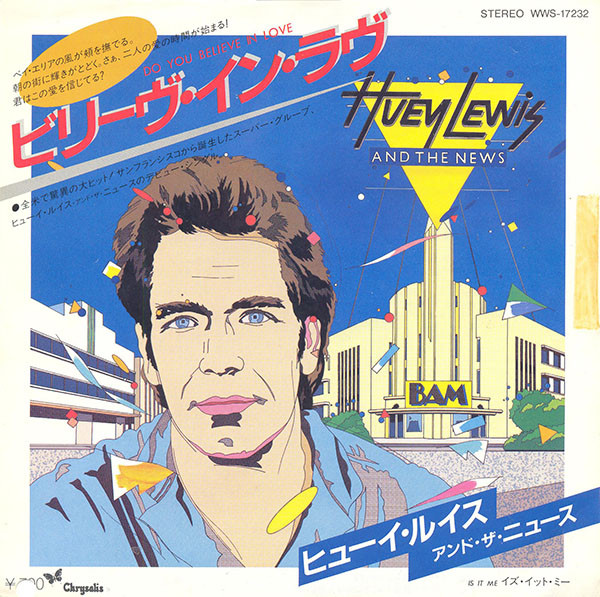
HUEY LEWIS & THE NEWS - DO YOU BELIEVE IN LOVE?


Released: January 22, 1982

Charted:  UK: #9   US: #7 


"Do You Believe in Love" marked the first top-ten hit for Huey Lewis and the News in the United States, reaching number seven in April 1982 from their album "Picture This." The song was originally written and produced by Robert John "Mutt" Lange for a British band he was working with called Supercharge. Under the title "We Both Believe In Love," Supercharge released the song on their 1979 album "Body Rhythm." Notwithstanding some success in Europe, Supercharge remained relatively unknown in America, where the album was not even released.


In 1977, Mutt Lange produced two albums for the San Francisco-based band Clover, who later served as Elvis Costello's backing band on his album "My Aim Is True" but struggled to find success in the UK. Upon returning to the US, Clover reformed as Huey Lewis & the News, releasing their first album in 1980 to little success. Despite initial reluctance to work with Lange again after their previous efforts faltered, Chrysalis Records strongly suggested they record "Do You Believe in Love?" for their second album. Even with reservations about its commercial appeal, the band complied, and the song became their breakthrough hit, setting a precedent for ensuring commercial success on subsequent albums. 


Huey Lewis & the News received significant support from MTV, which started airing their music videos in early 1982, just six months after the network launched. Unlike European artists who had been making videos for years, American artists, especially rock bands hadn't made videos before because there was no platform to show them. In San Francisco, the band had a video shot for their song "Some of My Lies Are True (Sooner or Later)" in 1980, specifically for a local cable TV show. This caught the attention of Chrysalis Records, a British label heavily invested in music videos, which signed the band and ensured that all their songs received well-produced videos. This strategy paid off handsomely, as the band quickly became popular on MTV. 


The label initially hired a fashion-focused advertising guy to direct the video, envisioning a serious production with pastel colors and heavy makeup. But upon viewing the rough cut two weeks later, Lewis was dismayed. The video lacked direction and coherence, featuring surreal scenes like the band collectively in bed with a woman. Despite Lewis' disappointment, the video screening ended with a surprising standing ovation from everyone present, including the record company and video company personnel. This response left Lewis feeling disillusioned with the video-making process, realizing that artistic merit was often overlooked in favor of superficialities. 


Consequently, this experience motivated Huey Lewis & the News to take creative control of their subsequent music videos. They decided to inject more fun and originality into their visuals, deliberately going against the conventional grain to make videos that matched their music's vibe and message more authentically. 


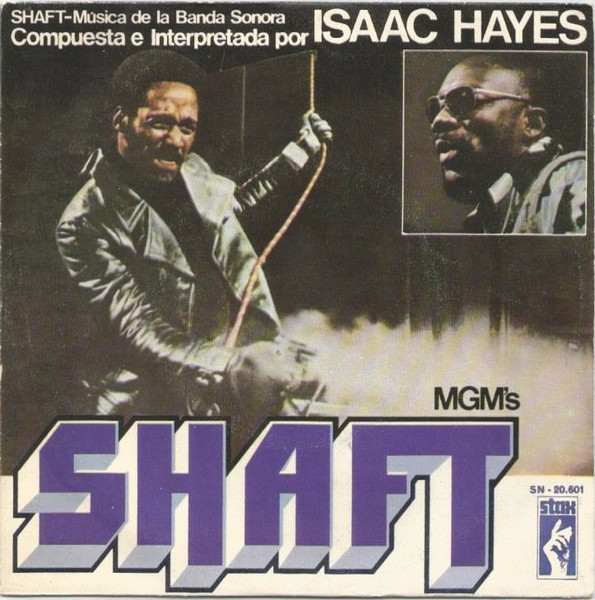
ISAAC HAYES - THEME FROM SHAFT


Estrena: 30 de setembre de 1971

Llistes: EUA: #1 (2 setmanes)   Regne Unit: #4


"Theme from Shaft", escrita i interpretada per Isaac Hayes el 1971, es va publicar com a tema principal amb estil soul i funk per a la pel·lícula "Shaft", produïda per Metro-Goldwyn-Mayer. Llançada com a senzill per l'etiqueta Enterprise de Stax Records poc després de la banda sonora de la pel·lícula, el tema va arribar al número u de les llistes Billboard Hot 100 al novembre de 1971, i també va assolir el número dos a les llistes Billboard Soul Singles.


L'any següent, "Theme from Shaft" va guanyar l'Oscar a la millor cançó original, convertint Isaac Hayes en el primer afroamericà en aconseguir aquesta distinció, o qualsevol Oscar en una categoria que no sigui d'actuació. A més, Hayes es va convertir en el primer guanyador del premi que va composar i interpretar la cançó guanyadora.


Isaac Hayes va acceptar escriure i gravar la banda sonora de "Shaft" el 1971 després que el productor de la pel·lícula li prometés una audició per al paper principal, que finalment va ser per a Richard Roundtree. Tot i que Hayes mai no va rebre l'audició promesa, va complir amb la seva part de l'acord i va crear la banda sonora icònica de la pel·lícula.


La pel·lícula presenta a Richard Roundtree com un detectiu de Harlem al qual un mafiós contracta per trobar la seva filla desapareguda. La cançó subratlla la persona de Shaft com un individu intrèpid que enfronta el perill directament i mai no s'acovarda. El caracteritza com una figura elegant i carismàtica, semblant a un James Bond negre, amb el seu atractiu de seducció cap a les dones.


"Theme from Shaft" va comptar amb Telma Hopkins i Joyce Wilson com a cantants de suport, amb Hopkins pronunciant la memorable frase "Shut Your Mouth!" Aquesta frase feta va estar associada més tard als personatges de Hopkins en els seus programes de televisió. Isaac Hayes mateix va tocar els teclats a la peça, acompanyat pel bateria Willie Hall i el baixista James Alexander del grup de funk de Memphis, The Bar-Kays. La cançó també va incloure contribucions de The Memphis Strings, The Memphis Horns, els guitarristes Charles Pitts i Michael Toles, el percussionista Gary Jones i el pianista Lester Snell. Però sense dubte, el que caracteritza la cançó és l'ús de l'efecte wah-wah a la guitarra al llarg de tota la seva durada.


ISAAC HAYES - THEME FROM SHAFT


Released: September 30, 1971

Charted:  US: #1 (2 weeks)  UK: #4 


"Theme from Shaft," penned and performed by Isaac Hayes in 1971, serves as the soul and funk-styled theme song for the film “Shaft”, produced by Metro-Goldwyn-Mayer. Released as a single by Stax Records' Enterprise label shortly after the movie's soundtrack, the theme soared to number one on the Billboard Hot 100 chart in November 1971, and also reached number two on the Billboard Soul Singles chart. 


In the subsequent year, "Theme from Shaft" clinched the Academy Award for Best Original Song, marking Isaac Hayes as the first African American to secure this accolade, or any Academy Award in a non-acting capacity. Additionally, Hayes became the first recipient of the award to both compose and perform the winning song.


Isaac Hayes agreed to write and record the “Shaft” score in 1971 after the film's producer promised him an audition for the lead role, which ultimately went to Richard Roundtree. Despite Hayes never receiving the promised audition, he fulfilled his end of the deal and created the iconic soundtrack for the film.


The film features Richard Roundtree as a Harlem detective tasked by a mobster to locate his abducted daughter. The song underscores Shaft's persona as a fearless individual who confronts danger head-on and never relents. It characterizes him as a suave and charismatic figure, akin to a black James Bond, with his allure extending to women. 


"Theme from Shaft" featured Telma Hopkins and Joyce Wilson as backup singers, with Hopkins delivering the memorable line "Shut Your Mouth!" This catchphrase later became associated with Hopkins' characters on her television shows. Isaac Hayes himself played keyboards on the track, accompanied by drummer Willie Hall and bass player James Alexander from The Bar-Kays, a Memphis funk group. The song also included contributions from The Memphis Strings, The Memphis Horns, guitarists Charles Pitts and Michael Toles, conga player Gary Jones, and electric pianist Lester Snell. But without a doubt, what characterizes the song is the use of the wah-wah effect on the guitar throughout its duration.