Total de visualitzacions de pàgina:

10.7.24


THE ROLLING STONES (HISTÒRIA D’UNA LLENGUA)


El logotip de la llengua i els llavis, dissenyat per l'artista anglès John Pasche el 1970, és un dels logos més icònics i reconeixibles de la història de la música popular. També conegut com el logotip Hot Lips o simplement el logotip dels Rolling Stones, ha aparegut a tots els àlbums i singles dels Stones des de 1970, així com al seu merchandising i escenaris.


John Pasche, llavors estudiant de disseny a la Royal College of Art de Londres, va ser contractat per Mick Jagger per crear un pòster per a la gira europea dels Rolling Stones de 1970. Insatisfets amb dissenys anteriors, el grup buscava una perspectiva nova. Els dissenys de Pasche van cridar l'atenció de Jagger a l'exposició final, i això va portar a la seva contractació. La segona versió del pòster de Pasche va ser finalment acceptada per Jagger, marcant l'inici d'una col·laboració que va donar lloc al icònic logotip de la llengua i els llavis.


Inicialment, John Pasche es va inspirar en la suggerència de Mick Jagger d'utilitzar la llengua de la deessa hindú Kali per al logotip, però Pasche va decidir no incorporar directament imatges hindús, ja que creia que es passarien de moda ràpidament. En lloc d'això, va buscar capturar l'esperit rebel del grup, la peculiar boca de Mick Jagger i les connotacions suggerents associades al rock and roll. El disseny resultant, amb la seva representació atrevida i provocadora d'una llengua i uns llavis, va combinar aquests elements alhora que era fàcilment reproducible i d’estil atemporal.


Craig Braun, propietari i director creatiu de Sound Packaging Corporation, necessitava el logotip per a la portada de l'àlbum Sticky Fingers dels Rolling Stones, però en aquell moment John Pasche només havia completat esbossos preliminars del logotip. Marshall Chess, president de Rolling Stones Records, estava a Londres i només tenia accés a un segell de goma de l'esbós de Pasche. En una solució creativa, Braun va fer que li enviessin per fax el segell, tot i que la qualitat era pobra. Després, va ampliar la silueta del logotip i va fer que un il·lustrador la refinés encara més. Malgrat que Pasche no havia acabat el seu logotip, la versió de Braun va acabar sent el logotip oficial de Rolling Stones utilitzat per a gires, merchandising i llicències. Posteriorment, Pasche va rebre una compensació pel treball original del seu logotip, tot i que no és la versió oficial associada al grup.


Els il·lustradors de Sound Packaging Corporation de Craig Braun van completar el logotip refinant el disseny, estrenyint la llengua, ajustant l'espai blanc al voltant dels llavis i la llengua, i afegint negre per ressaltar la gola. Aquesta versió modificada va ser llavors ampliada per cobrir tota la funda interior de l'edició americana de l'àlbum “Sticky Fingers”. Mentre tant, la versió original de Pasche del logotip va ser utilitzada internacionalment. El logotip va fer la seva primera aparició oficial el 26 de març de 1971, en passis VIP per a un concert dels Rolling Stones al Marquee Club, marcant la fi de la seva gira pel Regne Unit del 1971.


Pasche va rebre un pagament de només 50 lliures esterlines el 1970 per crear el logotip. Va rebre 200 lliures esterlines addicionals el 1972. El 1984, Pasche va vendre els drets d'autor del logotip a la branca comercial dels Rolling Stones, Musidor BV, per 26.000 lliures esterlines. El 2008, el Victoria and Albert Museum (V&A) de Londres va adquirir l'obra original de John Pasche del logotip de la llengua i els llavis dels Rolling Stones per 51.000 lliures esterlines. Victoria Broakes, cap d'exposicions del V&A, va comentar que el logotip de la llengua dels Rolling Stones és un dels primers exemples d'un grup utilitzant la marca i ha esdevingut potser el logotip de rock més famós del món. El 2012, la banda va encarregar a Shepard Fairey que actualitzés el logotip per al seu 50è aniversari.


THE ROLLING STONES (A TONGUE’S STORY)


The tongue and lips logo, designed by English art designer John Pasche in 1970, is one of the most iconic and recognizable logos in the history of popular music. Also known as the Hot Lips logo or simply the Rolling Stones logo, it has adorned all post-1970 albums and singles by The Rolling Stones, as well as their merchandise and stage sets.


John Pasche, then a design student at the Royal College of Art in London, was approached by Mick Jagger to create a poster for The Rolling Stones' 1970 European Tour. Unsatisfied with previous designs, the band sought a fresh perspective. Pasche's designs caught Jagger's eye at the final degree show, leading to the commission. Pasche's second version of the poster was ultimately accepted by Jagger, marking the beginning of a collaboration that would produce the iconic tongue and lips logo.


John Pasche initially drew inspiration from Mick Jagger's suggestion of using the tongue of the Hindu goddess Kali for the logo. However, Pasche decided against directly incorporating Indian imagery, as he felt it would quickly become dated. Instead, he aimed to capture the band's rebellious spirit, Mick Jagger's distinctive mouth, and the suggestive undertones associated with rock and roll. The resulting design, with its bold and provocative depiction of a tongue and lips, encapsulated these elements while also being easily reproducible and timeless in style.


Craig Braun, owner and creative director of the Sound Packaging Corporation, needed the logo for the Rolling Stones' Sticky Fingers album artwork. However, John Pasche had only completed rough sketches of the logo at the time. Marshall Chess, the president of Rolling Stones Records, was in London and had access only to a rubber stamp of Pasche's sketch. In a creative workaround, Braun had the stamp faxed to him, even though the quality was poor. He then enlarged the silhouette of the logo and had an illustrator refine it further. Despite Pasche not having finished his logo, Braun's version ultimately became the official Rolling Stones tongue and lip logo used for tours, merchandising, and licensing. Pasche later received compensation for his original logo art, although it is not the version officially associated with the band.


The illustrators at Craig Braun's Sound Packaging Corporation completed the logo by refining the design, including narrowing the tongue, adjusting the white space around the lips and tongue, and adding black to highlight the throat. This modified version was then enlarged to cover the entire inside sleeve of the American release of the Sticky Fingers album. Meanwhile, Pasche's original version of the logo was used internationally. The logo made its first official appearance on March 26, 1971, on VIP passes for a Rolling Stones concert at the Marquee Club, marking the end of their 1971 UK Tour.


Pasche received a payment of just £50 in 1970 for creating the logo. He received an additional £200 in 1972. In 1984, Pasche sold the copyright of the logo to the Rolling Stones' commercial arm, Musidor BV, for £26,000. In 2008, the Victoria and Albert Museum (V&A) in London acquired Pasche's original artwork of the Rolling Stones tongue and lips logo for £51,000. Victoria Broakes, head of exhibitions at the V&A, remarked that the Rolling Stones' tongue logo is one of the first examples of a group using branding and has become arguably the world's most famous rock logo. In 2012, the band commissioned Shepard Fairey to update the logo for their 50th anniversary.


NACHA POP - CHICA DE AYER


Publicació: 1980

Àlbum: Nacha Pop


"Chica de ayer" és una cançó d'Antonio Vega, escrita el 1977 i enregistrada el 1980 amb el seu grup Nacha Pop. Es va convertir en un himne de la movida madrilenya dels anys 80 i en un símbol dels canvis socials a Espanya. Amb el temps, ha estat versionada per diversos artistes.


El 1980, les discogràfiques van començar a signar amb els nous grups de l’emergent movida madrilenya. Hispavox va contractar Radio Futura, Alaska y Los Pegamoides, Ejecutivos Agresivos i Nacha Pop, entre d'altres. Aquell mateix any, Nacha Pop va llançar el seu àlbum debut titulat "Nacha Pop". En els primers assajos, la banda tocava "Chica de ayer" en format de balada, amb un ritme molt més lent. Quan el productor del disc, Teddy Bautista, la va escoltar, va decidir accelerar-la, donant-li la seva forma definitiva.


Finalment, el mateix 1980 es va publicar el single "Chica de ayer", escrita per Antonio Vega i cantada amb el seu grup Nacha Pop. La llegenda diu que Antonio la va escriure el 1977 mentre feia el servei militar a València, específicament a la platja de la Malva-rosa. En diverses ocasions s'ha especulat sobre l’identitat de la "chica de ayer". Antonio va mencionar en alguna entrevista que ella va ser fruit de la seva imaginació i de la seva nostàlgia per Madrid durant el seu temps a la mili. Va relatar que, després d'un conflicte amb un superior, en lloc de ser castigat, va ser enviat a "tomar viento" pel seu superior. Així, amb la seva guitarra a la platja, va compondre la cançó que es va convertir en l'himne d'una generació.


La lletra de "Chica de ayer" parla de l'amor que Antonio Vega sentia per una jove del seu barri, mencionant fins i tot el local mític de la movida madrilenya, el Pentagrama (o Penta). La cançó parla d'un amor passat que el protagonista no pot oblidar. Segons un documental, aquesta "Chica de ayer" podria haver estat Maite Echanojauregui, una dona de Bilbao amb qui Antonio va tenir una breu relació quan ell tenia 20 anys i ella 17. Maite vivia a Madrid i era dissenyadora de moda. La seva identitat va ser insinuada per Jaime Conde, el primer bateria de Nacha Pop, en referir-se a una foto en què Antonio apareixia amb una noia rossa.


NACHA POP - CHICA DE AYER


Released: 1980

Album: Nacha Pop


"Chica de ayer" is a song by Antonio Vega, written in 1977 and recorded in 1980 with his band Nacha Pop. It became an anthem of the "movida madrileña" of the 1980s and a symbol of social changes in Spain. Over time, it has been covered by various artists. The American band Gigolo Aunts also performed the song, adapting its lyrics into English with the title "The Girl from Yesterday."


The "movida madrileña" was a countercultural movement that emerged in Madrid during the early years of Spain's post-Franco transition. It spread to other provinces under the generic name "la Movida" and lasted until the mid-1980s. In 1980, record companies began signing new groups from "la movida madrileña." Hispavox signed Radio Futura, Alaska y Los Pegamoides, Ejecutivos Agresivos, and Nacha Pop, among others. That same year, Nacha Pop released their debut album titled "Nacha Pop." In their initial rehearsals, the band played "Chica de ayer" as a ballad, with a much slower rhythm. However, when the album's producer, Teddy Bautista, heard it, he decided to speed it up, giving it its final form.


Finally, in 1980, the single "Chica de ayer" was released, written by Antonio Vega and performed with his group Nacha Pop. Legend has it that Antonio wrote it in 1977 while serving in the military in Valencia, specifically on the Malvarrosa beach. There has been much speculation about the identity of the "Chica de ayer." Antonio mentioned in an interview that she was a product of his imagination and his longing for Madrid during his military service. He recounted that after a conflict with a superior, instead of being punished, he was sent away by his superior. With his guitar on the beach, he composed the song that became the anthem of a generation.


The lyrics of "Chica de ayer" talk about the love Antonio Vega felt for a young woman from his neighborhood, even mentioning the iconic "movida madrileña" venue, the Pentagrama (or Penta). The song speaks of a past love that the protagonist cannot forget. According to a documentary, that "Chica de ayer" could have been Maite Echanojauregui, a woman from Bilbao with whom Antonio had a brief relationship when he was 20 and she was 17. Maite lived in Madrid and was a fashion designer. Her identity was hinted at by Jaime Conde, the first drummer of Nacha Pop, when referring to a photo where Antonio appears with a blonde girl.


"Chica de ayer" is one of the most important songs of Spanish pop, a song that marked an era, a trend and it meant a social change for a youth who until then was oppressed by the Franco regime. Spain experienced a social and cultural change at that time and "Chica de ayer" was the anthem of that generation of young people that began to know what it was like to live feeling free. 


NACHA POP - CHICA DE AYER


Publicación: 1980

Álbum: Nacha Pop


«Chica de ayer» es una canción de Antonio Vega, escrita en 1977 y grabada en 1980 con su banda Nacha Pop. Se convirtió en un himno de la movida madrileña de los años 80 y en un símbolo de los cambios sociales en España. Con el tiempo, ha sido versionada por diversos artistas.


En 1980, las compañías discográficas comenzaron a fichar a los nuevos grupos de la "movida madrileña". Hispavox contrató a Radio Futura, Alaska y Los Pegamoides, Ejecutivos Agresivos y Nacha Pop, entre otros. Ese mismo año, Nacha Pop lanzó su álbum debut titulado "Nacha Pop". En los primeros ensayos, la banda tocaba "Chica de ayer" en formato de balada, con un ritmo mucho más lento. Sin embargo, cuando el productor del disco, Teddy Bautista, la escuchó, decidió aumentarle la velocidad, dándole su forma definitiva.


Finalmente en 1980 se publicó el single de la "Chica de ayer", escrita por Antonio Vega y cantada junto a su grupo Nacha Pop. La leyenda dice que Antonio la escribió en 1977 mientras hacía el servicio militar en Valencia, específicamente en la playa de la Malvarrosa. En diversas ocasiones se ha especulado sobre la identidad de la "chica de ayer". Antonio mencionó en alguna entrevista que ella fue fruto de su imaginación y de su añoranza por Madrid durante su tiempo en la mili. Relató que, tras un conflicto con un superior, en lugar de ser castigado, fue enviado a “tomar viento” por su superior. Así, con su guitarra en la playa, compuso la canción que se convirtió en el himno de una generación. 


La letra de "Chica de ayer" trata sobre el amor que Antonio Vega sentía por una joven de su vecindario, mencionando incluso el local mítico de la movida madrileña, el Pentagrama (o Penta). La canción habla de un amor pasado que el protagonista no puede olvidar. Según un documental, esa "Chica de ayer" podría haber sido Maite Echanojauregui, una mujer de Bilbao con la que Antonio tuvo una breve relación cuando él tenía 20 años y ella 17. Maite vivía en Madrid y era diseñadora de moda. Su identidad fue insinuada por Jaime Conde, el primer batería de Nacha Pop, al referirse a una foto en la que Antonio aparece con una chica rubia.


HUEY LEWIS & THE NEWS - THE HEART OF ROCK & ROLL


Estrenada: 10 d'abril de 1984

Llistes: Regne Unit: #49   EUA: #6


"The Heart of Rock & Roll" és una cançó de l'àlbum de 1983 "Sports", llançada com a tercer senzill el 1984. Escrita per Huey Lewis i el membre de la banda Johnny Colla, la cançó celebra la vitalitat perdurable de la música rock a tots els Estats Units. És coneguda pels seus instruments de vent enèrgics i pel seu estil optimista. El tema es va convertir en un dels 12 èxits del Top 10 als Estats Units per a la banda durant la dècada dels 80, arribant al número sis de la llista Billboard Hot 100.


Segons Lewis, la idea de la cançó va sorgir després d'un concert memorable a la Sala de Ball Agora de Cleveland. Malgrat el seu escepticisme inicial sobre l’escena de rock de Cleveland en comparació amb San Francisco, Lewis va quedar impressionat per l'entusiasme de la ciutat i la cultura del rock. En marxar de Cleveland, Lewis va observar l'skyline i va comentar que "el cor del rock and roll realment està a Cleveland", fet que va inspirar el concepte de la cançó. El tema enfatitza que mentre la indústria musical pot estar centrada a Nova York i Los Angeles, l'autèntic esperit del rock and roll prospera allà on els fans i músics apassionats es troben.


"The Heart of Rock & Roll" va tenir versions personalitzades per a diferents ciutats, introduint noms locals a la lletra per atraure directament els públics de ràdio arreu dels Estats Units. Aquesta pràctica va ser efectiva perquè locutors locals posessin la cançó i, per tant, impulsar les vendes en un moment en què la ràdio influïa fortament en la popularitat de la música. Un cas curiós és que Lewis es va resistir inicialment a personalitzar la cançó per a Canadà, negant-se a cantar sobre Halifax, creient que el cor del rock and roll no podia estar en una ciutat canadenca. No obstant, més tard va descobrir de primera mà l'animada escena musical d’Halifax durant un assaig de gira, adonant-se de la ironia i reconeixent que Halifax realment roquejava.


La producció del videoclip va afrontar nombrosos reptes, segons va recordar el director Edd Griles. El rodatge al Pont de Brooklyn a la ciutat de Nova York va durar tretze hores i després es va traslladar a Times Square. Les preses en helicòpter sobre el pont van ser obstaculitzades pel vent, requerint molt de temps per rodar les imatges. A Times Square, les condicions de rodatge eren difícils amb temperatures tan baixes com 21 graus Fahrenheit, mentre la banda, vestida amb roba lleugera, havia de suportar el fred entre preses. A més, hi va haver retards a causa que la dona de Huey Lewis esperava un nadó en aquell moment.


HUEY LEWIS & THE NEWS - THE HEART OF ROCK & ROLL


Released: April 10, 1984

Charted:  UK: #49  US: #6 


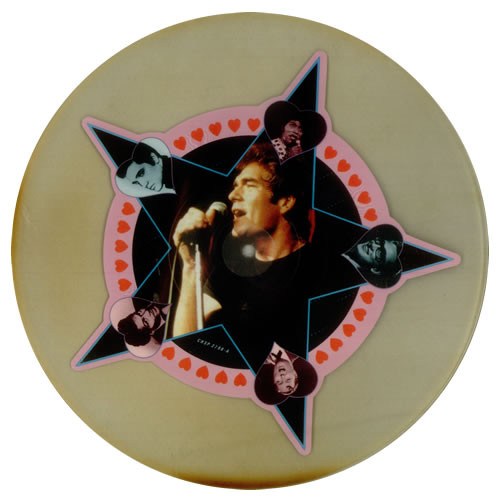
"The Heart of Rock & Roll" is a lively song from the 1983 album “Sports”, released as its third single in 1984. Written by Huey Lewis and band member Johnny Colla, the song celebrates the enduring vitality of rock music across America. It's known for its energetic horns and upbeat style. The track became one of the band's 12 US Top 10 hits during the 1980s, peaking at number six on the Billboard Hot 100 chart.


According to Lewis, the idea for the song came after a memorable gig at the Agora Ballroom in Cleveland. Regardless of initial skepticism about Cleveland's rock scene compared to San Francisco, Lewis was impressed by the city's enthusiasm and rock culture. As the band left Cleveland, Lewis observed the skyline and remarked that "the heart of rock and roll really is in Cleveland," which sparked the song's concept. The track emphasizes that while the music industry may be centered in New York and LA, true rock and roll spirit thrives wherever passionate fans and musicians come together.


"The Heart of Rock & Roll" featured customized versions for different cities, inserting local names into the lyrics to appeal directly to radio audiences across the United States. This practice was effective in driving airplay and consequently boosting sales during a time when radio play heavily influenced music popularity. Lewis initially resisted customizing the song for Canada, refusing to sing about Halifax, believing the heart of rock and roll couldn't be in a Canadian city. But instead of that he later discovered Halifax's vibrant music scene firsthand during a tour rehearsal, realizing the irony and acknowledging that Halifax did indeed rock.

The production of the music video faced numerous challenges, as recalled by director Edd Griles. Filming spanned 13 hours on the Brooklyn Bridge in New York City and later moved to Times Square. The helicopter shots over the bridge were hindered by wind, requiring extensive time to capture the footage. In Times Square, filming conditions were harsh with temperatures as low as 21 degrees Fahrenheit, while the band, dressed in light clothing, had to endure the cold between takes. Additionally, delays occurred due to Huey Lewis's wife expecting a baby at the time.