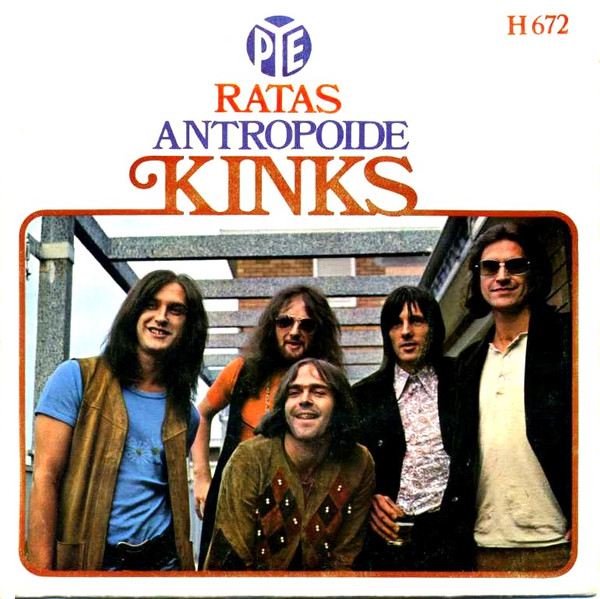
“Apeman” is a 1970 single by London’s The Kinks. It was written and produced by Kinks frontman Ray Davies and lifted from their album “Lola Versus Powerman and the Moneygoround, Part One”. The song was the follow-up to the smash hit “Lola”, and although it failed to make the American top 40, it was a hit in much of the rest of the world.
The song was written by Davies while on a family trip to Cornwall in England in 1970. In the song, Davies opines that he wants to leave the modern world behind in favour of returning to nature, living in a “distant shore and make like an apeman”. The song despairs of the troubles with modern life singing “I don’t feel safe in this world no more. I don’t want to die in a nuclear war” and wanting to “Sit in the trees and eat banana’s all day, just like an apeman”
The song also caused some controversy over its soft calypso beat, and Davies’ slightly accented delivery being frowned upon as cultural appropriation in today’s more politically correct times. There is also a rather controversial misheard lyric in the song, which had to be re-recorded to make the corrects words more audible. “The air pollution is a-fogging up my eyes” really did sound like a different word to “Fogging”.
A promotional video was filmed at Hampstead Heath, a location also used for the cover of The Kinks' album "The Kinks Are the Village Green Preservation Society." In the video, the band's new pianist John Gosling appeared dressed as an ape. Guitarist Dave Davies commented on the video's creation, attributing the idea to manager Grenville Collins, who suggested incorporating piano and keyboards into the band's lineup. Gosling, excited about joining the band, quickly found himself in unusual roles such as Lola for the song and an ape for "Apeman."
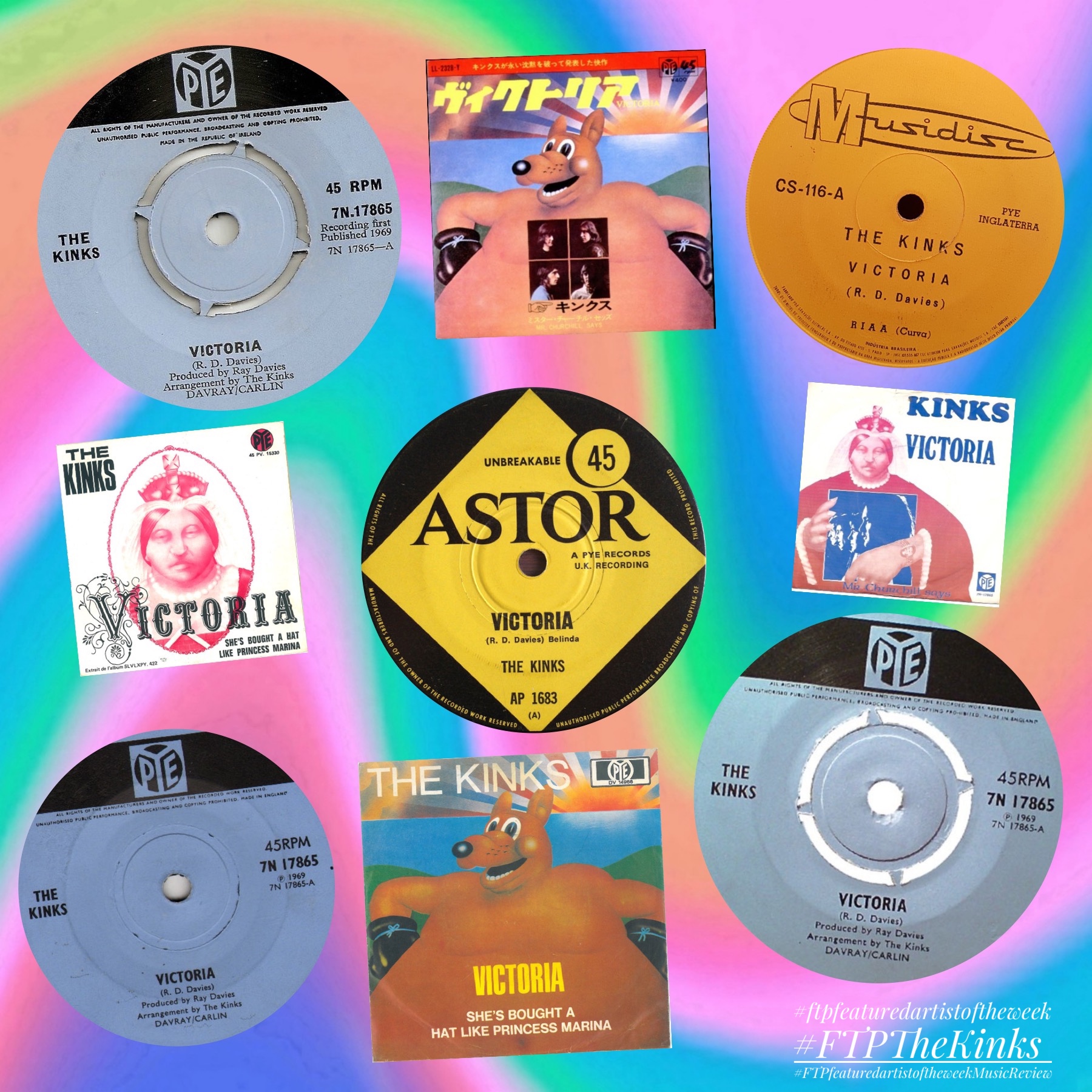
THE KINKS - VICTORIA
Released: October 15, 1969
Charted: UK: #33 US: #62
"Victoria" is a song written by Ray Davies serving as the opening track on their 1969 concept album "Arthur (Or the Decline and Fall of the British Empire)." Originally intended as the soundtrack for a British TV play, the project was cancelled due to financial issues. Regardless this setback, Davies' music was recorded by the Kinks and released as a concept album, exploring themes of British identity and history through the character of Arthur.
This is a satirical song that blends English nostalgia with social commentary on Queen Victoria's era and the British Empire. Davies combines the harsh realities of 19th-century life in Britain, including societal repression and economic inequality with the idealized image of Queen Victoria's rule and the Empire's paternalistic aspirations. The lyrics also reflect the admiration of the working-class for their queen and country, expressing a sense of pride and patriotism despite their struggles.
"Victoria" showcases a blend of musical styles that characterize Ray’s songwriting. The song features a prominent electric blues guitar riff, which gives it a thumping rock edge throughout. Musically, it balances between the nostalgic elements of music hall traditions and the rock influences prevalent in Davies' work.
The track's structure includes a memorable "Land of hope and gloria" bridge that enhances its triumphant feel. This section contrasts with the straightforward rock riff of the verses and choruses, incorporating raucous background vocals from Dave Davies and building to an exultant climax with the addition of brass instrumentation in the production.
THE KINKS - THE VILLAGE GREEN PRESERVATION SOCIETY
Released: November 22, 1968
Album: The Kinks Are the Village Green Preservation Society
"The Village Green Preservation Society" is a song from the 1968 album "The Kinks Are the Village Green Preservation Society." Written and sung by Ray Davies, the song nostalgically reflects on preserving British traditions and values. It serves as the album's opening track, setting the stage for its themes, and has been described by Davies as the LP's "national anthem."
Ray Davies was inspired to write it after hearing someone comment that the Kinks had been preserving "nice things from the past." The song was written and recorded in August 1968 as the band's sessions for their next album were coming to a close. Initially dissatisfied with the working title "Village Green" for the album, Ray intended "The Village Green Preservation Society" to be the new title track. Musically, the song combines pop and rock elements with influences from English music hall, reflecting Ray's ongoing fascination with the genre.
Ray Davies includes references to various fictional characters from his childhood in the song such as Old Mother Riley and Mrs. Mopp. These characters evoke nostalgic memories for Davies, reflecting a time when he enjoyed listening to radio programs like "Round The Horne" on the BBC Light Programme. In an interview with Q magazine, Davies explained that these characters were ones he admired as a child or that his family could relate to.
Ray Davies clarified that the inspiration behind "The Village Green Preservation Society" and the album's depiction of small English town innocence was not derived from the Kinks' performances in rustic Devon, as some critics speculated. Instead, Davies explained to The Independent on June 19, 2009, that the album's themes were rooted in his own childhood memories growing up in London. North London, particularly his neighborhood of Fortis Green, served as his "village green" equivalent, with places like Waterlow Park and its lake playing significant roles in his upbringing. Davies reminisced about singing in the choir at St James's Primary School until the age of ten, after which he intentionally trained himself to sing out of tune to fit in with a group called the Crooners. His singing teacher, Mrs. Lewis, humorously remarked, "Never mind, Davies - I hear crooners are making a lot of money these days."
THE KINKS - LOLA
Publicació: 12 de juny de 1970
Llistes: Regne Unit: #2 EUA: #9
"Lola", escrita per Ray Davies per al seu àlbum de 1970 "Lola Versus Powerman and the Moneygoround, Part One", narra un encontre romàntic en un bar de Soho entre un jove i Lola, que pot ser una dona trans o un travesti. Llançada com a senzill al juny de 1970, va assolir un gran èxit comercial, arribant al número dos a la llista de senzills del Regne Unit i al número nou al Billboard Hot 100 als Estats Units.
Ray Davies va escriure la lletra basant-se en una experiència amb el seu manager, qui va ballar amb algú en un club de París, pensant equivocadament que era una dona fins que la llum del dia va revelar el bigoti. Davies va descriure "Lola" com una cançó d'amor on el protagonista s'enamora d'un travesti, amb la consciència que la relació probablement no durarà a causa del malentès. La narrativa de la cançó reflecteix aquest encontre, embellit creativament per a un impacte líric.
"Lola" va suscitar especulacions, especialment després d'un article de Rolling Stone el 2004, que suggeria que estava inspirada en Candy Darling, una actriu transgènere que es va rumorejar breument que havia sortit amb el cantant principal dels Kinks, Ray Davies. Candy Darling també és mencionada a "Walk On The Wild Side" de Lou Reed. Malgrat la possible polèmica pel seu tema, Davies va explicar en una entrevista amb Rolling Stone el 2014 que la narrativa de la cançó estava suficientment amagada per evitar discusions. Frases com "ella es va despertar al costat meu" despistaven subtilment els oients, permetent que la història es desenvolupés sense revelar obertament la seva temàtica, cosa que Davies considerava més artística en comparació amb un títol més directe com "I Dated a Drag Queen" (Vaig sortir amb una drag queen).
En un article de Record Mirror titulat "Sex Change Record: Kink Speaks", Ray Davies va abordar la qüestió afirmant: "Realment no importa quin sexe tingui Lola, crec que ella està bé". Algunes emissores de ràdio van començar a acabar la pista abans que es revelés la identitat biològica de Lola. El novembre de 1970, diverses emissores de ràdio a Austràlia la van prohibir a causa del seu polèmic tema, però algunes emissores van reprendre la cançó després d'editar una frase clau, fent que sembli que el disc hagués saltat per evitar la frase "I'm glad I'm a man and so's Lola" (Estic content de ser home i Lola també).
Ray Davies també es va afrontar a problemes amb la BBC, que es va negar a radiar "Lola" a causa d'una frase que mencionava Coca-Cola, cosa que plantejava un problema en fer referència a un producte comercial. Per resoldre això, Davies va volar ràpidament de Nova York a Londres per canviar la frase a "cherry cola". Aquest ajust va satisfer les normatives de la BBC, permetent que la cançó es pogués retransmetre.
El 1980, una versió en directe de l'àlbum "One for the Road" es va llançar com a single als Estats Units i diversos països europeus. Sorprenentment, va ser un èxit arribant al número 1 als Països Baixos, assolint l'èxit de la versió original d'estudi que també havia encapçalat les llistes allà el 1970.
THE KINKS - LOLA
Released: June 12, 1970
Charted: UK: #2 US: #9
"Lola", penned by Ray Davies for their 1970 album "Lola Versus Powerman and the Moneygoround, Part One," depicts a narrative of a romantic encounter in a Soho bar between a young man and Lola, who may be a trans woman or cross-dresser. Released as a single in June 1970, it achieved significant commercial success, reaching number two on the UK Singles Chart and number nine on the Billboard Hot 100 in the United States.
Ray Davies wrote the lyrics based on an experience involving their manager, who danced with someone at a club in Paris, mistakenly believing them to be a woman until stubble became visible in daylight. Davies described "Lola" as a love song where the protagonist falls for a transvestite, with the realization that the relationship is unlikely to endure due to misunderstanding. The song's narrative reflects this encounter, creatively embellished for lyrical impact.
"Lola" sparked speculation, especially after a 2004 Rolling Stone article, that it was inspired by Candy Darling, a transgender actress briefly rumored to have dated Kinks lead singer Ray Davies. Candy Darling is also referenced in Lou Reed's "Walk On The Wild Side." Despite the potential controversy of its subject matter, Davies explained in a 2014 interview with Rolling Stone that the song's narrative was crafted ambiguously enough to avoid direct scrutiny. Phrases like "she woke up next to me" subtly misled listeners, allowing the story to unfold without overtly revealing its themes, which Davies believed was a more artful approach compared to a more direct title like "I Dated a Drag Queen."
"Lola" stirred controversy due to its lyrics. In a Record Mirror article titled "Sex Change Record: Kink Speaks", Ray Davies addressed the issue by stating, "It really doesn't matter what sex Lola is, I think she's all right". Some radio stations preemptively faded out the track before the implications of Lola's biological sex were revealed. On November 1970, several radio stations in Australia banned "Lola" due to its controversial subject matter, but some stations eventually resumed playing the song after editing out a key line, making it sound like the record had skipped to avoid the phrase "I'm glad I'm a man and so's Lola".
Ray Davies also encountered a hurdle with the BBC when they refused to play "Lola" due to a lyric mentioning Coca-Cola, which posed a commercial reference issue. To resolve this, Davies promptly flew from New York to London to alter the line to "cherry cola." This adjustment satisfied the BBC's regulations, enabling the song to be broadcasted.
In 1980, a live version from the album "One for the Road" was released as a single in the US and various European countries. Surprisingly, it became a minor hit, reaching number 1 in the Netherlands, mirroring the success of the original studio version which had also topped the charts there in 1970.
20.8.24
THE KINKS - COME DANCING
Released: November 19, 1982
Charted: UK: #12 US: #6
"Come Dancing" is a song penned by Ray Davies and featured on their 1983 album “State of Confusion”. The track is a tribute to Davies' sister Rene, who passed away suddenly while dancing at a local dance hall. The lyrics, sung from the perspective of a working-class boy from East London, reminisce about his sister's joyous nights out at the Palais dance hall.
When 'Come Dancing' was initially released as a single in the UK in November 1982, it did not chart. Arista Records founder Clive Davis had concerns about its English-centric theme for the US market, but despite this, it was released there in April 1983. Surprisingly, the song became a major success in the US, reaching number six on the Hot 100 chart. The promotional music video, directed by Julien Temple and heavily aired on MTV, played a crucial role in its popularity. The song's US success prompted a re-release in the UK, where it reached number 12.
Ray Davies wrote "Come Dancing" as a nostalgic tribute to his older sisters, who enjoyed dancing. Initially, he stated that the song was about Gwen, his sixth sister who was seven years older than him. Later, Davies revised this to say the song was inspired by Rene, who was 18 years older. Rene had a tumultuous life, including an unhappy marriage to a Canadian soldier, which led her to frequently return to her childhood home in Muswell Hill, London. Tragically, Rene suffered a fatal heart attack while dancing at the Lyceum Ballroom in 1957, on the same day Ray received his first guitar from her as a birthday gift. "Come Dancing" was written 25 years later as a poignant memorial to Rene, celebrating her love for dancing.
When "Come Dancing" peaked at #6 on the US charts on July 16, 1983, it coincided with a notable presence of British acts dominating the Top 40. This phenomenon led to some journalists dubbing it the "Second British Invasion." The Kinks, originally part of the first British Invasion in the 1960s, contributed to this resurgence.