Total de visualitzacions de pàgina:

24.8.24


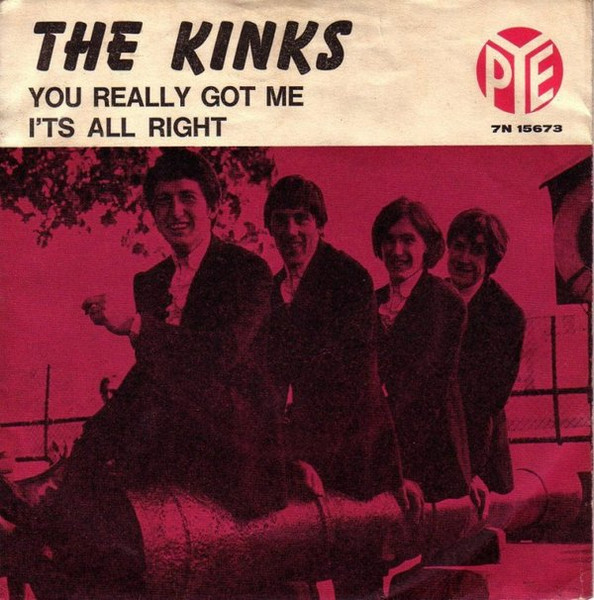
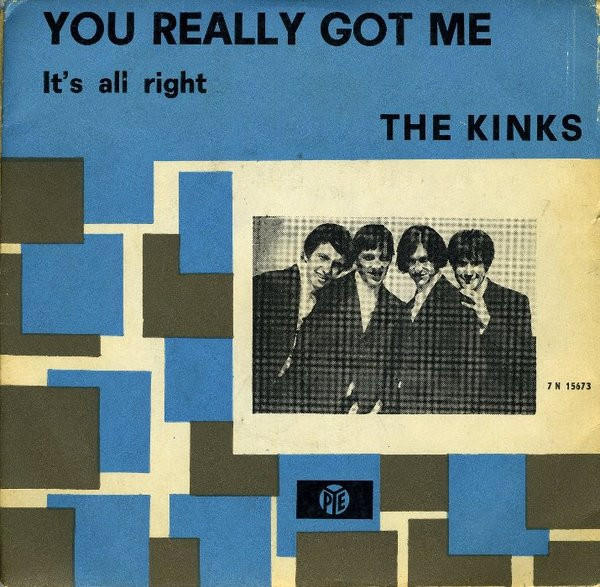
THE KINKS - YOU REALLY GOT ME


Estrenada: 4 d'agost de 1964

Llistes: Regne Unit: #1 (2 setmanes)  EUA: #7


"You Really Got Me" és una cançó clàssica de rock escrita per Ray Davies. Inicialment influïda pels músics de blues, va ser enregistrada originalment en estil blues. Es van produir dues versions, sent la segona la triada per al llançament final com a single. Va ser publicada per Pye Records al Regne Unit l’agost de 1964, sent el tercer senzill dels Kinks. Ràpidament va arribar al número u a la llista de Record Retailer el mes següent, mantenint-se en aquesta posició durant dues setmanes. Llançada als Estats Units el 2 de setembre per Reprise Records, es va convertir en un gran èxit per a la banda, arribant al número set al Billboard Hot 100 més tard aquell mateix any. Posteriorment va ser inclosa al seu àlbum debut, "Kinks".


La versió final enregistrada al juliol de 1964, va comptar amb Ray Davies a la veu principal, Dave Davies a la guitarra i Pete Quaife al baix. Inicialment, la banda no tenia bateria, així que el productor Shel Talmy va contractar el músic de sessió Bobby Graham per a la gravació inicial. Cap al juliol, Mick Avory ja s'havia unit com a bateria, però Talmy dubtava d'ell i va fer que Avory toqués el tamborí mentre Graham continuava amb la bateria. Altres músics a la cançó van ser Arthur Greenslade al piano i Jon Lord, que més tard es va fer famós amb Deep Purple, contribuint amb els teclats.


Ray Davies va escriure la lletra després de quedar captivat per una noia ballant en un club. La cançó captura la indicisió del protagonista que està tan impressionat per la presència de la noia que gairebé no pot articular els seus sentiments. Davies va recordar en una entrevista amb Rolling Stone que la inspiració li va venir en observar una noia ballant i quedar impressionat per la seva atracció, incapaç d'expressar-se coherentment. Va detallar-ho més en una entrevista amb la revista Q, recordant una noia específica que va observar en un club de Piccadilly, descrivint els seus trets i l'efecte que tenia sobre ell. Tot i no conèixer-la mai, Davies va escriure "You Really Got Me" amb ella en ment.


Dave Davies va aconseguir el so de guitarra brut a través de la modificació del con de l’altaveu del seu amplificador amb una fulla de ganivet. Aquesta acció, fruit de la frustració per les circumstàncies personals, va crear l'efecte de "fuzz", que es va convertir en icònic en el rock. Dave, enfadat després que la seva nòvia Sue Sheehan es quedés embarassada i afrontés l'oposició dels seus pares per casar-se, va dirigir la seva ira de la problemàtica cap a l’amplificador Elpico a la seva habitació al nord de Londres. Al estudis, l'Elpico modificat es va connectar a un altre amplificador, possiblement un Vox AC30 o AC10, creant el so distorsionat que va revolucionar la música rock. Després de la seva separació, Sue Sheehan va donar a llum a la seva filla Tracey, que no va conèixer el seu pare fins al 1993.


El guitarrista principal Dave Davies va interpretar el memorable solo de guitarra. Tot i els rumors que suggerien que Jimmy Page va tocar la guitarra en aquesta pista, els Kinks i el productor Shel Talmy han negat constantment aquesta afirmació. Segons Talmy, mentre que Page va contribuir amb la guitarra rítmica en algunes de les pistes de l'àlbum, no va tocar a "You Really Got Me". La decisió de portar a Page per a la guitarra rítmica va sorgir de la preferència de Ray Davies de no cantar i tocar la guitarra simultàniament durant certes sessions d'enregistrament. Posteriorment, Jimmy Page va confirmar que no va tocar el solo.


Ray Davies va reflexionar sobre els primers dies dels Kinks i l'impacte del seu èxit amb "You Really Got Me" en una entrevista de 1981 amb la revista Creem. Va assenyalar que hi havia una gran gelosia entre els seus contemporanis quan els Kinks van aconseguir l'èxit amb la cançó. Davies va mencionar que en aquell moment, moltes bandes, incloses The Yardbirds i The Rolling Stones, estaven lluitant per tenir un número u però encara no ho havien aconseguit. Va recordar la lluita inicial que els Kinks van tenir per aconseguir un contracte discogràfic, sent rebutjats per diverses grans discogràfiques abans de trobar l'èxit amb "You Really Got Me".


Després de l'èxit de "You Really Got Me", els Kinks van llançar "All Day And All Of The Night", que Davies va descriure com una reescriptura essencial de la primera però també com un èxit per dret propi.


THE KINKS - YOU REALLY GOT ME


Released: August 4, 1964

Charted:  UK: #1 (2 weeks)  US: #7 


"You Really Got Me" is a classic rock song penned by Ray Davies. Initially influenced by blues musicians, the song was originally recorded in a blues style. Two versions were produced, with the second being chosen for the final single release.  It was released by Pye Records in the UK on August 1964, marking the Kinks' third single. It quickly rose to number one on the Record Retailer chart the following month, maintaining its top position for two weeks. Released in the US on September 2 by Reprise Records, the song became the band's breakthrough hit, reaching number seven on the Billboard Hot 100 later that year. The song was subsequently included on their debut album, "Kinks."


The final version of "You Really Got Me" recorded in July 1964, featured Ray Davies on lead vocals, Dave Davies on guitar, and Pete Quaife on bass. Originally, the band didn't have a drummer, so producer Shel Talmy enlisted session musician Bobby Graham for the initial recording. By July, Mick Avory had joined as the drummer, but Talmy had doubts about him and had Avory play tambourine while Graham continued on drums. Additional musicians on the track included Arthur Greenslade on piano and Jon Lord, who later became famous with Deep Purple, contributing on keyboards. 


Ray Davies wrote the lyrics after being captivated by a girl dancing in a club. The song captures the raw, primal feeling of infatuation, where the protagonist is so overwhelmed by the girl's presence that he can barely articulate his feelings. Davies recalled in a interview with Rolling Stone that the inspiration came from observing a girl dancing and being struck by her allure, unable to express himself coherently. He further elaborated in a interview with Q magazine, reminiscing about a specific girl he noticed at a Piccadilly club, describing her features and the effect she had on him. Despite never meeting her, Davies wrote "You Really Got Me" with her in mind.


Dave Davies achieved the groundbreaking dirty guitar soundby slashing the speaker cone of his amplifier with a razor blade. This act, born out of frustration over personal circumstances, created the "fuzz" effect, which became iconic in rock music. Dave, upset after his girlfriend Sue Sheehan became pregnant and faced opposition to their marriage from their parents, directed his anger at his problematic Elpico amp in his North London bedroom. In the studio, the modified Elpico was connected to another amp, possibly a Vox AC30 or AC10, creating the distorted sound that revolutionized rock music. After their separation, Sue Sheehan gave birth to their daughter Tracey, who didn't meet her father until 1993. 


Lead guitarist Dave Davies delivered the memorable guitar solo. Despite rumors suggesting that Jimmy Page played guitar on this track, the Kinks and producer Shel Talmy have consistently denied this claim. According to Talmy, while Page did contribute rhythm guitar on some of the album tracks, he did not play on "You Really Got Me." The decision to bring in Page for rhythm guitar stemmed from Ray Davies' preference not to sing and play guitar simultaneously during certain recording sessions. Later Jimmy Page confirmed he did not perform the solo.


Ray Davies reflected on the early days of The Kinks and the impact of their breakthrough hit, "You Really Got Me," in a 1981 interview with Creem magazine. He noted that there was significant jealousy among their contemporaries when The Kinks achieved success with the song. Davies mentioned that at the time, many bands including The Yardbirds and The Rolling Stones were striving for a number one R&B record but hadn't quite achieved it. He recalled the initial struggle The Kinks faced in securing a recording deal, being turned down by several major labels before finding success with "You Really Got Me."


Following the success of "You Really Got Me," The Kinks released "All Day And All Of The Night," which Davies described as essentially a re-write of the former but also a hit in its own right.




23.8.24


RADIO FUTURA - LA NEGRA FLOR


Publicada: Març de 1987

Àlbum: La canción de Juan Perro


“La negra flor” és la cançó que tanca la cara A de l’àlbum “La canción de Juan Perro” de Radio Futura publicat al Març de 1987. Posteriorment es va publicar en single amb “El Hombre de papel” a la cara B. Aquest àlbum, actualment considerat com el millor de Radio Futura, és recordat com el primer treball de rock llatí, que va marcar el camí per a molts grups espanyols actuals. A més, és el disc amb el qual el grup es sent més satisfet.


La relació especial entre Radio Futura i Barcelona es cristal·litza a la cançó "La negra flor". El compositor Santiago Auserón afirma que és una de les seves lletres favorites. La va escriure en un modest hotel de les Rambles, inspirat per les impressions que va captar mentre passejava: els rostres femenins de la prostitució, els quioscos de flors i la llum de la ciutat. Auserón descriu que, en escriure la cançó, va tenir una revelació i es va sentir com un humil hereu de l'estil de composició de Serrat.


Després de l’èxit comercial de l‘àlbum “La canción de Juan Perro” Radio Futura volien gravar un disc en directe però la seva discogràfica volia un disc de cançons noves, per tant mentre negociaven amb els executius, la banda va fer una remescla de la cançó “La negra flor” amb forma de rap titulada “Paseo con la negra flor” que es va publicar con a cara B del maxi-single de la cançó original. Aquesta va ser la primera cançó de rap en espanyol i va tenir un gran èxit tant de vendes com d’acceptació entre la crítica i el públic. Aquesta remescla va tornar a posar el grup el cim de la fama en els convulsos temps que estaven travessant tant a nivell personal com amb la disputa amb la seva discogràfica. 


RADIO FUTURA - LA NEGRA FLOR


Released: March 1987

Album: La canción de Juan Perro


"La negra flor" is the song that closes Side A of Radio Futura's album "La canción de Juan Perro," released in March 1987. It was later released as a single with "El Hombre de papel" on the B-side. This album, currently considered Radio Futura's best, is remembered as the first Latin rock work, which paved the way for many current Spanish bands. Additionally, it is the album with which the group feels most satisfied.


The special relationship between Radio Futura and Barcelona is crystallized in the song "La negra flor." The songwriter Santiago Auserón states that it is one of his favorite lyrics. He wrote it in a modest hotel on Las Ramblas, inspired by the impressions he captured while strolling: the female faces of prostitution, the flower kiosks, and the city’s light. Auserón describes that, while writing the song, he had a revelation and felt like a humble heir to Serrat's songwriting style.


After the commercial success of the album "La canción de Juan Perro," Radio Futura wanted to record a live album, but their record label wanted an album of new songs. While negotiating with the executives, the band remixed the song "La negra flor" into a rap version titled "Paseo con la negra flor," which was released as the B-side of the original song's 12 inch. This was the first rap song in Spanish and was a great success both in sales and in acceptance by critics and the public. This remix brought the group back to the peak of fame during the turbulent times they were experiencing, both personally and in their dispute with their record label.


PET SHOP BOYS - MY OCTOBER SYMPHONY


Released: October 22, 1990 

Album: Behavior


"My October Symphony" is the sixth track on the Pet shop Boys’ 1990 album “Behavior” produced by the boys and Harold Faltermeyer. The song is a reflection on the personal and existential crisis faced by an artist or individual when the foundations of their beliefs and identity are shaken by significant societal changes. Neil Tennant's lyrical narrative delves into the turmoil experienced by a Russian composer who had dedicated his life and work to the ideals of the October Revolution, only to find himself bewildered and betrayed by the collapse of communism.


The song explores themes of disillusionment, questioning the relevance and meaning of the composer's work in the aftermath of profound political and social transformations. The composer grapples with the dilemma of whether to revise or rewrite his symphony, symbolizing a profound reevaluation of his life's purpose and creative endeavors. The reference to October alludes to the 1917 russian October Revolution.


Axl Rose, the frontman of Guns and Roses, claimed that the group's hit single "November Rain" was influenced by "My October Symphony" (as well as by "Being Boring"), which has probably been one of the most unexpected influences of Pet Shop Boys on other artists, given the disparity of styles. Rose confessed: "I used to hate them. I was the guy at the MTV Awards yelling, 'The Pet Shop Boys suck.'" The musician recalled his famous protest at the 1986 MTV Awards when, in a moment of silence, he expressed his discontent. However, his attitude changed over time, and he embarked on a journey of musical discovery. Axl explained: "When I really hate someone, I buy all their records to try to find out why. And I realized that I really liked them."


"My October Symphony", which could be considered the reverse of "Being Boring" as it contained a political message about the fall of the Soviet bloc, is undoubtedly one of his best lyrics and one of the most outstanding songs on the album, although little known to the big audience.


On “Behavior” the Pet Shop Boys wanted to make their work more personal and they succeeded. Neil himself said it in an interview: "For many we were a dance factory, but now they can see that we can also do things that are far from musical fast-food."

They had the help of exceptional collaborators such as Johnny Marr (ex-Smiths), who contributed his guitar in a discreet background, and Angelo Badalamenti, to whom we owe the orchestrations that sound above mid-tempo. Critics applauded the work, the public not so much, but perhaps it’s their best album. 


A piece of advice: listen to the work today and we will sense something colossal in it because, until that moment, PSB electronics had never sounded so emotional. It must also be said that no entire album of his could achieve the harmonic and poetic perfection that this one gives off. Ten songs in a row where not even a second is left.


KENNY ROGERS - COWARD OF THE COUNTY


Estrena: 12 de novembre de 1979

Llistes: EUA: #3   Regne Unit: #1 (2 setmanes)


"Coward of the County" és una cançó de Kenny Rogers, llançada al novembre de 1979 des del seu àlbum "Kenny". Escrita per Roger Bowling i Billy Edd Wheeler, es va convertir en un èxit significatiu. La cançó va encapçalar les llistes de música country de Billboard i va arribar al número tres a la llista Hot 100. També va assolir la primera posició a la llista de singles de Cash Box i va ser un èxit dins dels Top 10 en diversos països arreu del món, ocupant els primers llocs a Canadà, el Regne Unit i Irlanda.


"Coward of the County" narra la història de Tommy, a qui el seu pare aconsella evitar  la violència i adoptar una postura pacifista, guanyant-se el sobrenom de "Coward of the County" (El Covard del Comtat). Quan la seva nòvia és agredida per tres germans, Tommy els enfronta en un bar i defensa el seu honor, donant-los una lliçó. La popularitat de la cançó va portar a la seva adaptació per a una pel·lícula de televisió el 1981, on Rogers va actuar i l va cantar.


Billy Edd Wheeler, conegut pels seus èxits anteriors com a compositor, va col·laborar amb Roger Bowling el 1979 després d'una trucada de Bowling, qui també va coescriure l'èxit de Kenny Rogers, "Lucille". El seu objectiu era crear una cançó amb una narrativa potent, inicialment inspirada en les seves reflexions sobre "My Fair Lady", però el punt de vista va canviar quan Bowling va proposar el títol "Coward of the County", desencadenant la idea d'explorar per què un personatge podria guanyar aquest sobrenom. Van desenvolupar la història de Tommy, el pare del qual mor a la presó, transmetent un missatge de pacifisme al seu fill abans de morir. Inicialment van considerar elements de trama més complexos amb escenes de l'església o visions, però van simplificar la narrativa amb Tommy comunicant-se amb el seu pare en baixar el seu retrat de la xemeneia. La cançó es va completar en un cap de setmana, i després de fer una demo, va ser presentada a Kenny Rogers, qui finalment la va gravar i llançar.


La cançó presenta uns antagonistes anomenats els "Gatlin Boys", coincidint casualment amb el nom del popular trio de música country, Larry Gatlin and the Gatlin Brothers. Larry va expressar malestar pel fet que s'utilitzés el seu nom a la cançó, ja que va portar a acusacions infundades en contra d’ells. Els autors van afirmar que van triar el nom simplement pel seu so i van negar qualsevol connexió amb els autèntics germans Gatlin. Tot i considerar noms alternatius com els "Barlow Boys", van optar pels "Gatlin Boys" per la seva aparença de duresa i per encaixar amb la narrativa de la cançó.


KENNY ROGERS - COWARD OF THE COUNTY


Released: November 12, 1979

Charted:  US: #3   UK: #1 (2 weeks)


"Coward of the County" is a song by Kenny Rogers, released in November 1979 from his album "Kenny." Written by Roger Bowling and Billy Edd Wheeler, it became a significant crossover hit. The song topped the Billboard Country chart and reached number three on the Hot 100 chart. It also achieved the number one position on the Cash Box singles chart and was a Top 10 hit in various countries globally, topping the charts in Canada, the UK, and Ireland.


"Coward of the County" tells the story of Tommy, whose father advises him to avoid violence and adopt a pacifist stance, earning him the nickname "Coward of the County", but when his girlfriend is assaulted by three brothers, Tommy confronts them in a bar and stands up for her, teaching them a lesson. The popularity of the song led to its adaptation into a TV movie in 1981, where Rogers acted and performed the song. 


Billy Edd Wheeler, renowned for his earlier successes as a songwriter, collaborated with Roger Bowling in 1979 following a call from Bowling, who co-wrote Kenny Rogers' hit "Lucille." Their goal was to create a narrative-driven song, initially inspired by Wheeler's thoughts of "My Fair Lady", but the direction shifted when Bowling proposed the evocative title "Coward of the County," sparking the idea of exploring why a character might earn such a label. They crafted the story of Tommy, whose father dies in prison, imparting a message of pacifism before passing away. They initially considered complex plot elements involving church scenes or visions, but simplified the narrative to Tommy communicating with his father by taking down his picture from the mantle. The song was completed over a weekend, and after making a demo, it was pitched to Kenny Rogers, who ultimately recorded and released it.


The song features antagonists named the "Gatlin Boys," coincidentally sharing a name with the popular country music trio, Larry Gatlin and the Gatlin Brothers. Larry expressed discomfort with the use of their name in the song, as it led to unwarranted accusations against them. The songwriters claimed they chose the name simply for its sound and denied any connection to the real Gatlin brothers. Despite considering alternative names like the "Barlow Boys," they settled on "Gatlin Boys" for its perceived grit and fitting the narrative of the song.


THE KINKS - TILL THE END OF THE DAY / WHERE HAVE ALL THE GOOD TIMES GONE


Released: November 19, 1965

Charted:  UK: #8  US: #50 


"Till the End of the Day" by the Kinks, written by Ray Davies, was released as a single in 1965 and later included on their album *The Kink Kontroversy*. It features a prominent power chord structure typical of the band's early hits and enjoyed commercial success, reaching number eight on the UK Singles Chart and number 50 on the US Billboard Hot 100. 


During the mid-1960s, The Kinks experienced a rapid rise to fame starting with their hit "You Really Got Me." Notwithstanding their success, the band faced immense pressure from constant touring, recording demands, and promotional activities that strained their cohesion. Ray Davies was also contending with personal challenges—he was newly married and became a father to his daughter Louisa in May 1965. The responsibilities of fatherhood exacerbated his stress, leading to a period of depression. 


Regardless of this turmoil, Davies returned to work and wrote "Till the End of the Day," a seemingly upbeat song intended to project a façade of well-being. Davies later revealed that the song masked his true emotional state, reflecting the tension between his personal life and the demands of maintaining a successful music career. Ray Davies reflected on the meaning behind "Till the End of the Day," describing it as a song about freedom and escape from confinement or oppression. 


"Where Have All the Good Times Gone" was initially written by Ray Davies for the Kinks' fifth studio album. Originally released as the B-side of their single "Till the End of the Day," it later gained prominence after David Bowie covered it for his album “Pin-Ups”. 


"Where Have All the Good Times Gone" was inspired by the nostalgic memories of singing around the piano with his family. Davies aimed to create a song that his father or relatives could relate to, reflecting on the good times they often reminisced about before or during the war. He described the song as having the characteristic hard edge of The Kinks, combined with a reflective and poignant lyric that captures both nostalgia and introspection.


During this time The Kinks were facing significant inner-band tensions, highlighted by incidents like an infamous onstage fight at The Capitol Theatre in Cardiff, Wales. Ray Davies insulted drummer Mick Avory, who responded by striking Davies with a hi-hat, resulting in Davies needing stitches and the band briefly being banned from touring America. These conflicts and their fallout contributed to a tumultuous atmosphere within the band. The album title itself, "The Kink Kontroversy," humorously acknowledges the band's reputation for controversy and tumult, partly due to such incidents.