Total de visualitzacions de pàgina:

27.8.24


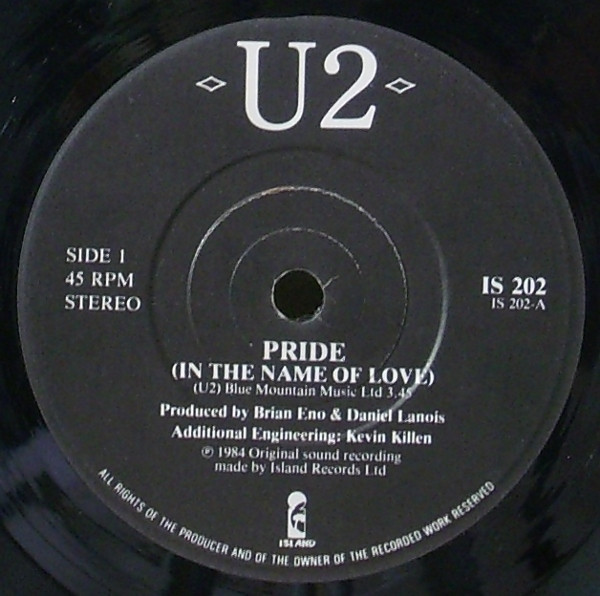
U2 - PRIDE (IN THE NAME OF LOVE)


Estrena: 3 de setembre de 1984

Llistes: EUA: #33   Regne Unit: #3


"Pride (In the Name of Love)" és la segona pista de l'àlbum de 1984 "The Unforgettable Fire" i es va publicar com a primer senzill el setembre de 1984. Produït per Brian Eno i Daniel Lanois, el tema rendeix homenatge al líder dels drets civils nord-americà Martin Luther King Jr. Va arribar al número 3 a la llista de singles del Regne Unit i va ser el primer èxit dels U2 dins del Top 40 als Estats Units, arribant al número 33. A més, va liderar la llista de singles a Nova Zelanda, sent el primer número 1 dels U2 en qualsevol país.


"Pride (In the Name of Love)" és un homenatge a figures històriques com Martin Luther King Jr. i Jesucrist, que van dedicar les seves vides a defensar la igualtat i la justícia mitjançant mètodes no violents. Bono destaca que aquestes figures exemplifiquen el veritable orgull, no en un sentit presumptuós, sinó en el seu compromís amb la dignitat i la santedat de tota vida humana.


La cançó va tenir els seus inicis durant una prova de so abans d'un concert al novembre de 1983 a Hawaii durant el War Tour. La melodia i els acords van ser improvisats pel guitarrista The Edge, que va introduir una sèrie de canvis d'acords. Un error durant la prova de so va motivar la banda a adaptar-se i innovar, donant una nova direcció a la improvisació. Després de finalitzar la gira, els U2 van continuar desenvolupant la cançó a la casa de Bono a Bray, al Comtat de Wicklow. A Slane Castle, on van enregistrar l'àlbum, es va continuar treballant en "Pride", consolidant la seva evolució com a pista final de "The Unforgettable Fire".


Hi ha un error factual a la cançó referent a l'assassinat de Martin Luther King Jr. La lletra originalment deia "Early morning, April 4", la qual cosa és inexacta ja que King va ser disparat després de les 6 de la tarda. Bono ha reconegut aquest error i sovint canvia la lletra a "Early evening..." en les interpretacions en directe. L'error es va corregir a la versió acústica de la cançó publicada a l'àlbum del 2023 del grup "Songs of Surrender", on la lletra es va actualitzar a "In the evening, April 4".


Es van crear tres vídeos musicals per a la cançó. El primer, dirigit per Donald Cammell a l'agost, mostrava imatges dels Docklands de Dublin i existeix en versions en blanc i negre i en color sèpia, però els U2 no van quedar satisfets amb aquest vídeo. El segon vídeo, enregistrat en un soterrani prop de l'aeroport de Heathrow a Londres per Anton Corbijn, mostrava la banda drets contra un mur en condicions de llum tènue, però aquest tampoc va satisfer les seves expectatives. Finalment, es va compilar un tercer vídeo amb imatges enregistrades durant les sessions de The Unforgettable Fire a Slane Castle. Malgrat la seva insatisfacció amb els vídeos de Corbijn i Cammell, la versió original en blanc i negre de Cammell va ser utilitzada principalment per a fins promocionals.


Chrissie Hynde dels Pretenders va proporcionar les veus de fons per a la cançó. En aquell moment, estava casada amb Jim Kerr dels Simple Minds, i va ser acreditada a l'àlbum com a "Mrs. Christine Kerr".


U2 - PRIDE (IN THE NAME OF LOVE)


Released: September 3, 1984

Charted:  US: #33   UK: #3 


"Pride (In the Name of Love)" is the second track on the 1984 album "The Unforgettable Fire" and was released as the lead single in September 1984. Produced by Brian Eno and Daniel Lanois, the song pays tribute to American civil rights leader Martin Luther King Jr. It reached number 3 on the UK Singles Chart and became U2's first top 40 hit in the United States, peaking at number 33. Additionally, it topped the singles chart in New Zealand, marking U2's first number 1 single in any country.


"Pride (In the Name of Love)" is a tribute to individuals throughout history, including Martin Luther King Jr. and Jesus Christ, who dedicated their lives to advocating for equality and justice through nonviolent means. Bono emphasizes that these figures exemplified true pride not in a boastful sense, but in their commitment to the dignity and sanctity of all human life. 


The song had its origins during a soundcheck before a November 1983 concert in Hawaii on their War Tour. The melody and chords were improvised led by guitarist the Edge, who introduced a series of chord changes. A mistake during the soundcheck prompted the band to adapt and innovate, giving the improvisation a new direction. After the tour ended, U2 continued developing the song at Bono's home in a Martello tower in Bray, County Wicklow. At Slane Castle, where they recorded the album, further work was done on "Pride," solidifying its evolution into the final track released on "The Unforgettable Fire."


There is a factual error in the song regarding the reference to Martin Luther King Jr.'s assassination. The lyric originally stated "Early morning, April 4," which is inaccurate as King was actually shot after 6 p.m. Bono has acknowledged this mistake and often changes the lyric to "Early evening..." in live performances. The error was corrected in the acoustic version of the song released on the group's 2023 album "Songs of Surrender," where the lyric was updated to "In the evening, April 4."


Three music videos were created for the song. The first, directed by Donald Cammell in August, featured shots of Dublin Docklands and exists in both black and white and sepia color versions, but U2 was dissatisfied with this video. The second video, shot in a basement near Heathrow Airport in London by Anton Corbijn, portrayed the band standing sternly against a wall in dim lighting conditions, but this too did not meet their expectations. Finally, a third video was compiled from footage recorded during The Unforgettable Fire sessions at Slane Castle. Despite their dissatisfaction with the Corbijn and Cammell videos, the original black and white Cammell version was primarily used for promotional purposes.


Chrissie Hynde of The Pretenders, provided backing vocals for the song. At the time, she was married to Jim Kerr of Simple Minds, and she was credited on the album as "Mrs. Christine Kerr." 


CHER - THE SHOOP SHOOP SONG (IT’S IN HIS KISS)

Estrena: 7 de novembre de 1990

Llistes: Regne Unit: #1 (5 setmanes)  EUA: #33


"It's in His Kiss" és una cançó originalment escrita per Rudy Clark i llançada com a senzill el 1963 per Merry Clayton, però no va aconseguir entrar a les llistes de èxits. Aquesta melodia va guanyar popularitat quan Betty Everett la va enregistrar el 1964, arribant al número 1 a les llistes R&B de la revista Cashbox. Amb el pas dels anys, ha estat versionada per nombrosos artistes i grups arreu del món. El 1990, Cher va revifar "It's in His Kiss" per a la pel·lícula "Mermaids", on es va incloure durant els crèdits finals i va esdevenir un èxit internacional.


A "Mermaids" Cher va interpretar el paper de la Sra. Flax, una mare soltera que navega per la vida amb les seves filles, incloent la rebel Charlotte, interpretada per Winona Ryder. El personatge de la Sra. Flax no canta a la pel·lícula, de manera que era adequat incloure "It's in His Kiss" durant els crèdits finals. Cher es va connectar profundament amb el seu personatge, notant que la Sra. Flax estava inspirada en la seva pròpia mare. Va reflexionar sobre com s’identificava amb aquest paper, dient: "Mermaids va ser la meva vida". Cher va establir paral·lelismes entre ella mateixa i el personatge, recordant els seus dramàtics anys adolescents i el seu comportament rebel, com ara conduir abans de tenir l’edat reglamentària.


"It's in His Kiss" és una cançó on la cantant, des de la perspectiva d'una dona, aconsella una jove sobre com identificar l'amor veritable. La lletra subratlla que el veritable signe d'amor rau "en el seu petó". La cantant es frustra amb la noia mentre li suggereix altres factors com el comportament i l'abraçada, afirmant que l'indicador definitiu és la manera dels seus petons.


La versió de Cher de "The Shoop Shoop Song (It's In His Kiss)" va tenir un èxit variable a nivell mundial. Tot i ser només un èxit moderat als Estats Units, arribant a una posició modesta a les llistes, va arribar al número u al Regne Unit, sent el seu primer número u en solitari allà (prèviament, "I Got You Babe" amb Sonny & Cher havia arribat al número u el 1965). La cançó també va encapçalar les llistes a Àustria, Irlanda i Noruega, i va assolir altes posicions com el número dos a Bèlgica i posicions al top ten a França, Alemanya, Nova Zelanda, Austràlia, Suïssa, Països Baixos i Suècia.


A causa del seu èxit al Regne Unit i Europa Continental, "The Shoop Shoop Song" es va incloure en el següent llançament discogràfic de Cher, "Love Hurts", en aquests països, així com a Austràlia i Nova Zelanda. Curiosament, la cançó també va formar part del llançament de l'àlbum a Canadà, però va ser notablement absent del seu llançament inicial als Estats Units. No va ser fins al recopilatori de 1999 "If I Could Turn Back Time: Cher's Greatest Hits" que "The Shoop Shoop Song" es va incloure oficialment en un àlbum de Cher als Estats Units.


CHER - THE SHOOP SHOOP SONG (IT’S IN HIS KISS)


Released: November 7, 1990

Charted:  UK: #1 (5 weeks)  US: #33 


"It's in His Kiss" is a song originally written by Rudy Clark and first released as a single in 1963 by Merry Clayton, but it did not chart. The song gained popularity when Betty Everett recorded it in 1964, reaching No. 1 on the Cashbox magazine R&B charts. Over the years, it has been covered by numerous artists and groups worldwide. In 1990, Cher revived "It's in His Kiss" for the movie "Mermaids," where it was featured during the closing credits becoming an international hit. 


In the 1990 film "Mermaids," Cher played the role of Mrs. Flax, a vibrant single mother who navigates life with her daughters, including the rebellious Charlotte, portrayed by Winona Ryder. The character of Mrs. Flax doesn't sing in the film, making it fitting to feature "It's in His Kiss" during the closing credits. Cher connected deeply with her character, noting that Mrs. Flax was inspired by her own mother. She reflected on how much the role resonated with her, saying, "Mermaids was my life." Cher drew parallels between herself and the character, recalling her dramatic teenage years and rebellious behavior, such as driving at a young age.


"It's in His Kiss" is a song where the singer, from a woman's perspective, advises a young girl on identifying true love. The lyrics emphasize that the true sign of love lies in "his kiss." The singer becomes frustrated with the girl as she suggests other factors like behavior and embrace, asserting that the definitive indicator is the manner of his kisses. 


Cher's rendition of "The Shoop Shoop Song (It's In His Kiss)" achieved varying degrees of success globally. While it was only a minor hit in the United States, reaching a modest position on the charts, it soared to number one in the United Kingdom, marking her first solo chart-topper there (previously, "I Got You Babe" with Sonny & Cher had reached number one in 1965). The song also topped charts in Austria, Ireland, and Norway, and achieved high rankings such as number two in Belgium and top ten positions in France, Germany, New Zealand, Australia, Switzerland, Netherlands, and Sweden.


Due to its widespread success in the UK and Continental Europe, "The Shoop Shoop Song" was included on Cher's subsequent album release, "Love Hurts," in those regions as well as in Australia and New Zealand. Interestingly, the song was also part of the album's release in Canada but was notably absent from its initial release in the United States. It wasn't until the 1999 compilation album "If I Could Turn Back Time: Cher's Greatest Hits" that "The Shoop Shoop Song" was officially included on a Cher album in the U.S.


26.8.24


U2 - GLORIA


Estrenada: 5 d'octubre de 1981

Llistes: Regne Unit: #55


"Gloria" és la primera pista i segon single de l'àlbum de 1981 "October". Amb una tornada cantada en llatí del text litúrgic tradicional "Gloria in Excelsis Deo", la cançó va assolir un èxit modest, arribant al número 55 a la llista de singles del Regne Unit, però amb millors resultats a Irlanda i Nova Zelanda. La cançó reflecteix les creences cristianes de Bono, The Edge i Larry Mullen, amb temes espirituals. Des del principi, U2 va integrar missatges de veneració a la seva música, cosa que inicialment va causar tensió dins la banda per preocupacions sobre possibles conflictes amb la seva fe. Adam Clayton va interpretar un solo de baix en aquesta pista, quelcom poc habitual en ell.


El títol "Gloria" és en llatí i significa "glòria", i el refrany llatí "In Te Domine" vol dir "En Tu Senyor". Bono, originalment anomenat Bono Vox, que es tradueix com "Bona Veu" en llatí, va incorporar el llatí a la cançó tot i no ser fluït en aquest idioma. En coneixia algunes paraules de l'església i, durant la gravació, va cantar el que li sortia de manera natural. Per a traduir les seves frases en llatí cantades amb precisió, Bono va sortir de l'estudi per consultar amb un amic versat en la llengua, enlloc de dependre únicament d'un diccionari.


Bono reflexiona sobre la cançó afirmant que valora el seu contingut líric, escrit ràpidament. Considera que explora la idea de transcendir el llenguatge, similar a parlar en llengües. La cançó passa de l'anglès al llatí, el que ell troba escandalós però èpic i operístic, i encara li provoca un somriure. Bono explica que "Gloria" pot ser interpretada en el sentit de Van Morrison, referint-se a una dona. Com a banda irlandesa, eren conscients d'aquestes connotacions culturals. Creu que la cançó va ser crucial perquè va desafiar la idea que les cançons només poden tractar Déu en un context espiritual, no de maneres que puguin suggerir una relació amb una dona.


El videoclip, dirigit per Meiert Avis, es va rodar l'octubre de 1981 en una gabarra situada al Grand Canal Dock prop de Windmill Lane a Dublin. Va ser el vídeo debut de U2 a MTV i va rebre una difusió considerable. El vídeo mostra U2 actuant a la gabarra mentre una multitud d'observadors balla al voltant.


U2 - GLORIA


Released: October 5, 1981

Charted:  UK: #55 


"Gloria" is the opening track and second single from the 1981 album, “October”. Featuring a chorus sung in Latin from the traditional liturgical text "Gloria in Excelsis Deo," the song achieved modest success, peaking at #55 on the UK singles chart but performing better in Ireland and New Zealand. It reflects the Christian beliefs of Bono, The Edge, and Larry Mullen, with spiritual themes. Early on, U2 integrated worship messages into their music, which initially caused tension within the band due to concerns about conflicting with their faith. Adam Clayton played a bass solo on this track, something he rarely did.


The title "Gloria" is Latin for "Glory," and the Latin refrain "In Te Domine" means "In You Lord." Bono, originally named Bono Vox, which translates to "Good Voice" in Latin, incorporated Latin into the song despite not being fluent in the language himself. He knew some Latin words from church, and during recording, he sang what came naturally to him. To translate his sung Latin phrases accurately, Bono left the studio to consult a friend who was knowledgeable in Latin, rather than relying solely on a dictionary.


Bono reflects on the song noting that he appreciates its lyrical content, which was written quickly. He sees it as exploring the idea of transcending language, akin to speaking in tongues. The song moves from English to Latin, which he finds outrageous yet epic and operatic, and still brings a smile to his face. Bono explains that "Gloria" can be interpreted in the Van Morrison sense, referring to a woman. As an Irish band, they were conscious of these cultural connotations. He believes the song was pivotal because it challenged the idea that songs could only address God in a spiritual context, not in ways that might suggest a relationship with a woman.


The music video directed by Meiert Avis, was filmed in October 1981 on a barge located in Grand Canal Dock near Windmill Lane in Dublin. It marked U2's debut music video on MTV and gained significant airplay. The video depicts U2 performing on the barge while a crowd of onlookers dances along.