Total de visualitzacions de pàgina:

28.6.24


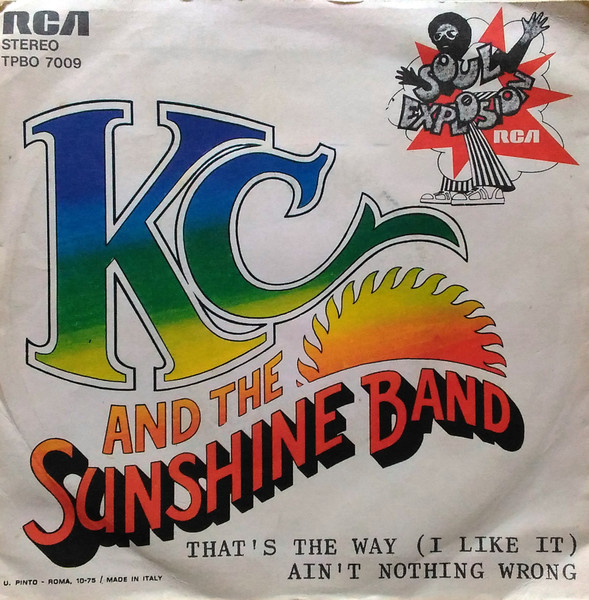
KC & THE SUNSHINE BAND - THAT’S THE WAY (I LIKE IT)


Publicació: 10 de juny de 1975

Llistes: Regne Unit: #4   EUA: #1 (2 setmanes)


"That's the Way (I Like It)" de KC and the Sunshine Band, inclòs al seu segon àlbum d'estudi autotitulat del 1975, va assolir un èxit significatiu a les llistes de Billboard. Es va convertir en el segon número u de la banda a la llista Hot 100. Va liderar la llista dues vegades en un període d'un mes a finals de 1975. Després d'arribar al número u durant una setmana, va ser breument reemplaçat per un altre èxit disco, "Fly, Robin, Fly" de Silver Convention. "That's the Way (I Like It)" va recuperar la primera posició per una setmana addicional després que "Fly, Robin, Fly" completés tres setmanes al cim. La cançó també va liderar la llista de singles de soul durant una setmana.


Inicialment, la cançó tenia un to més suggerent amb "uh-huhs" que originalment pretenien sonar sensuales, inspirats per la cançó francesa "Je T'aime... Moi Non Plus" de Jane Birkin i Serge Gainsbourg. El cantant Harry Wayne Casey va decidir moderar aquestes vocalitzacions per transmetre alegria en lloc de plaer.


Quant a la lletra, Rick Finch va mencionar que van haver de moderar les paraules per fer que la cançó fos més comercialment viable i evitar la controvèrsia. Va destacar els estàndards de censura més estrictes de l'època comparats amb avui, on els artistes poden ser més explícits. Finch creia en mantenir la lletra suggerent d'una manera poètica per permetre als oients interpretar-les com vulguin, fet que ampliava l'atractiu de la cançó i la feia més inclusiva.


En una entrevista, Richard Finch va reflexionar sobre l'eufòria i l'energia que envoltava la creació de "That's the Way (I Like It)". Finch va descriure com l'èxit del seu èxit anterior, "Get Down Tonight", va alimentar la seva emoció i confiança. Va destacar la joia i l'entusiasme que sentien tots els implicats en el procés d'enregistrament, assenyalant que es podien sentir els somriures a les interpretacions, especialment dels cantants dels cors. Finch va atribuir la qualitat màgica de la cançó a la sensació palpable i incredulitat que estaven aconseguint l'èxit des de la seva base a Miami, Florida, en una petita discogràfica independent. L'experiència era tan surrealista per a ells que sovint sentien que estaven vivint un somni.


KC & THE SUNSHINE BAND - THAT’S THE WAY (I LIKE IT)


Released : June 10, 1975

Charted:  UK: #4    US: #1 (2 weeks)


"That's the Way (I Like It)" by KC and the Sunshine Band, featured on their 1975 self-titled second studio album, achieved significant success on the Billboard charts. It became the band's second number-one hit on the Billboard Hot 100, a rare feat in music history as it topped the chart twice within a one-month period in late 1975. Initially reaching number one for one week, it was briefly replaced by another disco hit, "Fly, Robin, Fly" by Silver Convention. "That's the Way (I Like It)" reclaimed the top spot for an additional week after "Fly, Robin, Fly" completed its three-week reign. The song also topped the soul singles chart for one week.


Initially the song had a more suggestive tone with "uh-huhs" that were originally meant to sound sensual, inspired by the French song "Je T'aime... Moi Non Plus" by Jane Birkin and Serge Gainsbourg. Lead singer Harry Wayne Casey decided to tone down these vocalizations to convey jubilation rather than pleasure. 


Regarding the lyrics, Rick Finch mentioned that they had to moderate the words to make the song more commercially viable and avoid controversy. He highlighted the stricter censorship standards of the time compared to today, where artists can be more explicit. Finch believed in keeping lyrics suggestive in a poetic manner to allow listeners to interpret them as they wish, which he felt broadened the song's appeal and made it more inclusive.


In an interview Richard Finch reflected on the euphoria and energy surrounding the creation of "That's the Way (I Like It)". Finch described how the success of their previous hit, "Get Down Tonight," fueled their excitement and confidence. He emphasized the joy and enthusiasm felt by everyone involved in the recording process, noting that you can hear the smiles in the performances, especially from the background singers. Finch attributed the magical quality of the song to the palpable sense of accomplishment and disbelief that they were achieving success from their base in Miami, Florida, on a small independent label. The experience was so surreal to them that they often felt like they were living a dream.




SILVER CONVENTION - FLY, ROBIN, FLY


Publicació: setembre de 1975

Llistes: Regne Unit: #28   EUA: #1 (3 setmanes)


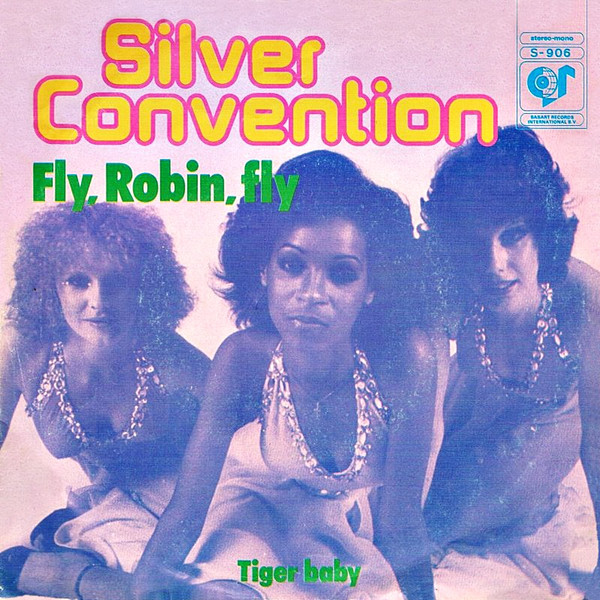
"Fly, Robin, Fly" és una cançó del grup de música disco alemany Silver Convention, del seu àlbum debut “Save Me”. Escrita per Sylvester Levay i Stephan Prager, i produïda per Prager, la cançó es va llançar com a tercer senzill de l'àlbum al setembre de 1975. Va arribar al número u de la llista US Billboard Hot 100, convertint Silver Convention en el segon grup alemany en aconseguir un número u als Estats Units. El gran èxit de la cançó també va guanyar un Premi Grammy a la Millor Actuació Instrumental R&B el 1976.


El productor Sylvester Levay va crear "Fly, Robin, Fly" basant-se en un riff que li va venir al cap una matinada mentre caminava. El seu company productor Michael Kunze ho va recordar i va suggerir utilitzar-lo per a l'àlbum de Silver Convention que estaven gravant. Levay inicialment tenia reserves sobre incloure-la a l'àlbum, però Kunze estava segur que seria un èxit i va proposar el títol "Run, Rabbit, Run". Levay n’era reticent per l'associació amb el Volkswagen Rabbit. La matinada següent, Levay va sentir una cançó anomenada "Run, Rabbit" a l'Armed Forces Network just abans de la sessió d'enregistrament. Va suggerir ràpidament a Kunze que canviessin el títol, i en 30 segons, Kunze va suggerir "Fly, Robin, Fly".


"Fly, Robin, Fly" destaca per tenir la quantitat més petita de paraules (sis) de qualsevol cançó que no sigui instrumental a assolir el número u al Hot 100. La tornada repeteix "fly, robin, fly" tres vegades, i acaba amb "Up, up to the sky!" Els productors van reduir la lletra a la mínima expresió perquè el grup alemany, que no era fluït en anglès, va trobar complicat memoritzar lletres llargues en un idioma estranger.


Als Estats Units, "Fly, Robin, Fly" va arribar al número u de la llista Billboard Hot 100 al novembre de 1975, mantenint la primera posició durant tres setmanes. Va ser precedida i reemplazada per "That's the Way (I Like It)" de KC and the Sunshine Band. El single també va encapçalar la llista Soul Singles Chart durant una setmana i va passar tres setmanes al número u de la llista Dance/Disco Chart. A Canadà, la cançó va arribar al número u de la llista RPM Top Singles Chart el 17 de gener de 1976, desplaçant "Saturday Night" dels Bay City Rollers de la primera posició.


SILVER CONVENTION - FLY, ROBIN, FLY


Released : September 1975

Charted:  UK: #28   US: #1 (3 weeks) 


"Fly, Robin, Fly" is a song by the German disco group Silver Convention from their debut album *Save Me* (1975). Written by Sylvester Levay and Stephan Prager, and produced by Prager, the song was released as the third single from the album in September 1975. It reached number one on the US Billboard Hot 100, making Silver Convention the second German act to achieve a number one hit in the US. The song's success also earned it a Grammy Award for Best R&B Instrumental Performance in 1976.


Producer Sylvester Levay created "Fly, Robin, Fly" based on a riff he had in his head one morning while walking. His fellow producer Michael Kunze remembered it and suggested using it for the Silver Convention album they were recording. Levay initially had reservations about including it on the album, but Kunze was confident it would be a hit and proposed the title "Run, Rabbit, Run." Levay was hesitant due to the association with the Volkswagen Rabbit. The next morning, Levay heard a song called "Run, Rabbit" on Armed Forces Network just before the recording session. He quickly suggested to Kunze that they change the title, and within 30 seconds, Kunze came up with "Fly, Robin, Fly."


"Fly, Robin, Fly" is notable for containing the fewest unique words (six) of any non-instrumental Hot 100 chart-topper. The chorus repeats "fly, robin, fly" three times, concluding with "Up, up to the sky!" The song features minimal lyrics because the German group, not fluent in English, found it challenging to memorize extensive lyrics in an unfamiliar language.


In the United States, "Fly, Robin, Fly" reached number one on the Billboard Hot 100 in November 1975, maintaining the top position for three weeks. It was both preceded and succeeded by "That's the Way (I Like It)" by KC and the Sunshine Band. The single also topped the Soul Singles Chart for one week and spent three weeks at number one on the Dance/Disco Chart. In Canada, the song reached number one on the RPM Top Singles Chart on January 17, 1976, displacing the Bay City Rollers' "Saturday Night" from the top spot.


STARS ON 45 - STARS ON 45


Estrena: gener de 1981

Llistes: Regne Unit: #2   EUA: #1 (1 setmana)


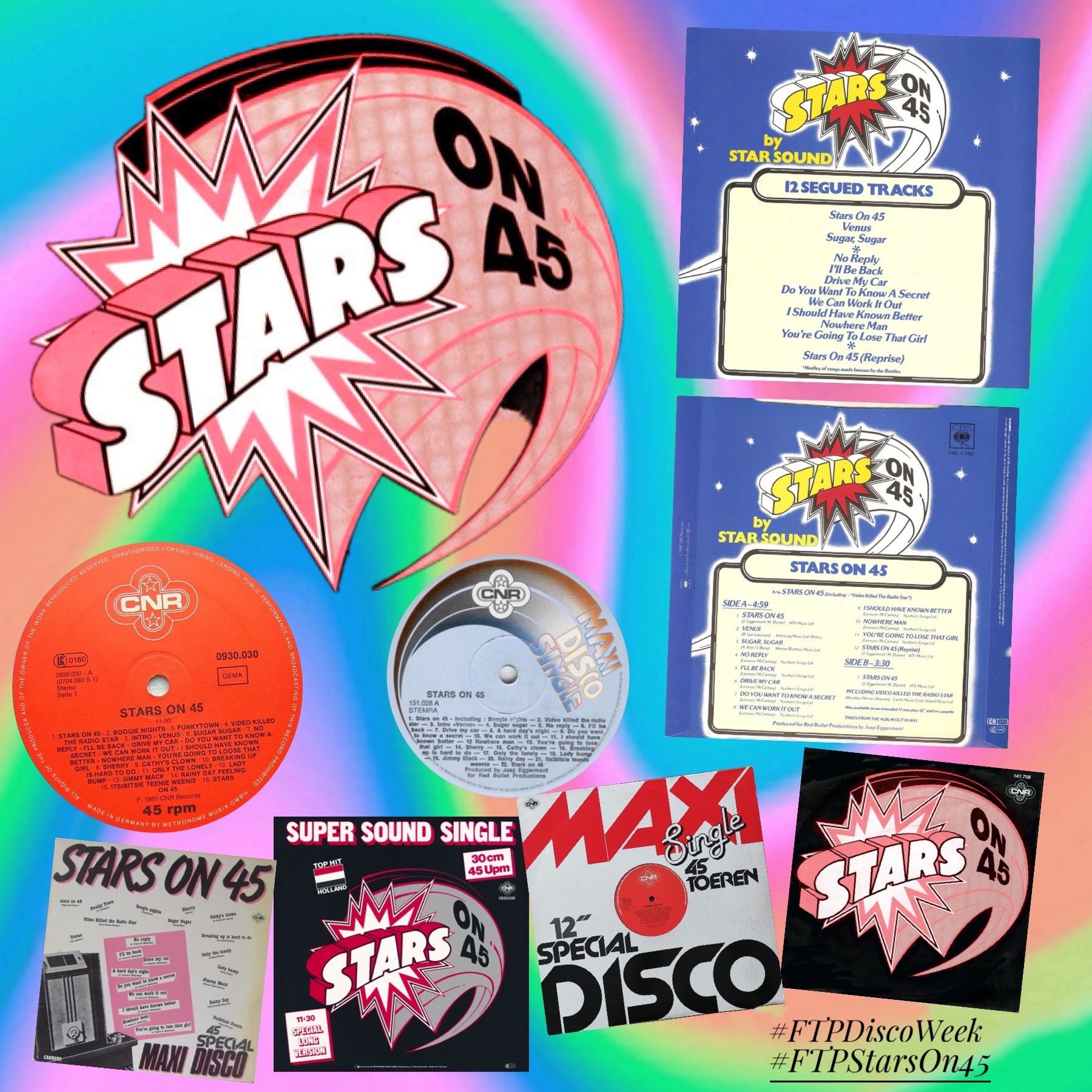
"Stars on 45" va aparèixer com un medley llançat al gener de 1981 pel grup d’estudi holandès Stars on 45, conegut com a 'Starsound' en alguns paissos com ara el Regne Unit, Irlanda i Nova Zelanda. El concepte va sorgir d'un maxi-single pirata titulat "Let's Do It In The 80's Great Hits," que va guanyar popularitat a les discoteques. Willem van Kooten va decidir crear una versió legítima que inclogués fragments de cançons populars. El medley, que es centrava en cançons dels Beatles, es va allargar fins als 16 minuts i va formar part del primer àlbum de Stars on 45 titulat "Long Play Album" (llançat com "Stars on Long Play" als Estats Units i "Stars on 45 - The Album" al Regne Unit).


"Stars On 45" té les seves arrels a la fi de l'era del fenomen disco, quan els DJs van començar a crear mescles pirata unint cançons populars amb un ritme constant. Aquestes mescles es van vendre principalment a d'altres DJs per a la reproducció en clubs i discoteques. Willem van Kooten, executiu de publicació musical als Països Baixos, va descobrir per primer cop aquest fenomen quan va escoltar un mix a una botiga de discs que incloïa cançons dels Beatles, així com cançons d'artistes com els Buggles i Madness, a més de diversos èxits disco de 1980. Reconeixent que el mix incloïa "Venus" de Shocking Blue, una cançó de la qual era propietari dels drets d'autor, van Kooten va investigar més a fons. Va saber que el mix havia estat creat per tres DJs de Montreal sota el nom de Passion, titulat "Let’s Do It In The ’80s Great Hits." Aquest descobriment va inspirar van Kooten a produir una versió legítima del mix, contractant cantants que imitaven les veus d'artistes famosos, centrant-se especialment en les cançons dels Beatles. Això va portar a la creació d’"Stars On 45," un medley que va tenir un gran èxit en el seu llançament el 1981.


"Let’s Do It In The ’80s Great Hits" era bàsicament un acte d'infracció dels drets d'autor, cosa que va portar Willem van Kooten a capitalitzar el concepte reinventant-lo de manera legítima. Va contractar el productor holandès Jaap Eggermont, antic membre de Golden Earring, per recrear el mix. Eggermont va reunir un grup de músics holandesos capaços d'imitar les veus de John Lennon, Paul McCartney i George Harrison. El single resultant, llançat sota el nom d’Stars On 45, era molt semblant al mix original. Barrejava de manera perfecta èxits disco contemporanis amb clàssics dels Beatles sobre un ritme constant de bateria sintetitzada, capturant l'esperit desenfadat de l'original pirata. Eggermont també va introduir una tornada disco engnxosa que apareixia intermitentment al llarg del medley, distingint-lo com a obra d’Stars On 45.


"Stars On 45" va tenir un gran èxit a Europa, especialment al Regne Unit, on es va convertir en un fenomen. Als Estats Units, va ser llançat per Radio Records, una subsidiària d'Atlantic, al juny de 1981. El moment era crucial, ja que va emergir durant l'era de la reacció contra el moviment disco. Malgrat això, la cançó s’aferrava a les seves arrels disco amb frases com "You can boogie like disco! Love that disco sound!" El medley entrellaçava astutament cançons clàssiques dels Beatles amb èxits disco contemporanis i pistes que recordaven als Beatles, com "Sugar, Sugar" d'Archies i "Venus" de Shocking Blue.


Els següents medleys de Stars on 45 van incloure cançons d'ABBA, Rolling Stones, Stevie Wonder i cançons de pel·lícules, fins arribar a un darrer medley anomenat Star Sisters, on van popularitzar les cançons de les Andrew Sisters. La tremenda popularitat d’Stars on 45 va portar a l’aparició d’innumerables medley de tot tipus que van aparèixer durant aquell any i els seguents, convertint-se en un estil recurrent per a molts artistes.


STARS ON 45 - STARS ON 45


Released: January 1981

Charted:  UK: #2    US: #1 (1 week)


"Stars on 45" originated as a medley released in January 1981 by the Dutch studio group Stars on 45, known as 'Starsound' in some regions like the UK, Ireland, and New Zealand. The concept stemmed from an underground bootleg 12" titled "Let's Do It In The 80's Great Hits," which gained popularity in clubs. Willem van Kooten decided to create a legitimate version featuring snippets of popular songs. The medley, which focused on Beatles songs, expanded into a 16-minute album side and became part of Stars on 45's debut album titled "Long Play Album" (released as "Stars on Long Play" in the US and "Stars on 45 - The Album" in the UK).


"Stars On 45" has its roots in the late disco era when DJs began creating bootleg mixes by splicing together popular songs over a consistent beat. These mixes were primarily sold to other DJs for club play. Willem van Kooten, a music publishing executive in the Netherlands, first encountered this phenomenon when he heard a mix in a record store that included Beatles songs, alongside tracks from artists like the Buggles and Madness, as well as various disco hits of 1980. Recognizing that the mix included "Venus" by Shocking Blue, a song for which he owned the copyright, van Kooten investigated further. He learned that the mix was created by three DJs from Montreal under the band name Passion, titled "Let’s Do It In The ’80s Great Hits." This discovery inspired van Kooten to produce a legitimate version of the mix, employing singers who imitated the voices of famous artists, particularly focusing on Beatles songs. This led to the creation of "Stars On 45," a medley that became a major success upon its release in 1981.


"Let’s Do It In The ’80s Great Hits” was essentially an act of copyright infringement, prompting Willem van Kooten to capitalize on the concept by reimagining it legitimately. He enlisted Dutch producer Jaap Eggermont, formerly of Golden Earring, to recreate the mix. Eggermont assembled a group of Dutch musicians capable of mimicking the voices of John Lennon, Paul McCartney, and George Harrison. The resulting single, released under the name Stars On 45, closely mirrored the original mix. It seamlessly blended contemporary disco hits with classic Beatles songs over a persistent drum-machine beat, capturing the playful and carefree spirit of the bootleg original. Eggermont also introduced a catchy disco refrain that intermittently surfaced throughout the medley, distinguishing it as the work of Stars On 45.


"Stars On 45" found significant success in Europe, particularly in the UK, where it became a hit. In the US, it was released by Radio Records, an Atlantic subsidiary, in June 1981. The timing was crucial as it emerged during the disco backlash era. Despite this, the song embraced its disco roots with lyrics like "You can boogie like disco! Love that disco sound!" The medley cleverly intertwined classic Beatles songs with contemporary disco hits and tracks reminiscent of the Beatles, such as the Archies’ “Sugar, Sugar” and Shocking Blue’s “Venus,” blurring the lines between these distinct musical styles.


The next Stars on 45 medleys included songs from ABBA, the Rolling Stones, Stevie Wonder, and movie songs to end with a last medley called Star Sisters where they popularized the songs of the Andrew Sisters. The tremendous popularity of Stars on 45 led to countless medley songs of all kinds appearing during the following years, becoming a recurring style for many artists.


27.6.24


ANDREA TRUE CONNECTION - MORE MORE MORE 


Publicació: febrer de 1976

Llistes: Regne Unit: #5   EUA: #4


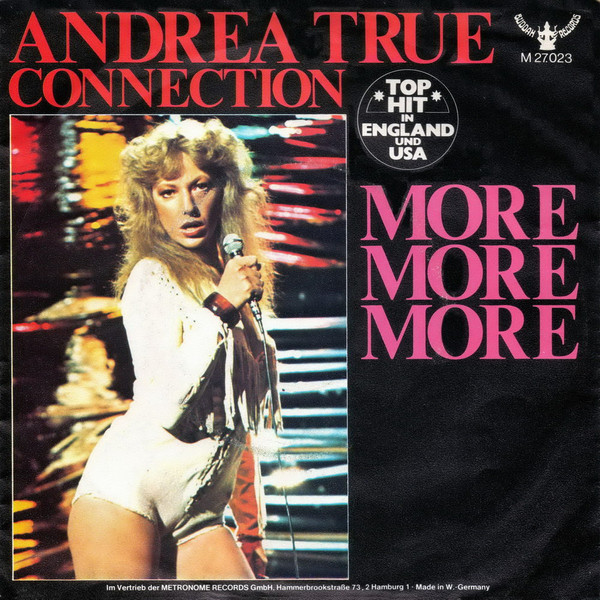
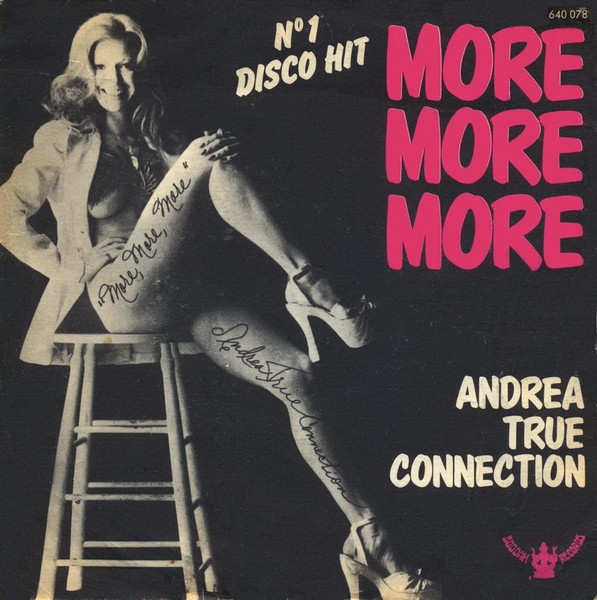
"More, More, More" és una cançó escrita per Gregg Diamond i enregistrada per l'artista nord-americana Andrea True, acreditada com Andrea True Connection. Llançada al febrer de 1976 com a primer senzill del seu àlbum debut del mateix nom, es va convertir en el seu tema distintiu i en un gran èxit de música disco. La cançó va arribar al número quatre a la llista Billboard Hot 100 i va passar tres setmanes al número tres a la llista Cash Box Top 100 als Estats Units. Va ser un número u a Canadà i va arribar al número cinc al Regne Unit.


True, originària de Nashville, va guanyar fama com a estrella del cinema pornogràfic després de traslladar-se a Nova York. El seu single amb lletres com "More, More, More, how do you like it, how do you like it," adquireix connotacions suggeridores donada la seva història. Frases com "Get the cameras rollin', get the action goin'," semblen fer referència directa a les seves experiències en els plató de films per adults. La cançó d'Andrea True, llançada sota el segell Buddah, es va convertir en una sensació disco, rebent molta reproducció a les discoteques i a les emissores de ràdio. Els DJs sovint destacaven el seu passat com a estrella del porno, afegint a l'atractiu del tema. 


Enregistrada el 1975 a Jamaica, on True estava treballant en un anunci de televisió, la cançó va sorgir de la seva inversió de diners, destinada a impulsar la seva carrera com a cantant. Amb l'ajuda de Gregg Diamond, True i altres músics d'estudi van col·laborar en el projecte. Diamond, reconeixent el potencial de True i influït pel seu passat en el cinema per adults, la va contractar per a les veus. Tot i que Diamond està oficialment acreditat com l'únic autor de la cançó, True assegura haver escrit la lletra mentre que Diamond va composar la música.


ANDREA TRUE CONNECTION - MORE MORE MORE 


Released : February 1976

Charted:  UK: #5   US: #4 


"More, More, More" is a song written by Gregg Diamond and recorded by American artist Andrea True, credited to Andrea True Connection. Released in February 1976 as the lead single from her debut album of the same name, it became her signature track and a major disco hit. The song reached number four on the Billboard Hot 100 and spent three weeks at number three on the Cash Box Top 100 in the US. It was a number one hit in Canada and reached number five in the UK.


True, originally from Nashville, gained fame as a porn star after moving to New York. Her upbeat single, with lyrics like "More, More, More, how do you like it, how do you like it," takes on suggestive undertones given her background. Lines such as "Get the cameras rollin', get the action goin'," seem to directly reference her experiences on adult film sets. Andrea True's song, released on the Buddah label, became a disco sensation, receiving ample airplay in clubs and on radio stations. DJs often highlighted her past as a porn star, adding to the allure of the track. With its catchy disco beat, the song paved the way for future disco hits.


Recorded in 1975 in Jamaica, where True was working on a TV commercial, the track emerged from her investment of money, intended to further her singing career. With Gregg Diamond's assistance, True and other studio musicians collaborated on the project. Diamond, recognizing True's potential and influenced by her adult film background, enlisted her for vocals. Although Diamond is officially credited as the song's sole author, True claims to have penned the lyrics while Diamond composed the music.