"Did You See Me Coming?" is a track released on June 2009 as the second single from the duo tenth studio album, “Yes”. Despite being chosen as the follow-up to "Love Etc" by the Pet Shop Boys' record label's radio promotion staff, who anticipated significant airplay, the song received limited play outside of BBC Radio 2. Consequently, it peaked at #21 on the UK singles chart, falling short of expectations.
As another writer aptly put it, this song is "unashamedly sunny pop," radiating a warmth that easily brings a smile to your face. Its infectious charm likely contributed to its selection as the album's second single. Opening with Johnny Marr's strummed guitar, the song quickly envelops the listener with layers of instrumentation while maintaining its rhythmic core. Neil's vocals convey a sense of wide-eyed innocence as he sings lines like:
"I'd love to be loved by you
Did you see me coming?
Was I that obvious?"
"Did You See Me Coming?" is a collaboration with the production team Xenomania, renowned for their work with the British pop group Girls Aloud. It was the first song that the Pet Shop Boys played to Xenomania founder Brian Higgins after meeting him. He noted that the demo was "80% there."
Neil Tennant, the singer, explained the song's inspiration to The Big Issue: "My mother used to say: 'They must have seen you coming,' and it meant you were being hoodwinked or something. It's about a guy realizing that the girl has spotted him across the crowded room and understood that he's going to fall in love with her immediately. It's a bit Cole Porter. It was actually the first song we wrote for this album and we realized then that the direction was going very poppy with very chirpy, happy harmonies."
While the song's primary themes may not revolve around their personal relationship, it's conceivable that some sentiments expressed in it could reflect Neil and Chris's dynamic as a songwriting duo, professional collaborators, and friends. The music video's focus solely on the two of them, echoing the chorus's sentiment of "just the two of us," hints at this possibility.
SINEAD O’CONNOR - YOU MADE ME THE THIEF OF YOUR HEART
Llançament: 7 de febrer de 1994
Llistes: Regne Unit: #42 Irlanda: #4
“You Made Me the Thief of Your Heart” és una cançó de Sinéad O’Connor, escrita per Bono, Gavin Friday i Maurice Seezer per a la pel·lícula de 1993 “In the Name of the Father”. Produïda per Tim Simenon, la cançó es va incloure posteriorment al recopilatori de 1997 d’O’Connor, “So Far… The Best Of”. Va rebre grans elogis de la crítica i va assolir bones posicions a les llistes, arribant al top 5 a Irlanda i Polònia, i entrant a les llistes de Finlàndia, el Regne Unit i l’Eurochart Hot 100.
En una entrevista de 1994 amb NME, Bono va descriure “You Made Me the Thief of Your Heart” com una cançó inspirada en la tradició de les balades de crims passionals, comparant-la amb una història irlandesa del segle XIV on una dona mata el seu amant per conservar-lo. Va explicar que, per a les pel·lícules, escriure de manera indirecta en lloc de literal era més efectiu. Gavin Martin de NME va elogiar l’emocionant interpretació de Sinéad O’Connor, destacant com segellava el to de resistència i llibertat de la pel·lícula. Un altre editor, Stephen Dalton, va destacar les paraules fredes però intel·ligents de Bono a la cançó. La crítica va aplaudir “You Made Me the Thief of Your Heart” com una de les interpretacions més poderoses de Sinéad O’Connor des de “Nothing Compares 2 U”.
“In the Name of the Father” és un drama criminal biogràfic dirigit per Jim Sheridan. Basada en l’autobiografia de Gerry Conlon de 1990, “Proved Innocent”, la pel·lícula explica la història real dels Quatre de Guildford, injustament condemnats pels atemptats de 1974 al pub de Guildford, que van matar cinc persones. El guió, coescrit per Sheridan i Terry George, explora la injustícia que van patir Gerry Conlon i la seva família mentre lluitaven per demostrar la seva innocència.
La trama segueix Gerry Conlon, un jove irlandès confós amb un franctirador de l’IRA a Belfast, i enviat a Londres pel seu pare, Giuseppe, on es veu atrapat en una cadena d’esdeveniments després d’un robatori. Després que una bomba matés diverses persones, Gerry, el seu amic Paul Hill i altres són detinguts, torturats i forçats a confessar tot i ser innocents. Aquest grup, conegut com els Quatre de Guildford, i diversos membres de la família de Gerry, anomenats els Set de Maguire, són condemnats injustament.
A la presó, Gerry descobreix per Joe McAndrew, el veritable autor dels atemptats, del qual la policia va suprimir la seva confessió. Malgrat l’admissió de Joe, les autoritats es neguen a actuar. La tragèdia arriba quan Giuseppe mor a la presó, cosa que impulsa Gerry a continuar la lluita per la justícia que havia iniciat el seu pare. Amb l’ajuda de l’advocada Gareth Peirce, es troben proves clau que demostren la innocència de Gerry, aconseguint la seva exoneració. Tanmateix, les autoritats responsables de la injustícia mai no són castigades, i els autèntics autors dels atemptats queden en llibertat.
El videoclip de “You Made Me the Thief of Your Heart”, dirigit pel director de “In the Name of the Father”, Jim Sheridan, va rebre una nominació a Millor Vídeo d’una Pel·lícula als MTV Music Awards de 1994. Ambientat en una presó, mostra Sinéad O’Connor en una cel·la austera amb una bombeta penjada, intermitentment visitada per un home gran i un corb negre. Intercalat amb escenes de la pel·lícula, el vídeo també mostra O’Connor sent interrogada i obligada a signar un document, fins que li col·loquen un corb mort al davant. Finalment, les portes de la cel·la s’obren, i una figura invisible la condueix cap a la llibertat. Ella camina per un bosc, alliberant coloms blancs, simbolitzant la llibertat, mentre el vídeo acaba amb ella observant els coloms enlairant-se cap al cel.
SINEAD O’CONNOR - YOU MADE ME THE THIEF OF YOUR HEART
Released: February 7, 1994
Charts: UK: #42 Ireland: #4
“You Made Me the Thief of Your Heart” is a song by Sinéad O’Connor, written by Bono, Gavin Friday, and Maurice Seezer for the 1993 film “In the Name of the Father”. Produced by Tim Simenon, it was later included in O’Connor’s 1997 compilation “So Far… The Best Of”. The song received critical acclaim and charted well, reaching the top 5 in Ireland and Poland, and ranking on charts in Finland, the UK, and the Eurochart Hot 100.
In a 1994 interview with NME, Bono described “You Made Me the Thief of Your Heart” as inspired by the tradition of murder ballads, likening it to a 14th-century Irish tale where a woman kills her lover to keep him. He explained that writing tangentially for movies, rather than literally, was more effective. NME‘s Gavin Martin praised Sinéad O’Connor’s emotional performance, noting how it sealed the film’s tone of resilience and hard-earned freedom. Another editor, Stephen Dalton, commended Bono’s “cold-but-clever words” in the song. Critics hailed Sinéad O’Connor’s “You Made Me the Thief of Your Heart” as one of her most powerful performances since “Nothing Compares 2 U.”
“In the Name of the Father” is a biographical crime drama directed by Jim Sheridan. Based on Gerry Conlon’s 1990 autobiography Proved Innocent, the film recounts the true story of the Guildford Four, who were wrongfully convicted of the 1974 Guildford pub bombings that killed five people. The screenplay, co-written by Sheridan and Terry George, explores the injustice faced by Gerry Conlon and his family as they fight to prove their innocence.
The plot follows Gerry Conlon, a young Irishman initially mistaken for an IRA sniper in Belfast, and sent to London by his father, Giuseppe, where he gets caught in a chain of events following a burglary. After a bomb kills several people, Gerry, his friend Paul Hill, and others are arrested, tortured, and coerced into confessing despite their innocence. This group, known as the Guildford Four, and several of Gerry’s family members, dubbed the Maguire Seven, are wrongfully convicted.
In prison, Gerry learns from Joe McAndrew, the real bomber, that the police suppressed his confession. Despite Joe’s admission, the authorities refuse to act. Tragedy strikes when Giuseppe dies in prison, motivating Gerry to continue his father’s fight for justice. With help from lawyer Gareth Peirce, critical evidence proving Gerry’s innocence is uncovered, leading to his exoneration. However, the authorities responsible for the miscarriage of justice are never held accountable, and the true bombers remain free.
The music video for “You Made Me the Thief of Your Heart” directed by “In the Name of the Father” filmmaker Jim Sheridan, earned a nomination for Best Video from a Film at the 1994 MTV Music Awards. Set in a prison, it depicts Sinéad O’Connor in a stark cell with a hanging light bulb, intermittently visited by an elderly man and a black raven. Interspersed with clips from the film, the video also shows O’Connor being interrogated and coerced into signing a document, culminating in the placement of a dead raven before her. Eventually, the cell doors open, and an invisible figure leads her to freedom. She walks through a forest, releasing white pigeons, symbolizing liberation, as the video concludes with her watching them ascend into the sky.
27.11.24
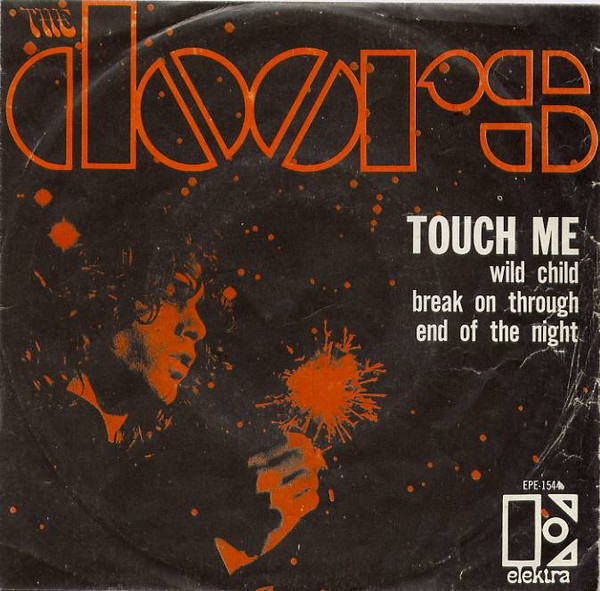
THE DOORS - TOUCH ME
Released: December 1968
Charts: US: #3
"Touch Me", written by guitarist Robby Krieger, is a 1968 single from The Doors' album “The Soft Parade”. Known for its prominent brass and string arrangements, the song was highly successful, reaching No. 3 on the Billboard Hot 100 and topping the Cashbox chart. It also hit No. 1 in Canada and entered the top 10 in Australia, though it did not chart in the UK. Released around the time of Jim Morrison's arrest in Miami for indecent exposure, some radio stations were hesitant to play the song despite its unrelated lyrics and title.
The Doors' song "Touch Me," originally titled "Hit Me," was written by guitarist Robby Krieger about arguments with his girlfriend, with the lyric “C'mon, hit me, I'm not afraid.” Jim Morrison suggested changing it to “Touch Me” for a softer tone. The song ends with Morrison chanting “Stronger than dirt!”—a reference to a popular Ajax detergent commercial featuring a knight fighting dirt. The song’s final four chords were inspired by the commercial’s jingle.
Critics viewed “Touch Me” as a commercial move by The Doors due to its use of brass and string sections, which were atypical for the band. Aiming to expand their audience, the band embraced this new style, achieving commercial success with the song. Jazz saxophonist Curtis Amy, known for his work on Carole King’s “Tapestry”, performed the sax solo, which Jim Morrison called the first jazz solo in a rock hit. Drummer John Densmore noted that incorporating jazz was always part of the band's vision, describing "Touch Me" as a vital experiment that helped shape the sound on “L.A. Woman”.
The Doors performed "Touch Me" on The Smothers Brothers Comedy Hour on December 6, 1968, accompanied by the Nelson Riddle Orchestra, with saxophonist Curtis Amy recreating his solo. Known for declining TV appearances, The Doors accepted this one due to the Smothers Brothers' anti-Vietnam War stance. During the performance, guitarist Robby Krieger’s visible black eye stirred rumors of a fight with Jim Morrison, which drummer John Densmore later attributed to a car accident. However, Krieger and keyboardist Ray Manzarek clarified that the injury occurred when Krieger tried to defend Morrison in a bar fight, only to end up punched himself.
SAM BROWN – STOP!
Publicada: 2 de maig de 1988
Llistes: EUA: #65 Regne Unit: #4
“Stop!” és una cançó de la cantautora anglesa Sam Brown, extreta del seu àlbum debut, també titulat “Stop!”. El single es va llançar inicialment al maig de 1988, arribant al #52 en les llistes del Regne Unit. La cançó va aconseguir èxit mundial a principis de 1989, quan, amb una nova edició, va assolir el #4 al seu país, liderant les llistes en diversos països europeus i arribant al #4 a Austràlia i al #13 al Canadà. A Amèrica, però, no va entrar al top 40, arribant al #65.
“Stop!” és una balada colpidora de traïció, on Sam representa una dona enganyada, suplicant al seu amant que deixi les seves infidelitats i torni amb ella. La cançó es caracteritza per la increïble interpretació de Sam Brown, amb una veu gairebé blues, impregnada de desesperació en cada paraula, mentre les cordes tristes marquen el ritme en l’orquestració de la peça. Si la cançó hagués estat escrita vint anys abans, podríem imaginar Dusty Springfield interpretant-la, o fins i tot Janis Joplin fent-ne una versió plena de blues. És un veritable espectacle de la capacitat vocal de Sam Brown.
Samantha Brown és filla de la reialesa del pop britànic. És la filla del rocker britànic Joe Brown, una gran estrella al Regne Unit durant els anys 60 i 70, i de Vicki Brown, una antiga membre de les Vernon Girls, que va construir una carrera notable com a corista per a artistes com The Kinks, Pink Floyd, Robert Palmer i Elton John. Als seus inicis, Sam va treballar amb la seva mare com a cantant de sessió, participant en l’últim àlbum d’estudi de Small Faces, “78 in the Shade”, el 1978, amb només 14 anys.
Sam va signar el seu primer contracte en solitari amb A&M el 1986, i en menys de divuit mesos va llançar el seu àlbum debut, “Stop!”. Amb l’èxit eventual del senzill del mateix nom, l’àlbum va assolir el #4 al Regne Unit, i una versió de “Can I Get a Witness” de Marvin Gaye (amb el seu pare Joe tocant la guitarra) va seguir “Stop!” a les llistes, arribant al #15. El segon àlbum de Sam, “April Moon” de 1990, va incloure el senzill “Kissing Gate” (#23), però sense un altre senzill que repliqués l’èxit de “Stop!”, va ser difícil mantenir-se, i l’àlbum no va entrar al top 30 del Regne Unit.
El següent àlbum de Sam, “43 Minutes…”, va ser gravat durant la llarga, però desafortunadament infructuosa, lluita de la seva mare contra el càncer de mama. A&M no va quedar satisfeta amb l’àlbum i va exigir que Sam enregistrés una versió amb potencial de single. Davant d’això, Sam va comprar la còpia mestra de l’àlbum i va trencar el seu contracte amb A&M, publicant-lo pel seu propi segell independent.
Sam Brown va continuar gravant fins al 2007, no només com a artista en solitari i cantant de suport, sinó també com a membre de la Rhythm and Blues Orchestra de Jools Holland. Malauradament, aquell any es va veure obligada a deixar de cantar a causa de problemes que van revelar un quist a les cordes vocals. Tot i que el quist es va eliminar, encara no podia mantenir una nota. Buscant una nova ocupació dins de la indústria musical, Sam va obrir un club de ukulele el 2010, que des de llavors ha crescut fins a tenir altres clubs i un negoci en línia pròsper. El 2023 va llançar el seu vuitè àlbum, “Number 8”, utilitzant programari de correcció de to per fer front als seus problemes vocals. Aquest va ser el seu primer àlbum en quinze anys.
Al llarg de la seva carrera, Sam Brown ha treballat amb alguns dels grans noms del rock: Pink Floyd, George Harrison, Deep Purple, Gary Moore, Marillion i Nick Cave, entre altres. Tot i això, el poder i l’emoció de “Stop!” ens mostren de què era capaç realment.
SAM BROWN – STOP!
Released: May 2, 1988
Charts: US: #65 UK: #4
“Stop!” was a single by English singer/songwriter Sam Brown, taken from her debut album, also called “Stop!”. The single was first released in May 1988, reaching #52 in the UK charts. The song found worldwide success in early 1989, when on reissue, it peaked at #4, topping the charts in several European countries, while also making #4 in Australia and #13 in Canada. In America, it wasn’t able to crack the top 40, peaking at #65.
“Stop!” is a stirring ballad of betrayal, with Sam playing the wronged woman, pleading with her lover to stop his cheating ways and return to her. What drives the song is Sam Brown's incredible, almost bluesy delivery, with desperation dripping off her words, while the mournful strings punctuate through the song’s orchestration. If the song was written 20 years before, you could imagine Dusty Springfield performing it, or even Janis Joplin letting rip through a full-on blues version. The song really is a tour de force of Sam Brown’s vocal ability.
Samantha Brown is the product of British pop royalty. She is the daughter of British Rock & Roller Joe Brown, who was a major star in the UK during the 60s and 70s, and former Vernon Girl, Vicki Brown, who forged a formidable career as a backing singer for artists like The Kinks, Pink Floyd, Robert Palmer and Elton John. In her early career, Sam joined her mom as a session singer, performing on Small Faces final studio album, “78 in the Shade” in 1978, aged only 14.
Sam signed her first solo deal with A&M in 1986, and within eighteen months, had released her debut album “Stop!”. With the eventual success of the single of the same name, the album peaked at #4 in the UK, with a cover of Marvin Gaye's “Can I Get a Witness” (featuring Dad Joe on guitar) following “Stop!” into the charts, peaking at #15. Sam's second album, 1990’s “April Moon” featured the #23 single “Kissing Gate”, but without a single replicating the success of “Stop!”, it found going tough, failing to make the UK top 30.
Sam's next album, “43 Minutes...” was recorded against her mother's long, but ultimately unsuccessful battle against breast cancer. A&M were unhappy with the album and demanded that Sam record a cover version with hit single potential. With that, Sam bought back the album’s master copy, and parted ways with A&M, releasing the album on her own independent label.
Sam Brown continued to record until 2007, not only as a solo artist and backing singer, but as a member of Jools Holland's Rhythm and Blues Orchestra. Unfortunately, she was forced to quit singing that year, after vocal issues found a cyst on her vocal cords. After the cyst was removed, she still found herself unable to hold a note. Looking for an alternate occupation in the music industry, Sam opened a ukulele club in 2010, which has since expanded to several other clubs and a thriving online business. She released her eighth album, “Number 8” in 2023, with the aid of pitch correction software to correct her vocal issues. It was her first album in 15 years.
Sam Brown has worked with some of rock music’s greatest in the past: Pink Floyd, George Harrison, Deep Purple, Gary Moore, Marillion and Nick Cave among that number. Still, the power and emotion of “Stop!” shows us what she was capable of.