Total de visualitzacions de pàgina:

20.2.24


GEORGE HARRISON - MY SWEET LORD 


Publicació: 23 de novembre de 1970 (EUA)  15 de gener de 1971 (Regne Unit)

Llistes: Regne Unit: #1 (5 setmanes)   EUA: #1 (4 setmanes)


"My Sweet Lord" és una cançó de George Harrison, llançada al novembre de 1970 al seu àlbum "All Things Must Pass". Com a primer senzill en solitari de Harrison, va assolir un èxit global a les llistes de èxits, convertint-se en el senzill més venut de l'any 1971 al Regne Unit. Com a fet destacat, va significar el primer número u en solitari d'un ex-Beatle tant als EUA com al Regne Unit. Inicialment destinada a Billy Preston, un altre artista d'Apple Records, Harrison va co-produïr la versió de Preston abans de decidir publicar la seva pròpia interpretació.


"My Sweet Lord" es submergeix en les religions orientals que George explorava. La cançó presenta una part d'un mantra hindú amb la repetició de "Hare Krishna... Krishna, Krishna". Harrison enllaça això amb una exclamació cristiana, "Hallelujah", destacant l'essència espiritual compartida de "Hallelujah" i "Hare Krishna". En el documental "The Material World", Harrison descriu el poder del mantra com una 

 "vibració sonora mística envoltada en una síl·laba", destacant la seva qualitat hipnòtica i espiritual.


En una revelació a Howard Stern, Peter Frampton va confirmar que va tocar la guitarra solista a "My Sweet Lord". Harrison, admirador de Frampton, el va convidar a l'estudi i inesperadament li va lliurar la seva icònica Les Paul. Tot i començar amb un rol rítmic, Harrison va demanar a Frampton que toqués la guitarra solista, cosa que va suposar la seva contribució no acreditada. Això paral·lelitzava el paper no acreditat d'Eric Clapton a "While My Guitar Gently Weeps", alimentant rumors durant anys sobre aquestes col·laboracions no revelades.


El 1971, Bright Tunes Music va demandar George Harrison, afirmant que "My Sweet Lord" sonava massa semblant a l’èxit de 1963 de les Chiffons "He's So Fine". Aquesta batalla legal es va desenvolupar durant un període turbulent per Harrison, qui va recordar que va compondre la cançó al desembre de 1969 mentre era a Copenhaguen amb Delaney and Bonnie, acompanyat de Billy Preston. Malgrat la seva oferta inicial de resoldre per 148.000 dòlars el 1976, el cas va arribar al jutjat, on el jutge va dictaminar que "les dues cançons són pràcticament idèntiques", citant "plagi subconscient". La penalització va ascendre a prop de 1,6 milions de dòlars. El cas va perdurar a través de diversos procediments legals fins com a mínim el 1993. La llarga disputa legal va deixar Harrison desencantat amb la indústria de la música, impactant la seva producció creativa i contribuint a una pausa en la seva carrera discogràfica.


El primer videoclip de "My Sweet Lord" es va publicar el 2021, per celebrar el 50è aniversari de "All Things Must Pass". Dirigit per Lance Bangs i sota la supervisió del fill de George, Dani Harrison, el vídeo presenta Fred Armisen i Vanessa Bayer en una misteriosa missió a la biblioteca. Amb un repartiment estel·lar que inclou Mark Hamill, Patton Oswalt, Ringo Starr i altres, el vídeo explora una narrativa captivadora, realçant la celebració del llegat d'aquesta icònica cançó.


GEORGE HARRISON - MY SWEET LORD 


Released: November 23, 1970 (US) January 15, 1971 (UK)

Charted:  UK: #1 (5 weeks)  US: #1 (4 weeks)


"My Sweet Lord" is a song by George Harrison, released in November 1970 on his album "All Things Must Pass." As Harrison's debut solo single, it achieved global chart success, becoming the best-selling single of 1971 in the UK. Notably, it marked the first number-one single by an ex-Beatle in both the US and the UK. Initially intended for Billy Preston, another Apple Records artist, Harrison co-produced Preston's version before deciding to release his own rendition.


"My Sweet Lord" delves into the Eastern religions George was exploring. Uniquely, the song features a portion of a Hindu mantra with the repetition of "Hare Krishna... Krishna, Krishna". Harrison intertwines this with a Christian exclamation, "Hallelujah", emphasizing the shared spiritual essence of "Hallelujah" and "Hare Krishna". In the documentary "The Material World," Harrison describes the mantra's power as a "mystical sound vibration encased in a syllable", highlighting its hypnotic and spiritually resonant quality.


In a revelation to Howard Stern, Peter Frampton confirmed playing lead guitar on "My Sweet Lord". Harrison, an admirer of Frampton, invited him to the studio and unexpectedly handed him his iconic Les Paul. Despite anticipating a rhythm role, Harrison requested Frampton to play lead, leading to his uncredited contribution. This parallels Eric Clapton's uncredited role on "While My Guitar Gently Weeps", fueling rumors for years about these undisclosed collaborations.


In 1971, Bright Tunes Music sued George Harrison, alleging that "My Sweet Lord" sounded too similar to the 1963 Chiffons hit "He's So Fine". This legal battle unfolded during a turbulent period for Harrison, who recounted composing the song in December 1969 while in Copenhagen with Delaney and Bonnie, accompanied by Billy Preston. Despite his initial offer to settle for $148,000 in 1976, the case proceeded to court, where the judge ruled in 1976 that "the two songs are virtually identical", citing "subconscious plagiarism". The damages awarded amounted to about $1.6 million. The case lingered through various legal proceedings until at least 1993. The protracted lawsuit left Harrison disenchanted with the music industry, impacting his creative output and contributing to a hiatus in his recording career.


"My Sweet Lord" received its first music video in 2021, marking the 50th anniversary of All Things Must Pass. Directed by Lance Bangs and guided by George's son, Dhani Harrison, the video features Fred Armisen and Vanessa Bayer embarking on a mysterious library mission. With a star-studded cast including Mark Hamill, Patton Oswalt, Ringo Starr, and others, the video explores a captivating narrative, enhancing the celebration of this iconic song's enduring legacy.


 DONNA SUMMER - LAST DANCE

Estrena: 2 de juliol de 1978

Llistes: Regne Unit: #51   EUA: #3 


"Last Dance", inclosa a la banda sonora de la pel·lícula de 1978 "Thank God It's Friday", va ser un èxit enormement aclamat tant per la crítica com comercialment. Escrita per Paul Jabara i co-producida per Giorgio Moroder i Pete Bellotte, la cançó va assolir diversos reconeixements el 1978. Va guanyar l'Oscar i el Globus d'Or a la Millor Cançó Original i va fer que Donna Summer guanyés el Premi Grammy a la Millor Interpretació Vocal Femenina R&B. A més, "Last Dance" va arribar al número tres de la llista Billboard Hot 100.


"Last Dance" té un lloc significatiu a la pel·lícula "Thank God It's Friday", ambientada en una discoteca on Paul Jabara, que interpretava el paper de Carl, un client del club, va escriure la cançó. Tot i que la pel·lícula no va assolir l'èxit de "Saturday Night Fever", va significar el primer gran paper cinematogràfic de Summer com a Nicole, una jove aspirant a cantant. A la pel·lícula, Nicole convenç al DJ per permetre-li actuar, i interpreta una memorable versió de "Last Dance" cap al clímax de la pel·lícula, capturant l'essència del que és aprofitar l'última oportunitat.


La lletra de "Last Dance" es pot interpretar amb dos sentits diferents. D'una banda, retracta una dona anhelant una relació romàntica, possiblement l'amor de la seva vida. També, en un sentit més literal, serveix com l'última cançó abans del tancament de la discoteca, simbolitzant l'última oportunitat per trobar companyia o una relació amorosa abans que acabi la nit.


"Last Dance" destaca com una de les cançons de discoteca pioneres en comptar amb parts ben diferenciades de tempo, començant com una balada, i  acabant amb el tradicional ritme ràpid per ballar, afegint una dinàmica única a la seva estructura. La capacitat de la cançó per barrejar de manera fluïda tempos contrastants reflecteix la versatilitat de Donna Summer com a artista i les tècniques de producció innovadores de Giorgio Moroder i Pete Bellotte. Aquest arranjament diferent va establir un precedent per als èxits posteriors de Summer, molts dels quals van incorporar transicions similars entre intros de balada i tempos disco enèrgics, mostrant la seva gamma i creativitat com a intèrpret. L'escepticisme inicial de David Foster sobre l'estructura de la cançó subratlla la naturalesa arriscada del procés de producció, que finalment va donar com a resultat un clàssic disco atemporal.


DONNA SUMMER - LAST DANCE 


Released: July 2, 1978

Charted:  UK: #51   US: #3 


"Last Dance" featured on the soundtrack album of the 1978 film “Thank God It's Friday”, was a tremendous success both critically and commercially. Written by Paul Jabara and co-produced by Giorgio Moroder and Pete Bellotte, the song achieved several accolades in 1978. It won the Academy Award and Golden Globe Award for Best Original Song and earned Donna Summer the Grammy Award for Best Female R&B Vocal Performance. Additionally, "Last Dance" peaked at number three on the Billboard Hot 100 chart, solidifying its place as one of Donna Summer's iconic tracks.


"Last Dance" holds a significant place in the movie "Thank God It's Friday," set in a dance club where Paul Jabara, who played the role of Carl, a club patron, wrote the song. While the film didn't match the success of "Saturday Night Fever," it showcased Summer's first major motion picture role as Nicole, an aspiring young singer. In the movie, Nicole persuades the DJ to allow her to perform, and she delivers a memorable rendition of "Last Dance" towards the film's climax, capturing the essence of seizing one's final opportunity. 


"Last Dance" carries a dual interpretation in its lyrics. On one level, it portrays a woman yearning for a romantic connection, possibly the love of her life. However, in a more literal sense, it serves as the final song played before the disco's closing time, symbolizing the last chance for revelers to find companionship or romance before the night concludes.


"Last Dance" stands out as one of the pioneering disco songs featuring slow tempo parts, adding a unique dynamic to its structure. Beginning as a ballad, it gradually transitions into a pulsating disco rhythm, creating a captivating musical journey for listeners. The song's ability to seamlessly blend contrasting tempos reflects Donna Summer's versatility as an artist and the innovative production techniques of Giorgio Moroder and Pete Bellotte. This distinctive approach set a precedent for Summer's subsequent hits, many of which incorporated similar transitions between ballad-like intros and upbeat disco tempos, showcasing her range and creativity as a performer. 

David Foster's initial skepticism about the song's structure underscores the risk-taking nature of the production process, which ultimately resulted in a timeless disco classic.


19.2.24


USA FOR AFRICA - WE ARE THE WORLD


Estrena: 7 de març de 1985

Llistes: EUA: #1 (4 setmanes)  Regne Unit: #1 (2 setmanes)


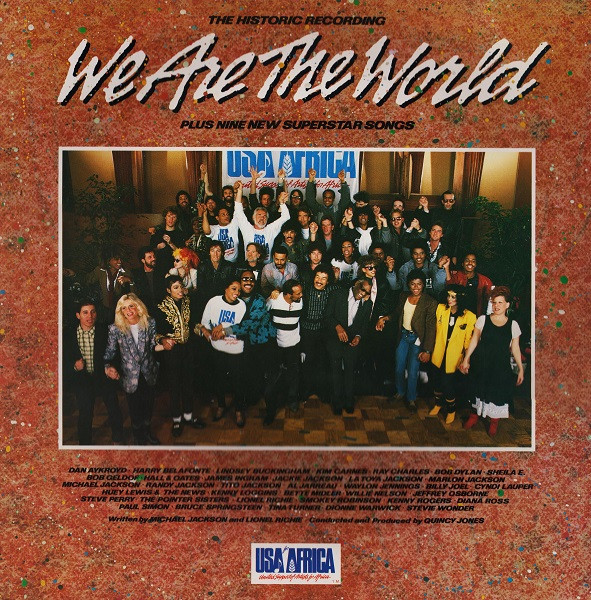
"We Are the World" és un senzill benèfic originalment enregistrat pel supergrup USA for Africa el 1985. La cançó va ser escrita per Michael Jackson i Lionel Richie i produïda per Quincy Jones i Michael Omartian per a l'àlbum del mateix nom. Amb vendes que superen els 20 milions de còpies, es considera un dels singles més venuts de tots els temps en format físic.


La gènesi de "We Are the World" es remunta a l'èxit del senzill benèfic del grup britànic Band Aid "Do They Know It's Christmas?" al desembre de 1984. Després el músic i activista Harry Belafonte, juntament amb Ken Kragen, van concebre la idea d'un senzill benèfic americà per a l'ajuda per combatre la fam a l'Àfrica. Jackson i Richie van ser convidats a escriure la cançó, acabant-la just una nit abans de la seva primera sessió d'enregistrament el 21 de gener de 1985. Aquesta sessió d'enregistrament de "We Are the World" va reunir una notable gamma dels músics més coneguts de l'època, culminant en un esdeveniment històric que va mostrar el poder de l'acció col·lectiva i la compassió per abordar les crisis humanitàries globals.


L'enregistrament de "We Are the World" als estudis A&M de Los Angeles el 28 de gener de 1985, coincidint amb la nit dels premis American Music Awards, que es va celebrar al proper Shrine Auditorium, va facilitar la reunió dels artistes implicats. Amb molts dels artistes ja a la ciutat per a la cerimònia de premis, va ser més fàcil des del punt de vista logístic reunir-los per enregistrar el disc. Quincy Jones va jugar un paper clau en gestionar el divers grup d'estrelles i controlar qualsevol ego potencial durant la sessió d'enregistrament. Malgrat la presència de nombroses personalitats famoses, el procés d'enregistrament va ser fluid, en part gràcies a les relacions personals de Jones amb molts dels artistes i la seva capacitat per a imposar respecte. Abans que comencés la sessió, Jones va organitzar estratègicament les posicions dels cantants, marcant els seus llocs al terra amb cinta adhesiva que portava els seus noms.


La sessió d'enregistrament de les veus va ser molt eficient, amb una durada d'aproximadament 12 hores. Aquesta eficiència és impressionant donat l'abast i la complexitat del projecte. La sessió també va servir com una mena de festa posterior als American Music Awards, amb els artistes compartint la jornada i fent-se intercanvis d'autògrafs, afegint-se a l'atmosfera de col·laboració i celebració.


El projecte va ser bàsicament americà en la seva concepció i execució, reflectit en el seu sobrenom "USA for Africa". El moment de la sessió d'enregistrament, coincidint amb els premis American Music Awards, també destaca les seves arrels americanes. Tot i que el projecte va presentar principalment artistes americans, l’europeu Bob Geldof, l'organitzador del Live Aid, també formava part del grup. El Live Aid, celebrat a Londres i Filadèlfia, va ser un esdeveniment significatiu que va complementar els esforços de "We Are the World" en augmentar la consciència i els fons per a l'ajuda a l'Àfrica.


"We Are the World" presenta una notable alineació d'artistes icònics, cadascun contribuint amb el seu talent vocal per crear una cançó poderosa i emocionalment ressonant. L'estructura de la cançó crea una sensació de sorpresa contínua i construcció emocional al llarg de la interpretació. Els primers versos són cantats per Lionel Richie, Stevie Wonder, Paul Simon, Kenny Rogers, James Ingram, Tina Turner i Billy Joel, establint el to per a la resta de la cançó. Després Michael Jackson i Diana Ross interpreten la primera tornada junts, seguits per Dionne Warwick, Willie Nelson i Al Jarreau cantant el segon vers. Bruce Springsteen, Kenny Loggins, Steve Perry i Daryl Hall encapçalen la segona tornada, afegint energia dinàmica a la cançó. El coautor Michael Jackson, juntament amb Huey Lewis, Cyndi Lauper i Kim Carnes, contribueixen al pont, elevant encara més la intensitat emocional de la cançó. La conclusió de "We Are the World" presenta interpretacions memorables de Bob Dylan i Ray Charles cantant una tornada complerta, amb Stevie Wonder i Bruce Springsteen fent un duo. Ray Charles i James Ingram aporten un toc final d'autenticitat i espontaneïtat a la cançó, portant-la a un final emotiu i poderós.


"We Are the World" va comptar amb una coral extensa d'artistes talentosos que van contribuir al so ric i poderós de la cançó. Aquí tenim la llista dels qui van cantar a la coral: Dan Aykroyd, Harry Belafonte, Lindsey Buckingham, Mario Cipollina (de Huey Lewis and the News), Johnny Colla (de Huey Lewis and the News), Sheila E., Bob Geldof, Bill Gibson (de Huey Lewis and the News), Chris Hayes (de Huey Lewis and the News), Sean Hopper (de Huey Lewis and the News), Jackie Jackson, La Toya Jackson, Marlon Jackson, Randy Jackson, Tito Jackson, Waylon Jennings, Bette Midler, John Oates, Jeffrey Osborne, Anita Pointer (de les Pointer Sisters), June Pointer (de les Pointer Sisters), Ruth Pointer (de les Pointer Sisters) i Smokey Robinson.


Quincy Jones va reunir un equip excepcional de músics per crear la  pista instrumental de "We Are the World", recorrent a molts dels mateixos talents que va utilitzar a l'àlbum "Thriller" de Michael Jackson. Els músics implicats en la creació de la part instrumental van ser: Greg Phillinganes: Teclats, John Robinson: Bateria, Michael Boddicker: Sintetitzadors, Paulinho da Costa: Percussió, Louis Johnson: Baix, Steve Porcaro: Sintetitzadors, David Paich: Sintetitzadors. A més, Michael Omartian va tenir un paper significatiu, contribuint amb els teclats i també figurant com a productor.


USA FOR AFRICA - WE ARE THE WORLD 


Released: March 7, 1985

Charted:  US: #1 (4 weeks)  UK: #1 (2 weeks)


"We Are the World" is a charity single originally recorded by the supergroup USA for Africa in 1985. The song was written by Michael Jackson and Lionel Richie and produced by Quincy Jones and Michael Omartian for the album of the same name. With sales exceeding 20 million copies, it ranks as one of the best-selling physical singles of all time.


The genesis of "We Are the World" traces back to the success of the UK-based group Band Aid's charity single "Do They Know It's Christmas?" in December 1984. Following this, musician and activist Harry Belafonte, along with fundraiser Ken Kragen, conceived the idea of an American benefit single for African famine relief. Jackson and Richie were enlisted to write the song, completing it just one night before its first recording session on January 21, 1985. The recording session for "We Are the World" brought together a remarkable array of the era's best-known musicians, culminating in a historic event that showcased the power of collective action and compassion in addressing global humanitarian crises. 


The recording of "We Are the World" at A&M Studios in Los Angeles on January 28, 1985, coinciding with the night of the American Music Awards, which took place at the nearby Shrine Auditorium, facilitated the gathering of the artists involved. With many of the artists already in town for the awards ceremony, it was logistically easier to bring them together to record the single. Quincy Jones played a pivotal role in managing the diverse group of stars and navigating any potential egos during the recording session. Despite the presence of numerous famous personalities, the recording process went smoothly, thanks in part to Jones's personal relationships with many of the artists and his ability to command respect. Before the session commenced, Jones strategically arranged the singers' positions, marking their places on the floor with tape bearing their names.


The recording session for the vocals was remarkably efficient, lasting about 12 hours. This efficiency is impressive given the scope and complexity of the project. The session also served as a kind of after-party following the American Music Awards, with artists mingling and exchanging autographs, adding to the collaborative and celebratory atmosphere.


The project was distinctly American in its conception and execution, reflected in its moniker "USA for Africa." The recording session's timing, coinciding with the American Music Awards, further emphasizes its American roots. While the project predominantly featured American artists, Bob Geldof, the organizer of Live Aid was in the chorus too. Live Aid, held in London and Philadelphia, was a significant event that complemented the efforts of "We Are the World" in raising awareness and funds for famine relief in Africa.


"We Are the World" features a remarkable lineup of iconic artists, each contributing their unique vocal talents to create a powerful and emotionally resonant song. The structuring of the song adds to its impact by creating a sense of continuous surprise and emotional buildup throughout the performance. The opening verses are sung by Lionel Richie, Stevie Wonder, Paul Simon, Kenny Rogers, James Ingram, Tina Turner, and Billy Joel, setting the tone for the rest of the song. Michael Jackson and Diana Ross then deliver the first chorus together, followed by Dionne Warwick, Willie Nelson, and Al Jarreau singing the second verse. Bruce Springsteen, Kenny Loggins, Steve Perry, and Daryl Hall lead the second chorus, adding to the song's dynamic energy. Co-writer Michael Jackson, along with Huey Lewis, Cyndi Lauper, and Kim Carnes, contribute to the bridge, further building the song's emotional intensity. The conclusion of "We Are the World" features memorable performances by Bob Dylan and Ray Charles singing a full chorus, with Stevie Wonder and Bruce Springsteen duetting. Ad libs from Ray Charles and James Ingram add a final touch of authenticity and spontaneity to the song, bringing it to a poignant and powerful close.


"We Are the World" featured an extensive chorus of talented artists who contributed to the song's rich and powerful sound. Here is a list of those who sang in the chorus: Dan Aykroyd, Harry Belafonte, Lindsey Buckingham, Mario Cipollina (of Huey Lewis and the News), Johnny Colla (of Huey Lewis and the News), Sheila E., Bob Geldof, Bill Gibson (of Huey Lewis and the News), Chris Hayes (of Huey Lewis and the News), Sean Hopper (of Huey Lewis and the News), Jackie Jackson, La Toya Jackson, Marlon Jackson, Randy Jackson, Tito Jackson, Waylon Jennings, Bette Midler, John Oates, Jeffrey Osborne, Anita Pointer (of the Pointer Sisters), June Pointer (of the Pointer Sisters), Ruth Pointer (of the Pointer Sisters) and Smokey Robinson.


Quincy Jones assembled an exceptional team of musicians to create the instrumental tracks for "We Are the World," drawing from many of the same talents he utilized on Michael Jackson's "Thriller" album. The musicians involved in crafting the instrumental tracks included: Greg Phillinganes: Keyboards, John Robinson: Drums, Michael Boddicker: Synthesizers, Paulinho da Costa: Percussion, Louis Johnson: Bass, Steve Porcaro: Synthesizers, David Paich: Synthesizers. Additionally, Michael Omartian played a significant role, contributing on keyboards and sometimes listed as a producer.